Monday, April 11, 2016

The Subtlety Guide to Shit You Should Have Seen in the Year of Our Lord, 2015! Part 2: Genre Stuff, Art, and Comedy!

Part II: The Best of the Rest: Horror, Action, Sci-Fi, Art, and Comedy categories!
Confession time: there ended up being so damn many winners this year that I broke my usual year-in-review post into THREE parts: part one is here, with my top 14 of the year. You should check that out first, obviously, since it's the very cream of the crop. But I saw too many movies I loved to stop at 14, so what follows is everything else which I thought was undeniably great this year, in no particular order. Today, we cover Action, Sci-Fi, Horror, Art, and Comedy! Tomorrow we return with Part III, covering Drama and Documentary. Enjoy!

Best of the Rest By Category!
There were so goddam many great movies this year that I thought I’d try and break the honorable mention list up by categories, so it’s a little easier to browse. So today, we're looking at Horror, Action, Sci-Fi, Art, and Comedy!

Genre: Horror

WE ARE STILL HERE
A deliciously twisted and carefully constructed riff on the hoary old haunted house genre, with first-time director and world’s-greatest-twitter-user Ted Geoghegan expertly defying time and space to tease out the best tendencies of modern, moody indie horror, patient 70’s horror, and gleefully gory 80’s bloodbaths, all while deftly avoiding the pitfalls of each. Fun, spooky, surprising, and enormously satisfying, this is about as good as indie horror gets. See the full review here!

PENANCE (Shokuzai)
To my knowledge this five-part mini-series from the great Japanese horror auteur Kiyoshi “No, no, we just have the same last name,” Kurosawa never actually played stateside, making this technically a direct-to-video effort. But what kind of asshole would I be if I didn’t give it its due just because of the sorry state of American-Asian genre imports? PENANCE is the story of four young girls who witness a friend’s murder, but say they can’t remember anything about the killer. This incites the deep hatred of the dead girl’s mom, who follows them into adulthood demanding… well, penance. Each of the five episodes deals with a different character, and explore, sometimes in very nebulous ways, how the events of the past have informed their adult lives. Some become heroes, others villains, but the mysteriously obsessed mother is always hovering around, sometimes explicitly antagonistic, other times inexplicably protective. Kurosawa uses the mini-series format as a good excuse to get even further away from traditional narrative than he usually does, giving each segment a starkly different tone and subtly distinct style, and tying them together only in loose, subterranean thematic ways. But he definitely delivers on his usual promise, which is to provide an icy, inexplicable dread, meted out with patient, distinctly classical filmmaking. Even at PENANCE’s most conventional moments (mostly in the final episode, which provides more resolution --at least in some regards-- than he’s usually inclined to offer) there’s no doubt you’re in the hands of an auteur who is absolutely confident of his abilities and absolutely unwavering in his vision. Methodical, mysterious, offbeat, and compelling, and maybe the best thing Kurosawa has done since BRIGHT FUTURE.

IT FOLLOWS
Another triumph of micro-budget indie horror, IT FOLLOWS sets itself up a straightforward, elegant original premise and then lets it play out, trusting the overwhelmingly ominous, paranoid atmosphere and understated imagery to get under our skin. It’s simple, but it’s spectacularly effective; director David Robert Mitchell and cinematographer Mike Gioulakis turn the Detroit suburbs into a brooding, twitchy nightmare with such ease that I can’t imagine anyone living in the area who saw this movie will ever again be completely comfortable in their neighborhood. The pace is patient but relentless --just like the mysterious IT of the title-- the acting is nuanced and believable, and the tone is spot-on for a dreamy, sweat-soaked descent into fear. The movie does itself no favors by setting up a premise which just begs to be overanalyzed, but don’t make that mistake -- the premise is a perfect cocktail to play off our vulnerabilities and anxieties about sex, guilt, and responsibility, not to be a stand-in for some kind of petty moralizing. IT FOLLOWS is too good for that bullshit. Give yourself over to this one and enjoy a pitch-perfect fever dream, the kind that lingers with you even though when you describe it to your friends you can never quite explain it right.

KRAMPUS
The phrase “From the director of TRICK R TREAT” --which is very possibly the best horror anthology of all time, and the third-best holiday film of all time, after HALLOWEEN and GROUNDHOG DAY-- was a guaranteed ticket sold to me, and director Mike Dougherty (who turns out not to be Soul Coughing frontman Mike Doughty, bummer) does not disappoint. KRAMPUS moves the holiday-themed action from Halloween to Christmas, but keeps the tone of its predecessor, which is to say an intoxicating mix of ingenious scares, dark comedy, and well-honed character moments. The monsters herein are without question the best designs of the year, and Dougherty utilizes them to tremendously fun and spooky effect, but don’t overlook the surprisingly earnest human story. An excellent cast --led by an amazingly committed Adam Scott and, especially, Toni Collette -- actually get to experience some real character arcs, which heightens the suspense without detracting in the slightest from the delightful menagerie of monsters that Dougherty visits upon them. Simply terrific fun, and a great reminder that horror movies needn’t be so damned serious all the time to still deliver the goods.

HE NEVER DIED
Henry Rollins is a mysterious, supernatural, uncomfortably intense old badass, who just wants to be left alone… until mysterious gangsters start to fuck with his routine. That’s all you need to know, but it’s not half of what makes this weird, low-budget action/horror/comedy gem tick. Like Rollins himself, the movie can be a little awkward and off-putting at times, but its intensity, ambition, and --crucially-- rich vein of deadpan comedy make for the kind of movie which will just have you smiling bigger and bigger as it goes along. It kinda peters out at the end, I grant, but it’s rich with charm, violence, and surprisingly bold ideas. See the full review here!

BONE TOMAHAWK
Sold with the eyebrow-raising high-concept come-on of a western / cannibal horror movie hybrid, BONE TOMAHAWK turns out to only occasionally be either of those. I mean, it is a Western, and it does, eventually, take a turn into cannibal horror, but mostly it’s something even more unexpected: a long, talky hangout movie starring Kurt Russell, Patrick Wilson, Matthew Fox, and Richard Jenkins. Sure, sure, they got a Sid Haig cameo at the beginning so they know their way around horror, but what the movie really wants to do is put those four guys on horseback, and have them wander around and talk about life and philosophy and right and wrong, while they gradually make their way to a bloody HILLS-HAVE-EYES finale. That this is a stranger decision even than a cannibal Western is not in dispute, but then again, neither are the results: it’s fucking great. Russell and his mustache from HATEFUL EIGHT are in fine form, Wilson is likeable, and someone finally realized that there actually is a good use for Matthew Fox, if you cast him as a pompous, mustachio’d asshole. But it’s Jenkins who walks off with the movie, playing an earnest, well-meaning eccentric given to whimsical aphorisms like, “You know, I know the world's supposed to be round, but I'm not so sure about this part.” The horror, when it arrives in the last 20 minutes, is plenty brutal, but a bit short on style and atmosphere to really get the skin crawling. But by that point, you like the characters so much that it doesn’t matter, so it works out OK. Surprisingly unassuming considering its unusual pedigree, but also not quite like anything else you’ve ever seen.

Genre: Sci-Fi (or, "SyFy")


PREDESTINATION
The Spierig Brother’s surprisingly faithful adaptation of Robert Heinlein's short story All You Zombies ingeniously expands on its central premise while still keeping its ballsy twist as a centerpiece. It’s a gripping slippery sci-fi romp, well-appointed and consistently surprising, but it’s even better as a complicated personal drama, thanks to a terrific performance from Ethan Hawke, and an absolutely mind-blowing performance from newcomer Sarah Snook, who turns in the hands-down best performance of the year, either gender, bar none. I know the Academy doesn’t give out Oscars to films which premier in January, and at this point it’s pretty trite to point out that they always overlook great performances like this in genre movies, but even so I just feel that honor demands I say jeez this is an egregious oversight. Having now proved herself to be one of the most ambitious and gifted actresses around, I look forward to a long career of seeing Snook appear as wives and girlfriends without anything interesting to do. Even so, I suspect this movie will gradually build a cult following as one of those very rare things, a sci-fi movie which is more focused on mind-bending ideas than explosions (although it does have a few of those, too). 

Genre: Action 


MISSION: IMPOSSIBLE–ROGUE NATION
While it lacks the grandeur and wildly imaginative setpieces of its Brad-Bird-directed 2011 predecessor, the latest M:I sequel makes up for it with a better villain (an icy, genuinely scary Sean Harris, also seen in this year’s excellent ‘71) and a more elegant plot, plus all the clever tech antics and overwrought spectacle you would expect. Delightful action sequences abound, there’s a charming cast, and for a modern obscene-budget action movie it’s assembled with surprising deftness (though that’s somewhat of a backhanded compliment). If it has a flaw, it’s that it’s maybe a little too slick and disposable. I saw it only three months ago, and I’m already struggling to remember any specifics about it. And actually I had to go back and figure out how long ago I actually watched it, too. But as far as cinematic cotton candy goes, this is pretty durn tasty.

ANT-MAN
Offbeat and self-aware enough to distinguish itself from Marvel’s increasingly homogenized lockstep, and much more charming than any movie which was finished by some other director after the only person who actually wanted to make it in the first place walked away over artistic differences with the studio has any right to be. It’s much better as the scrappy caper comedy the Paul-Rudd/Michael Pena team-up suggests it should be than it is as the inevitable superhero origin story it must become, but I suppose both parts have their merits. I like the suit, anyway, and they come up with enough ridiculous reasons to turn tiny that it kept me amused. Even an actor as naturally charismatic as Corey Stoll still can’t seem to break Marvel’s curse of dull villains, though. I was ready to write it off as a competent, mostly appealing time-waster until the film had the balls to go full-on psychedelic at its finale. OK, it lamely cheats its way out of it, but the fact that it was willing to go there puts it ahead of a lot of the competition.
Art
LOST RIVER
Oooh, controversy. Nobody liked this surreal and extremely odd Ryan Gosling-directed ode to David Lynch by way of THE PLACE BEYOND THE PINES, as directed by Nicolas Winding Refn. It was greeted with boo’s and jeers at its Cannes premiere. It’s sitting at 30% on rotten tomatoes, in the company of DUMB AND DUMBER TO and Paul W. S. Anderson's POMPEII, and ISHTAR.* Even the few critics who recommend it agree it’s a total mess. And it’s not hard to figure out why; Gosling seems to have found everything which is annoying and frustrating about Lynch, Cianfrance and Refn, and very few of their strengths. Well, except one: the cinematography, by BenoĆ®t Debie (IRREVERSIBLE, ENTER THE VOID, SPRING BREAKERS) is a lugubrious, filthy marvel, and the score by Johnny Jewel (DRIVE, BRONSON) is a perfect compliment, full of fuzzy menace and broken-down yearning. The tone is right. And it is a thing of beauty to get the tone this right. If you can ignore Gosling’s embarrassing script (full of phony redneck patois and charmless forced offbeat oddness) and just soak in the atmosphere, possibly while really, really stoned, there’s the core of a terrific, sinister and mournful art movie here. That’s a big ask, and Gosling sure doesn’t give you a lot of reasons you should overlook his painful failings as a writer, but on the other hand there’s an ambition here which is undeniable. Had he pulled this off, it would have been an all-time favorite. He didn’t, but still, getting halfway there is really something when you’re aiming this high. There’s a lot of shittiness to be found here, but also a consistent thread of genuine greatness; as a story --even a fragmented, arty story-- it’s regrettably amateurish, but as a hallucinogenic, mostly-visual tone poem/horror fantasy meditation on economic and spiritual decay in the despairing Rust Belt, it has moments of sublime perfection. Plus Ben Mendelsohn gets to go full-on campy as the sleazy villain, and fuck, you got Barbara Steele in there as a creepy mute. Barbara fucking Steele. Remind me again how anyone hated this? I don’t know. You probably won’t like it, but I may have just convinced myself that I loved it.

*Then again, RED LIGHTS and TWIXT both have 29%, so what do critics know?


THE ASSASSIN
Billed as a wuxia art film from Taiwanese arthouse darling Hou Hsiao-Hsien (CITY OF SADNESS, FLIGHT OF THE RED BALLOON), it’s certainly nothing of the kind, at least as the genre has typically been defined. While there are a few martial arts scuffles, they’re few and far between, and over quickly. So it’s a wuxia film which has most of the martial arts taken out. It’s also a martial arts film which has had almost everything taken out -- protagonist, motivation, resolution, context. What’s left are context-free dialogue scenes, exposition for things which are never explained or elaborated on. There is clearly some sort of plot that happens here; I mean, it’s clear who most of the characters are in a general way, and we see some altercations between them which would seem completely normal in a movie which gave them any context. But just when I thought maybe I was piecing things together, a crazy wizard guy showed up, and how he fits into the whole thing I certainly do not know, leaving this probably the only Hou Hsiao-Hsien movie which shares a plot device with Steven Seagal’s BELLY OF THE BEAST. So it’s a martial arts movie with very few martial arts, a political intrigue thriller with no comprehensible plot, and a character piece about characters we never understand. And this is clearly done intentionally -- I think Hou could easily describe the movie’s plot and motivations if he so wished (it’s “loosely based on the late 9th century martial arts story "Nie Yinniang" by Pei Xing,” says wikipedia), but for reasons of his own, he deliberately omits key pieces of the puzzle, leaving just enough connective tissue to prevent it from feeling utterly random but carefully obstructing any kind of real understanding. What does that leave, then? Just one thing: overwhelming aesthetic beauty. And it is indeed overwhelming. Shooting in a confoundingly constrictive 1.37:1 aspect ratio, Hou and cinematographer Mark Lee Ping Bing conjure images of alien, breathtaking beauty which are just so utterly gorgeous that it frankly doesn’t matter in the least what, specifically, they mean. The plot is lightly sketched enough that you can simply enter this world and get lost in it, which is exactly what I recommend you do, and as soon as possible.
Comedy
WILD TALES
This is one of those irritating ones which technically premiered in 2014, but of course no one outside a few festival-goers actually got to see it ‘til early 2015, myself included. But this revenge-fixated anthology is such an energetic and gleefully malicious little fantasy that I am certainly compelled to acknowledge it here. For what we would, I suppose, generally term an “arthouse film,” I don’t know that this has a lot of substance to it, but as a misanthropic ode to the sweet, sweet taste of revenge (served hot or cold), it’s absolutely intoxicating. Pacing, acting, and blackly comic tone are all pitch-perfect, and if the film has one problem, it’s only that it never tops its opening segment, a slow reveal which is about as perfect an exercise in setup and payoff as you will ever hope to see in a motion picture. But what a problem to have!


SLOW WEST
It honestly took me a while to parse out the vibe of this lightly surreal, offbeat western-comedy from New Zealand-based first-time director John McLean (DIE HARD). It has a very strange, somewhat episodic structure, full of odd vignettes and incessant banter and peppered with both images of violent, gritty Western revisionism and mythic abstraction. But about 20 minutes in, something clicked, I got it, and from there on I was completely entranced by the delicate balance between melancholy romanticism, goofball humor, lyrical beauty and startling violence. Michael Fassbender is, of course, terrific, and his somewhat-fatherly, somewhat-antagonistic relationship with young idealist Kodi McPhee-Smith (THE ROAD, LET ME IN) is the movie’s emotional core. But give credit to another pitch-perfect weirdo role for Ben Mendelsohn, inexplicably looking just like “Desire”-era Bob Dylan, and a bevy of lesser-known character actors, all of whom contribute to this oddball romp through a dreamy, funny, violent Old West which never was, but obviously should have been.

INSIDE OUT
This newest offering from Pixar -- the formerly undisputed king of American animation, in whom I had recently started to really lose faith after years of shameless sequelizing and demeaning money grabs-- handedly redeems their tentative last few years with one of their most enjoyable and ambitious films ever. INSIDE OUT is a fun, visually inventive adventure through the literalized subconscious of an adolescent, ingeniously touring the current understanding of neuropsychology along the way. That’s right: this is a lively, adventurous movie for kids, which consists of a literal journey through the most abstract theories of mind, all made concrete and personified. I literally cannot think of another movie which sets a more ambitious task for itself, let alone one which executes it with such apparent ease. Honestly this came within a hair of my top 14, and the only thing that holds me back is the vague, somewhat implacable sense that perhaps the film is too clever for its own good, soaring to remarkable heights in frenetic, imaginative storytelling and ingenious visual metaphor, but perhaps winding up slightly too abstract to hit as hard on an emotional level as the very best Pixar films do. Then again, maybe I was just too busy being impressed on the first viewing to even register anything else. Because it is, if absolutely nothing else, a tremendously impressive effort, and proof that Pixar, when it sets its mind to it, is practically untouchable.

THE MARTIAN
We, as a nation, have been rescuing Matt Damon for quite awhile, but seldom has it been such fun. And seldom has it been so far; the premise here, of course, is that Damon is an astronaut marooned on no less forbidding a surface than Mars, who must get creative if he’s going to survive and get home (at great taxpayer expense). Despite hearing it was good, I just couldn’t get excited about this one while it was in theaters, I guess because director Ridley Scott has such an uneven track record that I sort of assumed it would be another great-looking but ponderous bore, like PROMETHEUS or, god help us, EXODUS: GODS AND KINGS (a movie whose very title is a wearying death march of unearned pretensions). But I had not counted on writer Drew Goddard, who deftly transforms exactly the kind of movie you would assume Scott would make into a turgid slog, into a lively, charming adventure tale. Even Scott’s tendency towards grand, epic visuals can’t manage to take the fun out of Goddard’s cheerful gallows humor. A terrific, highly diverse cast (packed with great actors in small roles that maybe don’t require them, but shit, I’m never sorry to see Chiwetel Ejiofor, even if he doesn’t have a lot to do) goes a lot further than the expensive effects, but that’s not to say the journey isn’t exciting in itself, as Goddard cleverly throws one obstacle after another at our hapless Matt Damon. Considering the talent and money deployed here, the results are a bit slighter than maybe they ought to be, but the film is a scintillatingly pleasurable journey from start to finish.

DOPE
No less an authority on cinema than my Mom and Dad (who saw this before I did, a good sign for the universe) hailed DOPE as “the FERRIS BUELLER'S DAY OFF of this generation,” which is an assessment I could not possibly hope to top. And that means exactly what it sounds like -- this is a energetic, slightly farcical romp full of good will and winning characters. The only difference is that while Ferris Bueller hailed from the affluent, insulated world of the John Hughes suburbs, DOPE places our good-natured hero with a magic touch solidly in the poverty-and-violence-ridden streets of Inglewood, California. This gives a very mildly gritter touch to the whole adventure and heightens the stakes a little, but the breezy tone is unmistakable and infectious. Though the characters insist they play in a “punk” band (a debatable point, but whatever) the soundtrack is rife with top-quality early 90’s hip-hop (and some healthy nostalgia) and a sense of madcap fun pervades everything -- right up until the last minute, when the movie becomes a bit insistent about its moral, which was probably better made just by virtue of telling a story than by last-minute sermonizing. Still, DOPE knows that it’s the movie America needs right now, and I can’t argue with that.
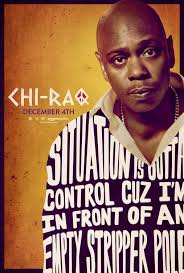

CHI-RAQ
Rebounding off his oddly restrained (for him, anyway) vampire art movie DA SWEET BLOOD OF JESUS, CHI-RAQ (a name, of course, evoking the pernicious violence with plagues Chicago’s South Side) finds Spike Lee up to his old tricks, which is to say, crafting overstuffed, crazy, messy, angry, loving, compassionate, contradictory, offensive and transcendent works of passion. Plus, this time it’s an ultra-stylized musical. About gang violence. As Vern put it,  Lee must’ve woke up one morning and said fuck it, I’m gonna make a movie that’s so Spike Lee it turns into Baz Luhrmann. The result is a movie which is absolutely all over the place in terms of tone, style, message, (and, to some extent, quality), and features everyone from Nick Cannon to David Patrick Kelly to Dave Chappelle (his first film role in 13 years!). As we’ve come to expect from Lee, sometimes the wild tonal shifts turn a bit discordant, but when it works, it’s a thing of surreal, sublime beauty, funny and angry and passionate. Maybe the most powerful part is the most unexpected, though: halfway through this stylized, sex-soaked musical, everything pauses for a heartfelt, prose sermon about the state of race relations in America, delivered by John Cusack of all people. Sometimes the direct approach is the best approach, and it’s sometimes frustrating to watch Lee chase good ideas with bad, or even run two good ideas into each other head-on. But with an artist as vigorous and original as Lee is, trying to reign things in would defeat the whole purpose of watching a great American auteur chase his own dreams. Plus, Wesley Snipes wears a sequin eye-patch, what other movie would dare offer such heady pleasures?

Continued Tomorrow, with THE BEST OF THE REST! -- A brief examination of a another 15 or so films that didn't quite make the cut but are just too damn great to be forgotten -- Documentary and Drama categories!


Wednesday, April 6, 2016

The Subtlety Guide to Shit You Should Have Seen in the Year of Our Lord, 2015! Part 1: Top 14


Well folks, it was another good one. And by it, I mean "that year that ended four goddam months ago and you haven't thought about since at least the Oscars, and even that was like two news cycles ago, who can even remember?" But while I'm obviously still grinding out reviews from the horror movies I watched back in October, literally exactly a half a year ago, I couldn't rob you of my take on the year's best. But first, as usual, I have to start with my list of shame: I didn’t see: Room, Danish Girl, Brooklyn, Paddington, 45 years, What We Do In The Shadows, Iris, Diary of a teenage Girl, Mustang, The Gift, Jafar Panahi’s Taxi, Black Souls, The Big Short, 99 Homes, The End Of The Tour, Straight Outta Compton, Beasts of No Nation, Steve Jobs, The Walk, The Tribe, Meru, James White, The Forbidden Room, Hard To Be A God, Tangerine, Mississippi Grind, Joy, Queen of Earth, Furious 7, The Club, The Demons, Boy and The World, The Tale of Princess Kaguya,  Maggie, Tomorrowland, Spy, Irrational Man, Youth, MacBeth, The Human Centipede 3, Amy, Cartel Land, Ricki and the Flash, The Visit, Trumbo, The Intern (Quentin Tarantino’s fav this year, seriously!), The Duke of Burgundy, Democrats, Blackhat, The Lobster, The Peanuts Movie, or Mortdecai, any one of which could be a masterpiece, you never know. And, tragically, I missed Roland Emmerich’s Stonewall, which is a shame because I believe myself to be the only living person who was actually excited for Roland Emmerich's "Stonewall" (hint: it's not about Stonewall Jackson).


But On the other hand, I did see what I believe is technically referred to as a "metric shitload" of movies this year. There were some disappointments (looking at you, TRUE STORY) and some misfires (SPECTRE) and a handful of truly unmissable, gloriously ill-conceived disasters (JUPITER ASCENDING). But mostly, this was a darn fine year for movies. As usual, it was a emotionally wrenching process to narrow down all the good movies I saw to just a handful, but it must be done in the name of science. So, without further ado, let's look at the heavy hitters, the big 14. I knew 2015 was going to shape up just fine as early as May, because that's when I saw...

Theatrical release poster


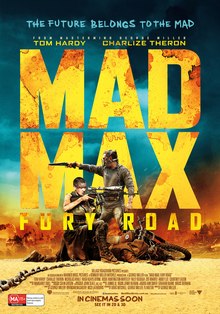
MAD MAX: FURY ROAD
Well, let’s get this out of the way right off the bat. It’s no surprise I loved FURY ROAD, because everyone loved it. It walked away with an armful of Oscars (though short the “best picture” and “best director” it might have deserved), a huge chunk of change, and massive critical love from every corner of the world. Ordinarily my contrarian nature would kick in here and I’d tell you why everyone was wrong, but I just can’t manage it this time. As an old professor once told me, “Every once in awhile, the people are actually right. They were right about Hendrix. They were right about Nirvana. And [they were right about MAD MAX: FURY ROAD].” I mean, what’s not to love? Great characters, jaw-dropping images, and a dense two hours absolutely packed to the gills with spectacle, tension, and righteously of-the-moment social fury. I think it’s fair to say that it immediately joins the ranks of the all-time great action movies; it would probably qualify for the insane see-saw truck-boarding stunt alone, even if there wasn’t another action beat in the whole thing. But it may even be a little more than that. 10 months after I last saw it, there’s still a lingering glow that suggests to me that it may be more than an action movie, it may just be one of the most relentlessly cinematic experiences I’ve ever endured. George Miller’s characters don’t tend to speechify --the titular character barely says a word if he doesn’t have to-- but the film is so eloquently visually evocative, so rife with iconic visions and potent symbolism that it feels timeless, mythic. If film has the ability to fire the blood and stir the soul, Miller seems to understand its mysterious inner workings better than anyone else. He’s gonna have a hell of a time topping it in the inevitable sequel, but if anyone can do it, FURY ROAD makes a good case for Miller being the one who can beat the odds.


‘71
In 1971, a British soldier (Jack O’Connell, EDEN LAKE, UNBROKEN) finds himself alone and trapped on the wrong side of the border between North and South Belfast, a roiling pressure cooker of violent unrest and guerrilla warfare between various factions of official and unofficial armed groups. If he’s going to survive, he has to stay hidden and somehow contact someone friendly enough to help him get back to the English-controlled area… but a British military hostage is a major prize, and everyone in this chaos has their own agenda. What follows is a dense, unbearably suspenseful thriller so vivid in its depiction of the era, so keen-eyed in its observations, and so ambitious in its sprawling labyrinthian plotline that it evokes THE BATTLE OF ALGIERS. That’s not a comparison that I make lightly, because BATTLE OF ALGIERS is one of the greatest movies ever made. But ‘71 earns it. It’s not one of the greatest movies ever made, of course, but just being in the same company as its 1966 predecessor is a staggering achievement. Somehow director Yann Demange (holy cow, a Frenchman making his film debut!) sews together the disparate threads of playwright Gregory Burke’s (also making his film debut) script into something dense but powerfully focused, and cinematographer Tat Radcliffe (PRIDE) grounds the whole thing in a gritty realism rife with pulse-pounding foot-chases and exquisitely constructed suspense pieces. Following the complex relationships between characters and groups asks a lot of the audience, but astute viewers will be rewarded with one of the most rich and gripping thrillers in ages.

CRIMSON PEAK
shhh.
The year is 2015, and Guillermo Del Toro tries his hand at the kind of sumptuously mounted, lugubrious Victorian Gothic horror that was considered irredeemably old-fashioned at least 40 years ago. Some might raise an eyebrow at that decision, but Del Toro cares not a wit for their judgement, pouring on the baroque romanticism and stately horror with a confident abandon that you’re either going to get enthusiastically on board with, or you’re going to find utterly stultifying. Obviously, the idea of Del Toro making a $60 million dollar Hammer Studios film (note that Mia Wasikowska’s surname is Cushing; a little on the nose, but you don’t hear me complaining) in 2015 is exactly the sort of madness which I’m powerless to resist, but I guess I can’t fault the world for reacting in annoyed bafflement. One thing we can all agree on, though: this is a phenomenally gorgeous film, absolutely dripping with evocative and imaginative gothic imagery, drowned in lurid color, and nicely complemented by a trio of actors (Wasikowska, Tom Hiddleston, and, especially, Jessica Chastain) more than willing to meet the film on its own breathlessly overwrought terms. And while I’m not as sold on Charlie Hunnam’s supposed charm as Del Toro seems to be, I was surprised by how much I liked Jim Beaver (Deadwood, JOY RIDE) as Wasikowska’s father. While it may not be a taste for everyone, you can’t deny that Del Toro bulls-eyed exactly what he was aiming for here: the sublime intersection between frothy melodrama, stately, unsettling horror iconography, and effortlessly stunning imagery. Newly-revived Hammer Studios, take note: this is exactly how you do it right.

SICARIO
In 2013, Denis Villeneuve released PRISONERS, and it was one of best movies of the year (I didn’t see it that year, but now I know). In 2014, he released ENEMY, also one of the best movies of the year. This year, he released SICARIO, and let’s just say that I’m currently clearing a spot on my 2016 Best-Of list for his upcoming STORY OF YOUR LIFE. Hell, I’m even excited about the completely unasked-for and shamelessly money-grabbing BLADE RUNNER sequel he’s now attached to direct, that’s how fuckin’ good this guy is. SICARIO isn’t his best work, but it is an extremely potent hard look into horrible mess that the War On Drugs has become, grim and uncompromising without ever getting silly or didactic. It’s so upsetting and hard-hitting, in fact, that at times it’s almost more horror movie than thriller, but despite that it never feels overly manipulative or exploitative. It’s not trying to shock you, it’s just a shocking film. Or, OK, it is trying to shock you, it just pulls it off so artfully that it feels legitimate and earned. To it’s credit, though, it’s a shocking, of-the-moment “issues” movie which also never comes across as preachy or reductive; its characters (particularly the stellar Emily Blunt; how she wasn’t even nominated for best actress is beyond me) are crisply drawn and the narrative compelling, drawing you steadily into its dark world while slowly and unexpectedly pulling back more and more layers to reveal how deeply complex and ambiguous this conflict can become. A narrative this twisting and nuanced is perhaps inevitably going to get a little unwieldy --which does start to happen here towards the end-- but fortunately with Villeneuve at the helm and a terrific cast at his disposal the film is never less than utterly riveting. Roger Deakins’ cinematography --by turns gritty and gorgeous-- stands out, even in a year which was just lousy with amazing cinematography.


SPOTLIGHT
A mature, stunningly well-constructed autopsy on the top-down structure that allowed systemic abuse in the Boston Catholic Church to continue for years. But it’s more than a muckraking issues movie, it’s also one of the most the most riveting journalistic procedural thrillers I’ve ever seen. Resolutely unflashy, impressively detailed, and stubbornly resistant to pandering or spoon-feeding, it’s nevertheless every bit as gripping and affecting as movies willing to indulge in a lot more phony Hollywood bullshit. A ridiculous dream cast of most of the nation’s best actors obviously goes a long way, but most impressive of all is the way director Tom McCarthy (THE STATION AGENT) dexterously presents an almost overwhelming volume of meticulously textured details, and yet makes it seem so comprehensible and easy to grasp. Never underestimate the skill it takes to make something like this look so easy. See the full review here!


THE HATEFUL EIGHT
I have to say, I was questioning my faith in Tarantino the last few years. GRINDHOUSE was kinda a dumb, not-that-funny gimmick which produced a few nice moments, but wasn’t really worth the hype. Then, INGLORIOUS BASTERDS came out, and it’s a bizarre movie, it feels like a near-perfect masterpiece which has been edited down to a highlights reel from an original movie three times longer. At the time, I was willing to call it some kind of crazy postmodern deconstruction of narrative, but then DJANGO UNCHAINED came out, and while again it had some great things about it, it was a total narrative mess, with a few of the weakest moments of Tarantino’s career (Candyland jokes? Tarantino thinks he can do accents?). Unable to explain away DJANGO’s failings, I started to wonder if I didn’t give Tarantino too much credit all along, if he wasn’t just some arrested-adolescent prick with a knack for effective mimicry, who didn’t really understand the fundamentals of cinema nearly as well as I thought.


Well, HATEFUL EIGHT shut me back up. Like his last three films, this is still messy and overstuffed, but it’s by an order of magnitude the most focused and disciplined he’s been in a long time. Which is a funny thing to say about a 190 minute film with only two locations and only a dozen speaking roles in the whole thing, but there you have it. It’s basically an Old West extreme parlour room mystery, where some --if not all-- of our eight characters are not who they claim to be. The first half is an elegant slow burn, very gradually dolling out hints and red herrings in equal doses, and spreading a generous layer of extravagantly chatty Tarantino dialogue over everything. Then --at least in the roadshow version I saw, at its extended length-- there’s an intermission, and when you come back the movie abruptly shifts gear into grueling splattercore. That’s a sharp left turn to take, but if you can hold on, Tarantino is equally at home spraying the room with red stuff as he is with long, fraught dialogue scenes. For my money, the second half is a very slight step down from the elegant first half (and kinda negates a lot of its patience) but Tarantino is just so sublimely confident with the terrific actors and the stately, ridiculously widescreen images that it’s a consistent queasy pleasure all the way through, and Ennio Morricone’s tense and funky score seals the deal.


Most interesting of all, this is the first Tarantino film which seems to genuinely have something to say about something vaguely resembling the real world. He’s a director who has always loved fiction more than reality, but despite its heightened (sometimes even cartoonish) exaggeration, HATEFUL EIGHT is unmistakably a painful plunge into the tumultuous history of American racism which even has the balls to come to a conclusion -- albeit a conclusion about as bleakly nihilistic as one could imagine. It’s dangerous ground for a director as easily amused by schlocky shock value as Tarantino is, but HATEFUL EIGHT is real evidence that, when pushed, he has the discipline and maturity to make something which is (nearly) as patient and nuanced as it is outrageous and indulgent.


SPRING
One of the most unique and intriguing love stories ever put to celluloid, SPRING finds sophomore directors Justin Benson and Aaron Moorehead taking on the ambitious task of symbolically exploring the true nature of love itself through the medium of Lovecraftian body horror. Now, that sounds like a movie for no one, but I dunno, there’s something so thoroughly endearing about the complicated performances of Lou Taylor Pucci and Nadia Hilker, and so enchanting about the breathtaking Italian vistas, that I honestly think this a movie everyone and anyone could and should love. It’s a horror movie, and an art movie, and a sweeping romance, and it’s a good one of all those things, without being entirely any of them. After more than a century of cinema, I wouldn’t have thought there was much more interest to plumb out of heterosexual love stories about pretty people, but SPRING manages to make the old --the oldest, in fact-- seem vibrant and new again. See the full review here!


KUMIKO: THE TREASURE HUNTER
This would make a great horror poster.

Perhaps the bleakest and most emotionally brutal film of the year --and it’s a year which included SON OF SAUL, THE REVENANT and SICARIO-- KUMIKO is the story of 29-year-old Japanese office drone Kumiko (Rinko Kikuchi, woah, she was in PACIFIC RIM!?) who is gradually drifting away from reality. She becomes obsessed with her battered VHS copy of the movie FARGO, and increasingly certain that she can travel to Minnesota and locate the money buried by Steve Buscemi in the movie. Sounds like a whimsical, Wes Anderson-esque plot about loveable eccentrics until you realize that her “map” to the treasure is actually an illustration of a frame from the movie, just an “x” drawn on a tracing of a long fence with no visible landmarks which stretches back into infinity. Kumiko isn’t a charming eccentric, she’s a mentally ill woman so completely isolated and ignored that no one even realizes it, and she’s about to make a series of impulsive and potentially disastrous choices by stealing money from her boss to travel to America for a treasure hunt. What follows is a long, inevitable walk to the gallows, as Kumiko plunges deeper and deeper into madness and nobody in America can understand her well enough to figure out what’s going on and help her. Director and co-writer David Zeller (who also appears in the film as a well-meaning but clueless Minnesota cop) casts this transcontinental downward spiral as a trance-like meditation in alienation, full of agonizingly extended takes girded by The Octopus Project’s droning, mournful electronic score. He makes wonderfully aching, surreal art of the grimy, snow-swept wasteland that our protagonist drifts through. But equally important is Kikuchi. She is astoundingly good as the resolute but misguided protagonist, vulnerable and frustrating and messy and difficult, miraculously imbuing this strange character with a completely unique but unmistakable inner logic which is completely compelling even as we can clearly see its folly. Her performance and Zeller’s stately, cold images and splendid sense of tone create an experience which is tragic and hypnotic in equal measures, but with little grace notes of gentle humor. Sometimes almost intolerably mournful, but far too mysterious and surreal to feel like a drag, this is one of the most starkly unique and transfixing Americans films I’ve seen in a long time.

CREED
Wow, talk about an underdog. Here we are at the seventh ROCKY movie, in a series which has ranged from gritty drama (ROCKY) to comical unintentional self-parody (ROCKY IV) to desperate, misguided attempts at a comeback (ROCKY V) to, against all odds, an actual factual genuine return to its roots (ROCKY BALBOA) which seemed to perfectly finish the series. What’re the odds they could return to the fount one more time, with an attempt at spinning off a new series, and actually recapture that magic again, forty years down the road? And especially, what are the odds they could do it with a second-time director with only a little indie drama about a real-life tragedy to his name? It was a long shot, for sure, but start cranking that classic Rocky theme (as they do just once, at exactly the right moment here) because somehow director Ryan Coogler, star Michael B. Jordan, and, of course, Stallone, have taken the legacy of the ROCKY series and turned it into something with equal footing in the past and future. It’s every bit the equal of the films that have preceded it and provides plenty of that old magic, but it’s not entirely beholden to the past, either -- check out the bravura single-take camera-in-the-ring fight, which is a setpiece highlight of the year as far as I’m concerned, and it’s not even the climactic fight. CREED puts a shiny new paint job on the wheel more than it reinvents it, but it’s as fine a new paintjob as this series has ever had, which is really saying something 40 years in. It relies enough on nostalgia and dependable ROCKY plot beats that I have a hard time calling it ambitious, exactly, but as with the young boxer at its center, just because you’re following in the footsteps of greatness doesn’t mean there isn’t ambition in trying to prove yourself worthy of that legacy. Coogler’s got the chops to go the distance, and a great cast to rely on for that goal; Jordan is immensely endearing as the up-and-comer who ends up under Rocky’s wing --and he has to be, just to avoid being outshone by Stallone’s terrific take on his most enduring character. While it’s probably the most conventional film in my top picks this year, I gotta give credit where it’s due: I don’t think any other film this year had me in the palm of its hand from the title onward the way this one did. We may have seen this story before, but all the more reason to be impressed they got me to wholeheartedly cheer for it one more time.


EX MACHINA
This slinky, engrossing sci-fi tale isn’t, perhaps, as mind-blowing as it fancies itself. The questions about sentience and our responsibility to artificial intelligence which are obviously central to the conceit are duly raised but never pursued, and the film dodges any definitive answers which might really interrogate these concepts and find new meaning in them. But honestly that matters not a whit, because instead of being great sci-fi, it settles for being a great little thriller with an seriously intriguing (if somewhat superficial) premise, and there’s no shame at all in that. Writer-director Alex Garland has been a reliable scripter for quite a while now (his first script was 28 DAYS LATER) but here he also shows a real aptitude for direction, patiently laying out puzzle pieces in the same crisp, subtle way he shoots the terrifyingly precise minimalism of the house where all the action takes place. There’s an impressive confidence to the pace, and to the streamlined, three-person (or is it two?) drama between Oscar Isaac’s domineering genius, Domhnall Gleeson’s outmatched wannabe, and Alicia Vikander’s ambiguous robotic intelligence (who may be a tragic victim, or a scheming femme fatale). The small cast packs plenty of wallop: Gleeson and Vikander are great, but come on, let’s be honest here, there’s not an actor alive today who can keep up with Oscar Isaacs. For the third year in a row, he’s given one of the absolute best performances of the year in yet another totally unique character the likes of whom you’ve never quite seen before, but who effortlessly comes to life as a rich, fascinating, and absolutely believable creation in the capable hands of the actor. I don’t want to spoil this for you if you haven’t seen it, but there’s a dance scene here which is almost certainly my favorite single cinematic moment of the whole year. You’ll know it when you see it. Simple and sublime genre filmmaking at its most mature and polished (if not necessarily its most substantial).


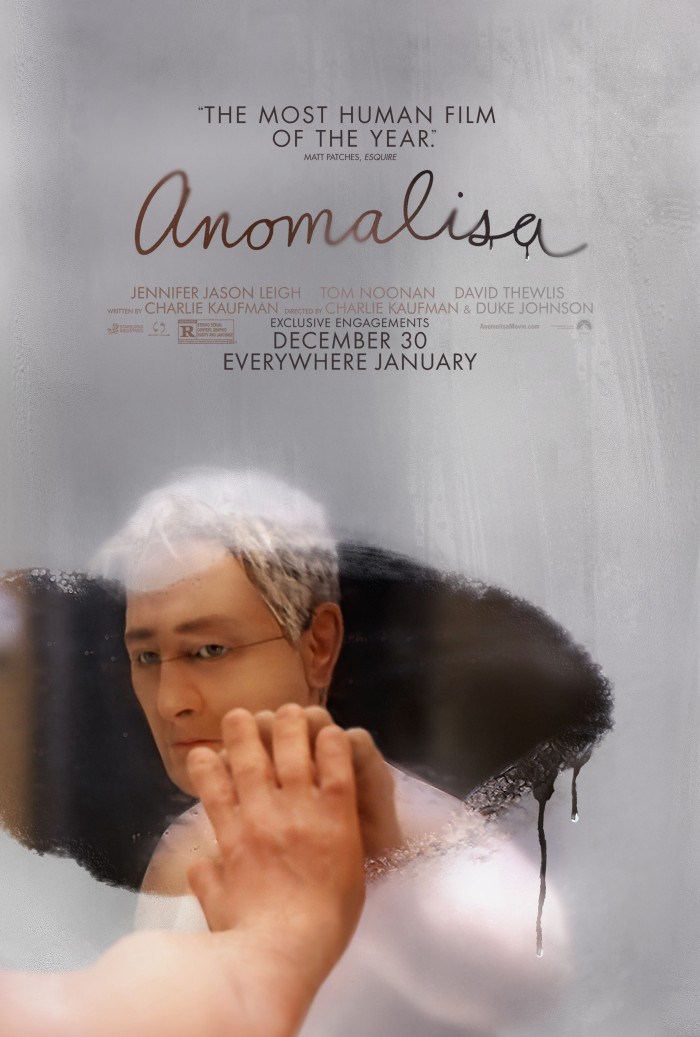
ANOMALISA
Charlie Kaufman’s lightly strange but deeply felt puppet meditation on alienation, repression, sex, and identity. Obviously I enjoy the surreal pleasures of seeing an all-puppet film with my dream cast (i.e. a cast composed primarily of Tom Noonan's) but the real surprise here is how honestly and compassionately Kaufman treats the flawed, painfully average people in his tiny, two-soul drama. I expect Kaufman to know his way around weirdness; it’s a bigger surprise, after all this time, that he would have an interest in --let alone some real insight into-- the human soul, absent the high-concept razzamatazz. This is a mature, thoughtful, and affecting film, and it honestly has one of the best American sex scenes in ages. With puppets. See the full review here!


SON OF SAUL
In Auschwitz, a Jewish-Hungarian prisoner forced into labor clearing bodies from the gas chambers (after removing any valuables) finds a corpse he believes to be his son, and sets out on a dangerous journey through the harrowing concentration camp to find a rabbi to give the boy a proper burial. If that sounds just unbelievably grim to you, well, you’re right, there’s no two ways about it, this is a punishingly traumatic film of the highest order. But thanks to director LĆ”szló Nemes and the dazzling cinematography of MĆ”tyĆ”s ErdĆ©ly --which utilizes an unusually tight, borderline claustrophobic focus, combined with long, unbroken takes, to create a world where only a few feet around the protagonist are clearly visible, and the unspeakable horrors in the background lurk as a blurry nightmare just outside our field of vision-- the film is as technically stunning as it is emotionally brutal. But beyond that, it’s actually surprisingly... thrilling? It's a weird thing to say, but there's no way around it. The tight perspective combined with the palpable danger of the environment and the ticking clock by which he has to bury the body combine into a absolutely intense race for life and time. There are sequences here which are as potent and harrowing as COME AND SEE, which is to say, about as good as film gets. But Nemes does more than find pathos and terror in the scenario; he also finds space for nuanced and mysterious human moments, eschewing simple victimhood parables and creating a complex, morally ambiguous look into what happens to someone so desperate to preserve some last vestige of humanity that nothing else matters anymore. Rich, complex, and absolutely staggering in both its unflinching horror and its technical proficiency, this is unmissable cinema, even though it’s almost certainly going to ruin your night, if not your whole week.See the full review here!


WHEN MARNIE WAS THERE
On a lighter note -- hey, 2015 really turned up a bounty of great animated films, didn’t it? When was the last time we such a deserving bunch of Best Animated Film nominees as ANOMALISA, INSIDE OUT, BOY AND THE WORLD (which I confess I have not yet seen, but am assured of its brilliance), SHAUN THE SHEEP (which I also have not seen, but come on, has Aardman Studios ever put out a product which was anything less than fantastic?) and, of course, WHEN MARNIE WAS THERE, which may turn out to be the very last film ever from legendary animation studio (and one time home of now-retired master Hayao Miyazaki) Studio Ghibli. I sincerely hope they return from their current “hiatus,” but if this is how they go out, they could hardly do better. MARNIE (a Hitchcock reference? There is something ineffably Hitchcockian about its haunted romance) is a deceptively simple, overwhelmingly gorgeous gothic romance about troubled young tomboy Anna, who spends the summer with eccentric relatives in a rural seaside town. While there, she discovers a ghostly abandoned house, which is sometimes home to a mysterious and charismatic blonde girl named Marnie. Anna and Marnie develop an instant bond, and gradually come to share their most intimate pain and insecurities. But, uh, Marnie’s, like, a ghost, or something, right? So what’s going on here? Unusually for a Japanese movie, you’ll actually get a fairly complete answer by the film’s end, and powerfully heartfelt one, at that. But even better than the end is the journey we take to get their -- director Hiromasa Yonebayashi (THE SECRET WORLD OF ARRIETTY) uses his complete control over the animated world to deliver image after image which which are every bit as ravishing as they are evocative. Stunning, painterly landscapes abound, but they perfectly serve and instinctively reflect the drama within. There’s a deep honesty and sensitivity in the portrayal of the intimate relationship between the two girls which is, if not explicitly sexual, certainly every bit as vulnerable and fraught as a first love. Yonebayashi does a wonderfully job depicting the stormy, frustrating passions of youth in a way which forgives its sins without whitewashing them, and penetrates some universal truths about childhood while still keeping focus on the particular, specific characters at the film’s center. A warmer-hearted film you will not find this year, but never mistake its kind heart for frivolousness. It takes a profound wisdom and artistry to make something so deceptively pure and heartbreaking.


THE REVENANT
Well, I guess I can’t avoid saying it anymore. I fucking love THE REVENANT, and I expect that with the exception of FURY ROAD, it’s probably the only movie this year that I will immediately buy and watch a hundred more times. This does not appear to be a popular opinion, at least in the circles of the internet where I run. Which is weird, because it’s got an 82% on rottentomatoes, --85% among users!--, a 76 on metacritic. It won Best Actor, Best Director and Best Cinematography at the Oscars. It seems like a lot of people must like it, but boy, are they not anyone that I personally know. A bunch of people have called it arty pretentious indulgence, which is occasionally true but completely beside the point. Others have called it shallow and superficial, with a shameless and smugly unearned final thrust at some kind of dull moralising. Which is also true but completely beside the point. Still others have called it boring misery porn. These people are flagrantly and ignominiously wrong. Wrong, wrong, wrong as can be. There’s plenty of misery, of course -- this is, after all, the story of a guy (Leonardo Di Caprio, CRITTERS 3) who get betrayed and left for dead and has his son murdered by a mumbly asshole (Tom Hardy, SCENES OF A SEXUAL NATURE [a movie’s title, not a description of his performance here]) and has to survive in a frigid Old West wilderness long enough to get revenge-- but THE REVENANT, whatever else it may be, is absolutely never for a single second boring.


The REVENANT is not really a very smart movie. It certainly is not a very deep movie. It might halfheartedly feint towards being those things, but at its heart it is one thing and one thing only. And fortunately, it’s the one thing I most want movies to be: utterly transporting and utterly engrossing. I was not more completely enraptured and enveloped by any other work of art all year. This is a film which fully and decisively pulls you into its stark and rapturously, savagely beautiful world, and immerses you in it --drowns you in it, really-- until the real world seems like a distant, chintzy memory. From the stunning cinematography to the vividly alive sound mixing to the rich production design to the girtty, lived-in performances, it is a master class in constructing an utterly transporting cinematic experience. Is it anything more than a simple revenge story? Of course not, but why does it need to be? It’s an exquisitely made revenge story, jam-packed with captivating scenes, arresting visuals, and memorable performances.


My film critic hero Vern from outlawvern.com compared it to a theme park ride. I think that would usually be an insult, suggesting that something is fleeting and superficial, but he meant it as a compliment in this case, and it’s actually a characteristically astute one: This is a film which constructs a complete and entrancing alternate reality to usher you through, one so absolutely gaudy with detail and life and incident that you feel like you’re missing out being trapped in a narrow camera’s perspective. You feel like you could turn your head in any direction and see something else amazing. It’s relentless, and even at 156 minutes feels absolutely stuffed with incident, hurtling from one harrowing adventure to another with a wild abandon unchecked by anything as dull as logic or reason or intent.


Director Alejandro G. IƱƔrritu (the excellent AMORES PERROS, the stultifying BABEL, the delectable BIRDMAN) seems unreasonably desperate to have people take him seriously (hence BIRDMAN’s incessant self-conscious claptrap) and he can’t help trying to lay claim to some sort of life lesson here too, in the film’s least believable few seconds. But fortunately THE REVENANT handily sidesteps all that unnecessary self-gratification by spending every other second revealing  IƱƔrritu --and, of course, cinematographer Emmanuel Lubezki, justifiably winning his third Oscar in a row-- as lovers of cinema, first and foremost, miles ahead of any other goal. While I love Tom Hardy’s feverishly deplorable villain and the film boasts no shortage of agreeable dramatic beats, it’s at its most thrilling when it turns into a race between IƱƔrritu and Lubezki to see who can come up with the most outlandishly stunning set pieces and the most luridly amazing images the fastest. It’s a work of unchecked, unguarded, unhinged cinematic ambition, and I would happily crawl inside of it and never come out.


Casually checking the box office figures In late January before I saw the film, I was sort of bemused to see that an arty western had displaced STAR WARS as the #1 film at the American box office, and I chuckled at how pissed off John Q. Public was going to be when he realized he'd paid 11 bucks for something so weird and violent and arty. But having seen the movie now, I completely understand. This is finely-crafted, crowd-pleasing entertainment at its most technically accomplished and enthusiastically executed. It’s simple, it’s relentless, it’s exciting.  Despite IƱƔrritu’s supposed disdain for genre films, he made a really great one. Considering that the Western genre has been increasingly the domain of arty revisionism, I think it’s a particularly delicious irony that it took a film which probably fancies itself an Important Art Movie to bring the genre back to the common people. But hey, sometimes the people are right.

Finally, twitter actually has their priorities right about something.


Continued Tomorrow, with THE BEST OF THE REST! -- A brief examination of a another 30 or so films that didn't quite make the cut but are just too damn great to be forgotten!