Showing posts with label DENIS VILLENEUVE. Show all posts

Wednesday, April 6, 2016

The Subtlety Guide to Shit You Should Have Seen in the Year of Our Lord, 2015! Part 1: Top 14


Well folks, it was another good one. And by it, I mean "that year that ended four goddam months ago and you haven't thought about since at least the Oscars, and even that was like two news cycles ago, who can even remember?" But while I'm obviously still grinding out reviews from the horror movies I watched back in October, literally exactly a half a year ago, I couldn't rob you of my take on the year's best. But first, as usual, I have to start with my list of shame: I didn’t see: Room, Danish Girl, Brooklyn, Paddington, 45 years, What We Do In The Shadows, Iris, Diary of a teenage Girl, Mustang, The Gift, Jafar Panahi’s Taxi, Black Souls, The Big Short, 99 Homes, The End Of The Tour, Straight Outta Compton, Beasts of No Nation, Steve Jobs, The Walk, The Tribe, Meru, James White, The Forbidden Room, Hard To Be A God, Tangerine, Mississippi Grind, Joy, Queen of Earth, Furious 7, The Club, The Demons, Boy and The World, The Tale of Princess Kaguya,  Maggie, Tomorrowland, Spy, Irrational Man, Youth, MacBeth, The Human Centipede 3, Amy, Cartel Land, Ricki and the Flash, The Visit, Trumbo, The Intern (Quentin Tarantino’s fav this year, seriously!), The Duke of Burgundy, Democrats, Blackhat, The Lobster, The Peanuts Movie, or Mortdecai, any one of which could be a masterpiece, you never know. And, tragically, I missed Roland Emmerich’s Stonewall, which is a shame because I believe myself to be the only living person who was actually excited for Roland Emmerich's "Stonewall" (hint: it's not about Stonewall Jackson).


But On the other hand, I did see what I believe is technically referred to as a "metric shitload" of movies this year. There were some disappointments (looking at you, TRUE STORY) and some misfires (SPECTRE) and a handful of truly unmissable, gloriously ill-conceived disasters (JUPITER ASCENDING). But mostly, this was a darn fine year for movies. As usual, it was a emotionally wrenching process to narrow down all the good movies I saw to just a handful, but it must be done in the name of science. So, without further ado, let's look at the heavy hitters, the big 14. I knew 2015 was going to shape up just fine as early as May, because that's when I saw...
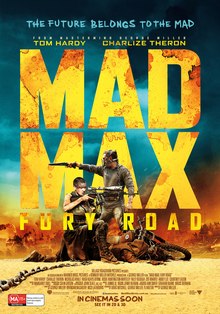
Theatrical release poster


MAD MAX: FURY ROAD
Well, let’s get this out of the way right off the bat. It’s no surprise I loved FURY ROAD, because everyone loved it. It walked away with an armful of Oscars (though short the “best picture” and “best director” it might have deserved), a huge chunk of change, and massive critical love from every corner of the world. Ordinarily my contrarian nature would kick in here and I’d tell you why everyone was wrong, but I just can’t manage it this time. As an old professor once told me, “Every once in awhile, the people are actually right. They were right about Hendrix. They were right about Nirvana. And [they were right about MAD MAX: FURY ROAD].” I mean, what’s not to love? Great characters, jaw-dropping images, and a dense two hours absolutely packed to the gills with spectacle, tension, and righteously of-the-moment social fury. I think it’s fair to say that it immediately joins the ranks of the all-time great action movies; it would probably qualify for the insane see-saw truck-boarding stunt alone, even if there wasn’t another action beat in the whole thing. But it may even be a little more than that. 10 months after I last saw it, there’s still a lingering glow that suggests to me that it may be more than an action movie, it may just be one of the most relentlessly cinematic experiences I’ve ever endured. George Miller’s characters don’t tend to speechify --the titular character barely says a word if he doesn’t have to-- but the film is so eloquently visually evocative, so rife with iconic visions and potent symbolism that it feels timeless, mythic. If film has the ability to fire the blood and stir the soul, Miller seems to understand its mysterious inner workings better than anyone else. He’s gonna have a hell of a time topping it in the inevitable sequel, but if anyone can do it, FURY ROAD makes a good case for Miller being the one who can beat the odds.


‘71
In 1971, a British soldier (Jack O’Connell, EDEN LAKE, UNBROKEN) finds himself alone and trapped on the wrong side of the border between North and South Belfast, a roiling pressure cooker of violent unrest and guerrilla warfare between various factions of official and unofficial armed groups. If he’s going to survive, he has to stay hidden and somehow contact someone friendly enough to help him get back to the English-controlled area… but a British military hostage is a major prize, and everyone in this chaos has their own agenda. What follows is a dense, unbearably suspenseful thriller so vivid in its depiction of the era, so keen-eyed in its observations, and so ambitious in its sprawling labyrinthian plotline that it evokes THE BATTLE OF ALGIERS. That’s not a comparison that I make lightly, because BATTLE OF ALGIERS is one of the greatest movies ever made. But ‘71 earns it. It’s not one of the greatest movies ever made, of course, but just being in the same company as its 1966 predecessor is a staggering achievement. Somehow director Yann Demange (holy cow, a Frenchman making his film debut!) sews together the disparate threads of playwright Gregory Burke’s (also making his film debut) script into something dense but powerfully focused, and cinematographer Tat Radcliffe (PRIDE) grounds the whole thing in a gritty realism rife with pulse-pounding foot-chases and exquisitely constructed suspense pieces. Following the complex relationships between characters and groups asks a lot of the audience, but astute viewers will be rewarded with one of the most rich and gripping thrillers in ages.

CRIMSON PEAK
shhh.
The year is 2015, and Guillermo Del Toro tries his hand at the kind of sumptuously mounted, lugubrious Victorian Gothic horror that was considered irredeemably old-fashioned at least 40 years ago. Some might raise an eyebrow at that decision, but Del Toro cares not a wit for their judgement, pouring on the baroque romanticism and stately horror with a confident abandon that you’re either going to get enthusiastically on board with, or you’re going to find utterly stultifying. Obviously, the idea of Del Toro making a $60 million dollar Hammer Studios film (note that Mia Wasikowska’s surname is Cushing; a little on the nose, but you don’t hear me complaining) in 2015 is exactly the sort of madness which I’m powerless to resist, but I guess I can’t fault the world for reacting in annoyed bafflement. One thing we can all agree on, though: this is a phenomenally gorgeous film, absolutely dripping with evocative and imaginative gothic imagery, drowned in lurid color, and nicely complemented by a trio of actors (Wasikowska, Tom Hiddleston, and, especially, Jessica Chastain) more than willing to meet the film on its own breathlessly overwrought terms. And while I’m not as sold on Charlie Hunnam’s supposed charm as Del Toro seems to be, I was surprised by how much I liked Jim Beaver (Deadwood, JOY RIDE) as Wasikowska’s father. While it may not be a taste for everyone, you can’t deny that Del Toro bulls-eyed exactly what he was aiming for here: the sublime intersection between frothy melodrama, stately, unsettling horror iconography, and effortlessly stunning imagery. Newly-revived Hammer Studios, take note: this is exactly how you do it right.

SICARIO
In 2013, Denis Villeneuve released PRISONERS, and it was one of best movies of the year (I didn’t see it that year, but now I know). In 2014, he released ENEMY, also one of the best movies of the year. This year, he released SICARIO, and let’s just say that I’m currently clearing a spot on my 2016 Best-Of list for his upcoming STORY OF YOUR LIFE. Hell, I’m even excited about the completely unasked-for and shamelessly money-grabbing BLADE RUNNER sequel he’s now attached to direct, that’s how fuckin’ good this guy is. SICARIO isn’t his best work, but it is an extremely potent hard look into horrible mess that the War On Drugs has become, grim and uncompromising without ever getting silly or didactic. It’s so upsetting and hard-hitting, in fact, that at times it’s almost more horror movie than thriller, but despite that it never feels overly manipulative or exploitative. It’s not trying to shock you, it’s just a shocking film. Or, OK, it is trying to shock you, it just pulls it off so artfully that it feels legitimate and earned. To it’s credit, though, it’s a shocking, of-the-moment “issues” movie which also never comes across as preachy or reductive; its characters (particularly the stellar Emily Blunt; how she wasn’t even nominated for best actress is beyond me) are crisply drawn and the narrative compelling, drawing you steadily into its dark world while slowly and unexpectedly pulling back more and more layers to reveal how deeply complex and ambiguous this conflict can become. A narrative this twisting and nuanced is perhaps inevitably going to get a little unwieldy --which does start to happen here towards the end-- but fortunately with Villeneuve at the helm and a terrific cast at his disposal the film is never less than utterly riveting. Roger Deakins’ cinematography --by turns gritty and gorgeous-- stands out, even in a year which was just lousy with amazing cinematography.


SPOTLIGHT
A mature, stunningly well-constructed autopsy on the top-down structure that allowed systemic abuse in the Boston Catholic Church to continue for years. But it’s more than a muckraking issues movie, it’s also one of the most the most riveting journalistic procedural thrillers I’ve ever seen. Resolutely unflashy, impressively detailed, and stubbornly resistant to pandering or spoon-feeding, it’s nevertheless every bit as gripping and affecting as movies willing to indulge in a lot more phony Hollywood bullshit. A ridiculous dream cast of most of the nation’s best actors obviously goes a long way, but most impressive of all is the way director Tom McCarthy (THE STATION AGENT) dexterously presents an almost overwhelming volume of meticulously textured details, and yet makes it seem so comprehensible and easy to grasp. Never underestimate the skill it takes to make something like this look so easy. See the full review here!


THE HATEFUL EIGHT
I have to say, I was questioning my faith in Tarantino the last few years. GRINDHOUSE was kinda a dumb, not-that-funny gimmick which produced a few nice moments, but wasn’t really worth the hype. Then, INGLORIOUS BASTERDS came out, and it’s a bizarre movie, it feels like a near-perfect masterpiece which has been edited down to a highlights reel from an original movie three times longer. At the time, I was willing to call it some kind of crazy postmodern deconstruction of narrative, but then DJANGO UNCHAINED came out, and while again it had some great things about it, it was a total narrative mess, with a few of the weakest moments of Tarantino’s career (Candyland jokes? Tarantino thinks he can do accents?). Unable to explain away DJANGO’s failings, I started to wonder if I didn’t give Tarantino too much credit all along, if he wasn’t just some arrested-adolescent prick with a knack for effective mimicry, who didn’t really understand the fundamentals of cinema nearly as well as I thought.


Well, HATEFUL EIGHT shut me back up. Like his last three films, this is still messy and overstuffed, but it’s by an order of magnitude the most focused and disciplined he’s been in a long time. Which is a funny thing to say about a 190 minute film with only two locations and only a dozen speaking roles in the whole thing, but there you have it. It’s basically an Old West extreme parlour room mystery, where some --if not all-- of our eight characters are not who they claim to be. The first half is an elegant slow burn, very gradually dolling out hints and red herrings in equal doses, and spreading a generous layer of extravagantly chatty Tarantino dialogue over everything. Then --at least in the roadshow version I saw, at its extended length-- there’s an intermission, and when you come back the movie abruptly shifts gear into grueling splattercore. That’s a sharp left turn to take, but if you can hold on, Tarantino is equally at home spraying the room with red stuff as he is with long, fraught dialogue scenes. For my money, the second half is a very slight step down from the elegant first half (and kinda negates a lot of its patience) but Tarantino is just so sublimely confident with the terrific actors and the stately, ridiculously widescreen images that it’s a consistent queasy pleasure all the way through, and Ennio Morricone’s tense and funky score seals the deal.


Most interesting of all, this is the first Tarantino film which seems to genuinely have something to say about something vaguely resembling the real world. He’s a director who has always loved fiction more than reality, but despite its heightened (sometimes even cartoonish) exaggeration, HATEFUL EIGHT is unmistakably a painful plunge into the tumultuous history of American racism which even has the balls to come to a conclusion -- albeit a conclusion about as bleakly nihilistic as one could imagine. It’s dangerous ground for a director as easily amused by schlocky shock value as Tarantino is, but HATEFUL EIGHT is real evidence that, when pushed, he has the discipline and maturity to make something which is (nearly) as patient and nuanced as it is outrageous and indulgent.


SPRING
One of the most unique and intriguing love stories ever put to celluloid, SPRING finds sophomore directors Justin Benson and Aaron Moorehead taking on the ambitious task of symbolically exploring the true nature of love itself through the medium of Lovecraftian body horror. Now, that sounds like a movie for no one, but I dunno, there’s something so thoroughly endearing about the complicated performances of Lou Taylor Pucci and Nadia Hilker, and so enchanting about the breathtaking Italian vistas, that I honestly think this a movie everyone and anyone could and should love. It’s a horror movie, and an art movie, and a sweeping romance, and it’s a good one of all those things, without being entirely any of them. After more than a century of cinema, I wouldn’t have thought there was much more interest to plumb out of heterosexual love stories about pretty people, but SPRING manages to make the old --the oldest, in fact-- seem vibrant and new again. See the full review here!


KUMIKO: THE TREASURE HUNTER
This would make a great horror poster.

Perhaps the bleakest and most emotionally brutal film of the year --and it’s a year which included SON OF SAUL, THE REVENANT and SICARIO-- KUMIKO is the story of 29-year-old Japanese office drone Kumiko (Rinko Kikuchi, woah, she was in PACIFIC RIM!?) who is gradually drifting away from reality. She becomes obsessed with her battered VHS copy of the movie FARGO, and increasingly certain that she can travel to Minnesota and locate the money buried by Steve Buscemi in the movie. Sounds like a whimsical, Wes Anderson-esque plot about loveable eccentrics until you realize that her “map” to the treasure is actually an illustration of a frame from the movie, just an “x” drawn on a tracing of a long fence with no visible landmarks which stretches back into infinity. Kumiko isn’t a charming eccentric, she’s a mentally ill woman so completely isolated and ignored that no one even realizes it, and she’s about to make a series of impulsive and potentially disastrous choices by stealing money from her boss to travel to America for a treasure hunt. What follows is a long, inevitable walk to the gallows, as Kumiko plunges deeper and deeper into madness and nobody in America can understand her well enough to figure out what’s going on and help her. Director and co-writer David Zeller (who also appears in the film as a well-meaning but clueless Minnesota cop) casts this transcontinental downward spiral as a trance-like meditation in alienation, full of agonizingly extended takes girded by The Octopus Project’s droning, mournful electronic score. He makes wonderfully aching, surreal art of the grimy, snow-swept wasteland that our protagonist drifts through. But equally important is Kikuchi. She is astoundingly good as the resolute but misguided protagonist, vulnerable and frustrating and messy and difficult, miraculously imbuing this strange character with a completely unique but unmistakable inner logic which is completely compelling even as we can clearly see its folly. Her performance and Zeller’s stately, cold images and splendid sense of tone create an experience which is tragic and hypnotic in equal measures, but with little grace notes of gentle humor. Sometimes almost intolerably mournful, but far too mysterious and surreal to feel like a drag, this is one of the most starkly unique and transfixing Americans films I’ve seen in a long time.

CREED
Wow, talk about an underdog. Here we are at the seventh ROCKY movie, in a series which has ranged from gritty drama (ROCKY) to comical unintentional self-parody (ROCKY IV) to desperate, misguided attempts at a comeback (ROCKY V) to, against all odds, an actual factual genuine return to its roots (ROCKY BALBOA) which seemed to perfectly finish the series. What’re the odds they could return to the fount one more time, with an attempt at spinning off a new series, and actually recapture that magic again, forty years down the road? And especially, what are the odds they could do it with a second-time director with only a little indie drama about a real-life tragedy to his name? It was a long shot, for sure, but start cranking that classic Rocky theme (as they do just once, at exactly the right moment here) because somehow director Ryan Coogler, star Michael B. Jordan, and, of course, Stallone, have taken the legacy of the ROCKY series and turned it into something with equal footing in the past and future. It’s every bit the equal of the films that have preceded it and provides plenty of that old magic, but it’s not entirely beholden to the past, either -- check out the bravura single-take camera-in-the-ring fight, which is a setpiece highlight of the year as far as I’m concerned, and it’s not even the climactic fight. CREED puts a shiny new paint job on the wheel more than it reinvents it, but it’s as fine a new paintjob as this series has ever had, which is really saying something 40 years in. It relies enough on nostalgia and dependable ROCKY plot beats that I have a hard time calling it ambitious, exactly, but as with the young boxer at its center, just because you’re following in the footsteps of greatness doesn’t mean there isn’t ambition in trying to prove yourself worthy of that legacy. Coogler’s got the chops to go the distance, and a great cast to rely on for that goal; Jordan is immensely endearing as the up-and-comer who ends up under Rocky’s wing --and he has to be, just to avoid being outshone by Stallone’s terrific take on his most enduring character. While it’s probably the most conventional film in my top picks this year, I gotta give credit where it’s due: I don’t think any other film this year had me in the palm of its hand from the title onward the way this one did. We may have seen this story before, but all the more reason to be impressed they got me to wholeheartedly cheer for it one more time.


EX MACHINA
This slinky, engrossing sci-fi tale isn’t, perhaps, as mind-blowing as it fancies itself. The questions about sentience and our responsibility to artificial intelligence which are obviously central to the conceit are duly raised but never pursued, and the film dodges any definitive answers which might really interrogate these concepts and find new meaning in them. But honestly that matters not a whit, because instead of being great sci-fi, it settles for being a great little thriller with an seriously intriguing (if somewhat superficial) premise, and there’s no shame at all in that. Writer-director Alex Garland has been a reliable scripter for quite a while now (his first script was 28 DAYS LATER) but here he also shows a real aptitude for direction, patiently laying out puzzle pieces in the same crisp, subtle way he shoots the terrifyingly precise minimalism of the house where all the action takes place. There’s an impressive confidence to the pace, and to the streamlined, three-person (or is it two?) drama between Oscar Isaac’s domineering genius, Domhnall Gleeson’s outmatched wannabe, and Alicia Vikander’s ambiguous robotic intelligence (who may be a tragic victim, or a scheming femme fatale). The small cast packs plenty of wallop: Gleeson and Vikander are great, but come on, let’s be honest here, there’s not an actor alive today who can keep up with Oscar Isaacs. For the third year in a row, he’s given one of the absolute best performances of the year in yet another totally unique character the likes of whom you’ve never quite seen before, but who effortlessly comes to life as a rich, fascinating, and absolutely believable creation in the capable hands of the actor. I don’t want to spoil this for you if you haven’t seen it, but there’s a dance scene here which is almost certainly my favorite single cinematic moment of the whole year. You’ll know it when you see it. Simple and sublime genre filmmaking at its most mature and polished (if not necessarily its most substantial).


ANOMALISA
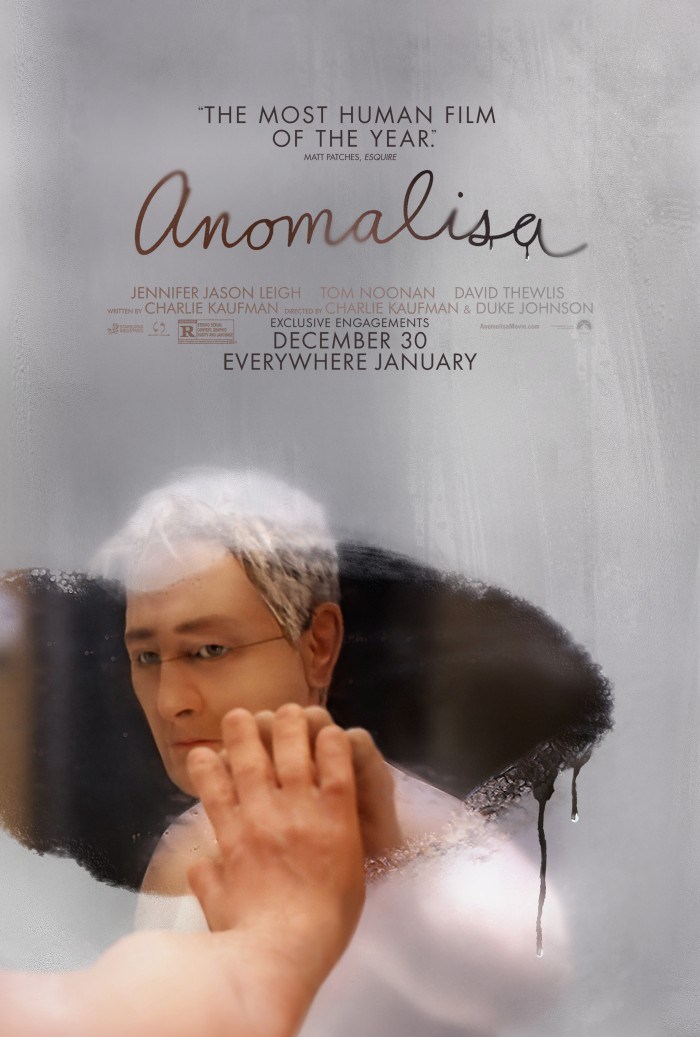
Charlie Kaufman’s lightly strange but deeply felt puppet meditation on alienation, repression, sex, and identity. Obviously I enjoy the surreal pleasures of seeing an all-puppet film with my dream cast (i.e. a cast composed primarily of Tom Noonan's) but the real surprise here is how honestly and compassionately Kaufman treats the flawed, painfully average people in his tiny, two-soul drama. I expect Kaufman to know his way around weirdness; it’s a bigger surprise, after all this time, that he would have an interest in --let alone some real insight into-- the human soul, absent the high-concept razzamatazz. This is a mature, thoughtful, and affecting film, and it honestly has one of the best American sex scenes in ages. With puppets. See the full review here!


SON OF SAUL
In Auschwitz, a Jewish-Hungarian prisoner forced into labor clearing bodies from the gas chambers (after removing any valuables) finds a corpse he believes to be his son, and sets out on a dangerous journey through the harrowing concentration camp to find a rabbi to give the boy a proper burial. If that sounds just unbelievably grim to you, well, you’re right, there’s no two ways about it, this is a punishingly traumatic film of the highest order. But thanks to director László Nemes and the dazzling cinematography of Mátyás Erdély --which utilizes an unusually tight, borderline claustrophobic focus, combined with long, unbroken takes, to create a world where only a few feet around the protagonist are clearly visible, and the unspeakable horrors in the background lurk as a blurry nightmare just outside our field of vision-- the film is as technically stunning as it is emotionally brutal. But beyond that, it’s actually surprisingly... thrilling? It's a weird thing to say, but there's no way around it. The tight perspective combined with the palpable danger of the environment and the ticking clock by which he has to bury the body combine into a absolutely intense race for life and time. There are sequences here which are as potent and harrowing as COME AND SEE, which is to say, about as good as film gets. But Nemes does more than find pathos and terror in the scenario; he also finds space for nuanced and mysterious human moments, eschewing simple victimhood parables and creating a complex, morally ambiguous look into what happens to someone so desperate to preserve some last vestige of humanity that nothing else matters anymore. Rich, complex, and absolutely staggering in both its unflinching horror and its technical proficiency, this is unmissable cinema, even though it’s almost certainly going to ruin your night, if not your whole week.See the full review here!


WHEN MARNIE WAS THERE
On a lighter note -- hey, 2015 really turned up a bounty of great animated films, didn’t it? When was the last time we such a deserving bunch of Best Animated Film nominees as ANOMALISA, INSIDE OUT, BOY AND THE WORLD (which I confess I have not yet seen, but am assured of its brilliance), SHAUN THE SHEEP (which I also have not seen, but come on, has Aardman Studios ever put out a product which was anything less than fantastic?) and, of course, WHEN MARNIE WAS THERE, which may turn out to be the very last film ever from legendary animation studio (and one time home of now-retired master Hayao Miyazaki) Studio Ghibli. I sincerely hope they return from their current “hiatus,” but if this is how they go out, they could hardly do better. MARNIE (a Hitchcock reference? There is something ineffably Hitchcockian about its haunted romance) is a deceptively simple, overwhelmingly gorgeous gothic romance about troubled young tomboy Anna, who spends the summer with eccentric relatives in a rural seaside town. While there, she discovers a ghostly abandoned house, which is sometimes home to a mysterious and charismatic blonde girl named Marnie. Anna and Marnie develop an instant bond, and gradually come to share their most intimate pain and insecurities. But, uh, Marnie’s, like, a ghost, or something, right? So what’s going on here? Unusually for a Japanese movie, you’ll actually get a fairly complete answer by the film’s end, and powerfully heartfelt one, at that. But even better than the end is the journey we take to get their -- director Hiromasa Yonebayashi (THE SECRET WORLD OF ARRIETTY) uses his complete control over the animated world to deliver image after image which which are every bit as ravishing as they are evocative. Stunning, painterly landscapes abound, but they perfectly serve and instinctively reflect the drama within. There’s a deep honesty and sensitivity in the portrayal of the intimate relationship between the two girls which is, if not explicitly sexual, certainly every bit as vulnerable and fraught as a first love. Yonebayashi does a wonderfully job depicting the stormy, frustrating passions of youth in a way which forgives its sins without whitewashing them, and penetrates some universal truths about childhood while still keeping focus on the particular, specific characters at the film’s center. A warmer-hearted film you will not find this year, but never mistake its kind heart for frivolousness. It takes a profound wisdom and artistry to make something so deceptively pure and heartbreaking.


THE REVENANT
Well, I guess I can’t avoid saying it anymore. I fucking love THE REVENANT, and I expect that with the exception of FURY ROAD, it’s probably the only movie this year that I will immediately buy and watch a hundred more times. This does not appear to be a popular opinion, at least in the circles of the internet where I run. Which is weird, because it’s got an 82% on rottentomatoes, --85% among users!--, a 76 on metacritic. It won Best Actor, Best Director and Best Cinematography at the Oscars. It seems like a lot of people must like it, but boy, are they not anyone that I personally know. A bunch of people have called it arty pretentious indulgence, which is occasionally true but completely beside the point. Others have called it shallow and superficial, with a shameless and smugly unearned final thrust at some kind of dull moralising. Which is also true but completely beside the point. Still others have called it boring misery porn. These people are flagrantly and ignominiously wrong. Wrong, wrong, wrong as can be. There’s plenty of misery, of course -- this is, after all, the story of a guy (Leonardo Di Caprio, CRITTERS 3) who get betrayed and left for dead and has his son murdered by a mumbly asshole (Tom Hardy, SCENES OF A SEXUAL NATURE [a movie’s title, not a description of his performance here]) and has to survive in a frigid Old West wilderness long enough to get revenge-- but THE REVENANT, whatever else it may be, is absolutely never for a single second boring.


The REVENANT is not really a very smart movie. It certainly is not a very deep movie. It might halfheartedly feint towards being those things, but at its heart it is one thing and one thing only. And fortunately, it’s the one thing I most want movies to be: utterly transporting and utterly engrossing. I was not more completely enraptured and enveloped by any other work of art all year. This is a film which fully and decisively pulls you into its stark and rapturously, savagely beautiful world, and immerses you in it --drowns you in it, really-- until the real world seems like a distant, chintzy memory. From the stunning cinematography to the vividly alive sound mixing to the rich production design to the girtty, lived-in performances, it is a master class in constructing an utterly transporting cinematic experience. Is it anything more than a simple revenge story? Of course not, but why does it need to be? It’s an exquisitely made revenge story, jam-packed with captivating scenes, arresting visuals, and memorable performances.


My film critic hero Vern from outlawvern.com compared it to a theme park ride. I think that would usually be an insult, suggesting that something is fleeting and superficial, but he meant it as a compliment in this case, and it’s actually a characteristically astute one: This is a film which constructs a complete and entrancing alternate reality to usher you through, one so absolutely gaudy with detail and life and incident that you feel like you’re missing out being trapped in a narrow camera’s perspective. You feel like you could turn your head in any direction and see something else amazing. It’s relentless, and even at 156 minutes feels absolutely stuffed with incident, hurtling from one harrowing adventure to another with a wild abandon unchecked by anything as dull as logic or reason or intent.


Director Alejandro G. Iñárritu (the excellent AMORES PERROS, the stultifying BABEL, the delectable BIRDMAN) seems unreasonably desperate to have people take him seriously (hence BIRDMAN’s incessant self-conscious claptrap) and he can’t help trying to lay claim to some sort of life lesson here too, in the film’s least believable few seconds. But fortunately THE REVENANT handily sidesteps all that unnecessary self-gratification by spending every other second revealing  Iñárritu --and, of course, cinematographer Emmanuel Lubezki, justifiably winning his third Oscar in a row-- as lovers of cinema, first and foremost, miles ahead of any other goal. While I love Tom Hardy’s feverishly deplorable villain and the film boasts no shortage of agreeable dramatic beats, it’s at its most thrilling when it turns into a race between Iñárritu and Lubezki to see who can come up with the most outlandishly stunning set pieces and the most luridly amazing images the fastest. It’s a work of unchecked, unguarded, unhinged cinematic ambition, and I would happily crawl inside of it and never come out.


Casually checking the box office figures In late January before I saw the film, I was sort of bemused to see that an arty western had displaced STAR WARS as the #1 film at the American box office, and I chuckled at how pissed off John Q. Public was going to be when he realized he'd paid 11 bucks for something so weird and violent and arty. But having seen the movie now, I completely understand. This is finely-crafted, crowd-pleasing entertainment at its most technically accomplished and enthusiastically executed. It’s simple, it’s relentless, it’s exciting.  Despite Iñárritu’s supposed disdain for genre films, he made a really great one. Considering that the Western genre has been increasingly the domain of arty revisionism, I think it’s a particularly delicious irony that it took a film which probably fancies itself an Important Art Movie to bring the genre back to the common people. But hey, sometimes the people are right.

Finally, twitter actually has their priorities right about something.


Continued Tomorrow, with THE BEST OF THE REST! -- A brief examination of a another 30 or so films that didn't quite make the cut but are just too damn great to be forgotten!

Monday, March 16, 2015

The Subtlety Guide to Shit You Should Have Seen in the Year of Our Lord, 2014! Part 1: Top 14


Well geez, this last year was a fuckin’ terrific year for film. I know if you’ve been reading the blog for awhile it seems like I just watch terrible, obscure horror films that no one would possibly be expected to care about, but believe it or not in-between horror reviews I watched a lot of other movies in theaters this year. In fact, I’d venture to guess I saw more theatrical films this year than any year of my life before this. And that turned out to be a great decision, because man, I saw a ton of good ones. But before I get to them, I should mention that this isn’t exactly fair because I did miss a few biggies, too. I missed THE LEGO MOVIE, for example, which everyone seems to think is basically the best thing since sex was invented. Also missed: Paranormal Activity: Marked Ones, The Legend of Hercules, Frank, Laggies, Dear White People, I Origins, Love is Strange, Young Ones, The Signal, 300: Rise of an Empire, The Quiet Ones, Brick Mansions, Maleficent, 22 Jump Street, TR4NS4M4RS, Hercules, Lucy, Magic in the Moonlight, Get On Up, The Two Faces of January, The Boxtrolls, The Drop, The Maze Runner, Kill the Messenger, The Book of Life, St. Vincent, Big Hero 6, American Sniper, Before I Disappear, Wild, Big Eyes, Force Majeure, Locke, Leviathan, The Tale of Princess Kaguya, We Are the Best, Joe, The One I Love, The Congress and The Hobbit Part Three The End Possibly Unless We Need More Money Later. So tell me which ones of those I gotta get to first; any of them could potentially shake this list up, although frankly I find it highly unlikely given the extremely high quality of the winners here.

In fact, confession time: there ended up being so damn many winners this year that I broke my usual year-in-review post in two: part one is here, with my top 14 of the year (plus one affectionate booby prize). Part two will follow tomorrow, including everything else I thought was worth praising.

Now, onto the main event. The winners this year were all over the place, covering almost every genre, style, and tone. But one thing about them was consistent: They all ended with a giant spider. Oh wait, I guess only one of them ended that way. But they all SHOULD have ended with a giant spider, so now that we understand this fact, I’d like to see 2015 do a better job on that front. But regardless of their shocking lack of giant spiders, they gave us plenty of good things: bloody jazz hands, Howard the Duck, a giant mechanical vulture, Muslim vampires, muttonchops, top hats, Ethan Hawke wearing a mustache, etc. The one thing they didn’t necessarily give us much of was big mainstream epics. Of the dozens of films I out-and-out loved this year, only a tiny handful even premiered in mainstream theaters, and most of those still focused on smaller-scale, more unusual conflicts. I guess that’s not a huge surprise in a Hollywood increasingly dominated by sequels and remakes and so on (INTERSTELLAR was apparently the only film in 2014 to crack the top 10 moneymakers without being a remake or sequel, although AMERICAN SNIPER crossed that mark in 2015) but man, you do kinda hate to see all that money being thrown into such forgettable fare. Not that Hollywood was ever exactly a consistent machine for cranking out great art, but with the giant price tag on some of these, you feel like they almost go out of their way to be dull and slapdash and forgettable. But, we found some happy exceptions anyway, and hey, if the future of quality really is indie fare, at least it’s more accessible than ever before.

So, without further ado, all the best of 2014, broken into categories but otherwise in NO PARTICULAR ORDER!

Top tier:


Nightcrawler: Jake Gyllenhaal gives the third best performance of the year (after the best two in ENEMY, both also by Jake Gyllenhaal) as a twitchy, glassy-eyed sociopathic freelance photographer in this slick, feverish little nightmare from longtime screenwriter (FREEJACK, THE FALL) Dan Gilroy. While its criticism of the media (hey look! TV news shamelessly peddles fear to boost ratings!) has been fairly criticized as a little pandering, I think it actually has its target on a slightly bigger game: Capitalism itself. Gyllenhaals’ creepy mantra of self-help business buzzwords, combined with this frighteningly aggressive pursuit of self-interest, actually might be a fairly legitimate way of satirizing the way the capitalist system is set up to reward monsters and rope normal people into enabling them (Riz Ahmed, in a less showy role, is fantastic as a mild-mannered loser who gets roped into Gyllenhaal’s insane world, sort of instinctively knowing it’s wrong but not quite having the authority of wherewithal to stand up for himself). All that is interesting subtext that makes the film a little richer, but it’s also a strong enough thriller to stand up on its own as pure entertainment. Gilroy proves himself an able director, cultivating a rich palette of slimy neon contrasts as he explores seldom-seen seedier parts of LA. And it even has probably the best car chase of the year! Even without the amazing performance from Gyllenhaal, the fresh mix of insanely dark themes and light social commentary packaged into a sleek thriller would be potent enough to put this one in the top tier.
Whiplash: This year was full of strange, complicated and gloriously excessive films, but in WHIPLASH, we find that sometimes the simplest scenarios can also be the most elegant. It chronicles the tortured relationship between a teenage jazz drummer (Miles Teller) and a brutal renowned jazz conductor (J.K. Simmons) as they struggle with the concept of what it takes to create truly great art. The movie is absolutely laser-focused on this single relationship and compelling question, creating an absolutely white-hot emotional thriller which somehow manages to create something complex and thoughtful while building to an almost intolerably tense finale. That Simmons is mesmerizing in it is not in dispute (he’s both ferocious and mysterious, creating subtle contradictions and unexpected nuances while still delivering one of the most high-octane performances of his career) but a lot of respect needs to go to Miles Teller, too, for creating his own richly textured but curiously unreadable characterization. And then of course you’ve got the music, the wild jazz rhythms which have maybe never before on film sounded so simultaneously fearsome and compelling. Riveting and emotionally bruising, but also deeply satisfying.
The Babadook: As sharply made as horror films come, this splendidly-acted and deftly-structured mix of gut-wrenching psychological torment and classic monster movie packs a wallop and introduces the world to director Jennifer Kent and actress Essie Davis, both of whom I look forward to fawning over for years to come. It’s mature, thoughtful, and patient, but without ever feeling like it needs to apologize for delivering the genuine horror goods. As a serious cinephile, it’s always a pleasure to see something this strong, but as a horror fanatic, it’s got me positively giddy. See the Full Review here.


Enemy: One of the most intriguing and mysterious films this year, this strange tale of dreamy existential dread finds a college professor (Jake Gyllenhaal, in the best performance of the year) discovering a minor actor (Jake Gyllenhaal in the second best performance of the year) who is his exact double. As the two Jakes circle each others’ lives, each finds his own life subtly shifting in unpredictable ways. Director Denis Villeneuve officially enters my must-see-everything-he-does list with his stunningly fine direction here, crafting a murky yellowed dreamscape peppered by mysterious symbolism and a diffusely ominous atmosphere of gradually unravelling paranoia. It might be some sort of allegorical horror movie (it was loosely based on a novel by Jose Saramago), or maybe not, but its strange magic realism and alluring, engrossing tone are too potent to resist. Without seeming deliberately opaque, ENEMY is simply more interested in creating a hypnotic descent into nameless dread than it is in telling you exactly what’s going on, and I suppose that was probably what kept it out of the mainstream cinemas. But it was America’s loss, because this movie contains some of the most effortlessly sublime cinematic pleasures to be had this year, including one of the best final shots… ever?


The Retrieval: A black orphan and his asshole uncle make a living luring escaped slaves to capture in the South during the final days of the American Civil War in this quiet, moody period piece which works wonders as both a vivid portrait of a unique time and place and as a hypnotic meditation on the horror of life within a system of slavery. Tishuan Scott and Ashton Sanders (both in their first starring roles) are nothing short of astonishing, turning the understated tension in their complex roles into something both powerfully painful and resolutely human with the barest of gestures and the slightest expressions. Probably more than any other film I’ve ever seen on the subject, THE RETRIEVAL tackles slavery with an eye for subtle human detail instead of mawkish pathos, and is all the richer and more piercing for it. Its characters rarely talk and almost never speechify, but still manage to tell us everything we need about the way people deal with the spirit-crushing contradictions of a world in which the only way to survive is to serve a system which is openly evil. In these quiet insights, the film even manages to transcend its historical setting and perhaps address the shared guilt we all have in contributing to a world based on systems which do so much harm; how many of us are secretly going through life like our young protagonist here, eyes cast down, being eaten alive from both without and within while we struggle to survive, knowingly working against every bit of our own innate human decency? Though the movie skews dangerously close to overplaying the drama in its finale, there’s a stark and unsentimental atmosphere, augmented by long takes and the gorgeous but unflashy photography through which our heroes travel, which imparts a sense of clear-eyed honesty about its characters and world. The journey is by turns harrowing and cerebral, augmented by keen observation of human nuance and a sharp visual sense for the scraggly austere Eastern woodland which matches the tone: sparse and prickly, but with a mordant sort of beauty.

Guardians of the Galaxy: What, just because I loved ENEMY, I can’t put a Marvel movie in my best-of list? Fie on that, I say! What James Gunn has crafted here is easily the best comic book movie of the modern era, and there’s a whole raft of reasons why. First and foremost --and this is kind of embarrassing to have to even say at this point-- but hey, it seems like they actually wrote a script for this one before they started shooting it. It tells a complete story, with heroes who actually encounter conflict which changes them, with themes that are developed, which seems to move logically from one plot point to another and which actually presents a suitable finale which provides the necessary scale and genuine dramatic beats. In other words, it passes the screenwriting 101 test, which is in itself a somewhat impressive feat in these days of headless big-budget behemoths like the excretable AMAZING SPIDER MAN 2 savaging the cinematic landscape like the decapitated Nightwalker from PRINCESS MONONOKE. But it gets better, because in addition to a general competence in its structure, it has a cast of enormously likable and unique characters, absolutely bursting with personality and vitality. So likable, interesting characters go on a competently structured adventure, already we’re ahead of the competition. But what really puts it over the top is the design; this is the first 200 million dollar movie I’ve seen in a dog’s life --probably since the last STAR WARS prequel-- that really looked like 200 million bucks. The amount of detail and meticulous, joyful world-building here is virtually unmatched in modern big-budget filmmaking. Pretty much every single image looks like a million bucks (partially because that’s what it likely cost) and it simply adds up to something which is immersive, beautiful, and, you know, just, cool. There’s always something cool going on, and if that doesn’t put a smile on your face, well, at least the idea that this is a 200 million dollar major-studio epic with a Lloyd (Troma Films) Kaufman cameo should. GUARDIANS shows that it’s possible for bloated, big-studio epics to still emerge with a sense of cheerfully adventurous fun, a sense of visual wonder, and a human heart.


Snowpiercer: The other highpoint of sci-fi action filmmaking this year, SNOWPIERCER somehow miraculously survived the Weinsteins Company’s merciless crusade to ruin foreign films and made it to American theaters --even semi-mainstream ones-- intact in both message and content. And that is itself is kinda jaw-dropping, given the massive and bracing indictment of an oppressive classist culture at the heart of the film’s conflict. Maybe we’re finally ready for this kind of angry, populist genre movie. Or, maybe it’s just that whatever the politics here, the heady momentum of this ingeniously staged action-thriller is too potent to resist. With a fantastic cast including John Hurt, Chris Evans, Tilda Swinton (in fright teeth), Song Kang-ho, Octavia Spencer, and Ed Harris, and the sublimely confident direction of Korean master Bong Joon-Ho (absolutely one of the best directors alive and working today), this is one of those rare cases where impeccable craft, unabashed symbolism, and imaginative genre thrills merge seamlessly into a tightly honed bullet of pure precision. Scene after scene is a triumph of design, imagination, and construction, supporting a philosophical struggle as timeless as it is blunt.
Boyhood: I’ve been following the progress of Linklater’s 12-years-in-the-making film nearly as long as I’ve known about the director, and needless to say my years of waiting paid off enormously in this profound, warm, and deeply human window into the whole messy, disjointed process of growing up. I found myself more moved in the 166 minutes here than in any other movie I saw this year, by a long shot. And the genius of it is that it’s not because it has an especially poignant narrative, it’s just that you almost never get to experience a film which feels so raw, so real. I’ve heard people criticize it as plotless and lacking in structure, which is technically accurate, but of course is also the whole point! There’s millions of movies out there that have meticulously structured screenplays which set up and carefully pay off every detail. OK, maybe these days it’s something of a lost art, but you can see tons of movies which at least craft reasonably complete narrative journeys. The joy of this movie is that it deliberately eschews phony hollywood drama and pat, armchair psychology. Real life doesn’t work like a Hollywood screenplay, with setup and payoffs and clear motivations bourne of discrete incidents. It all runs together, it all happens at once, it’s a drawn-out, many-splendored thing which sprawls and runs and makes unexpected turns. And BOYHOOD captures that messiness with a casual brilliance that struck me deep to the core. It makes the usual biographical narrative structure --where a person flashes back to some dramatic event in their childhood to explain how they got the way they are (See: every biopic ever made)-- just seem so phony and shallow and lazy that it was actually a little hard to go back to more normal movies having watched this one. Linklater succeeds so staggeringly not by telling a good story but by tearing down the constrictive framework of plot points and simply letting the pure, messy humanity shine through unadulterated. You just simply don’t usually get to see fictional movies made with this level of raw human honesty (the intriguing continuity of the 12-year shoot augments this, but is not the source), and it reminds you just how powerful the most simple elements of the shared human experience can be when you strip away the alienating layers of artifice that we take for granted in most art. While I’m glad not every movie is like this (hey, I like vampires and robots too!) BOYHOOD stands on its own as a one of the most powerfully affecting motion pictures I have experienced in a very, very long time.


Birdman: From the unassuming simplicity of BOYHOOD, we travel to the opposite end of the spectrum with BIRDMAN, a somewhat empty-headed chatterbox of a film about art, aging, and worth which happens to have a style so sumptuous and overwhelming that you can’t help but be sucked into it anyway. Though the script is intermittently witty, it’s so grossly overwritten that it begins to annoy after a while, but it almost doesn’t matter in the face of such heart-skippingly strong filmmaking. The crafty seemingly-unbroken long take that comprises the entire film, the phenomenal acting from an immensely talented cast (Ed Norton, playing a pointless character who pretty much disappears by the finale still manages one of the funniest and most technically impressive performances of the whole year; the scene where he re-writes his lines and gets progressively more into character is as mesmerizing as it is ingratiatingly hilarious) the propulsive and perfect jazz drum score, the surreal lighting that could have come right out of SUSPIRA… all of it is just so goddam inarguably great that you can hardly fault it for not having quite the thematic depth to justify it. I’ve always thought Iñárritu was one of the best directors alive, but he’s been languishing in weepy, overwrought melodrama since the masterful AMORES PERROS, so even if it’s thematically lightweight I think a stopover in meta-comedy was a great move for him. Besides, who says a movie has to solve the world’s problems? There’s not a minute of BIRDMAN that isn’t tour-de-force filmmaking, and even when it gets out of its depth it remains consistently ravishing and entertaining. What sort of monster would ask for more than that?

The Raid 2: The Original RAID was a tightly-woven and unrelenting  adrenaline-and-blood-soaked martial arts nightmare that unambiguously raised the game on what an action movie could be (it easily made my best-of list for 2012). Its sequel is something different: a bizarre mix of Kubrickian icy crime epic and insanely brutal action spectacle. I’d imagine there are some people who found it fatty and slow in comparison with the  unremitting propulsion of the original; I am not one of them. Instead, I think this one pushes beyond merely being the best action movie of the year into the realm of artistic genius. Its patience, beautiful symmetrical framings, and cold-eyed dread are a jarring mix with the elaborate, over-the-top action sequences which pepper the mammoth 2-and-a-half-hour runtime, but somehow meld together into some kind of bizarre web of coiled tension which is just as effective winding tighter as it is violently erupting. I think it’s kind of stunning how much information Evans communicates about his characters nonverbally, giving us tiny little hints about who they are and how they feel, which greatly flesh out the somewhat boilerplate mob war storyline without wasting time on needless exposition dumps. In particular, I want to give a hats off to Arifin Putra as Uco, arguably the chief villain here. He has a tough job, since he’s pretty much the motivating force in the movie, almost a second protagonist, but he also has to be a completely irredeemable bastard. The actor does a phenomenal job of somehow making him both completely despicable, and yet also sort of tragic. You can really see how torn up he is about doing what he does, even though he does it anyway. And if you can get me to notice that stuff alongside some of the most ridiculous and brutally elaborate fights in living memory, you must be doing something right. If it’s disjointed and larded up a little, so much the better; at this point in his career, I’ll relish every frame of celluloid that Gareth Evans wants to share with me.

Inherent Vice: The year’s most unfairly ignored masterpiece, this wild and joyful explosion of cinema by Paul Thomas Anderson is so absolutely overstuffed with plot, characters, tone, details, heartbreak, idealism, mystery, dialogue, themes and everything else in the world, that I watched it in the theater, walked out into the night with an enormous grin on my face, and had an immediate and overwhelming desire to turn around and go back and watch it again. And I’m not a guy who does that, ever. You don’t see as many movies as I have by going back and reliving the old stuff. Some of my favorite movies, some of the very best movies ever made -- TAXI DRIVER, FULL METAL JACKET, MULHOLLAND DRIVE-- I’ve only seen the one time and never felt especially compelled to run back and revisit. But INHERENT VICE, even at a lengthy 149 minutes, just feels so effusively packed with greatness that I felt physically compelled to return and luxuriate in its universe for as long as I could. PTA, adapting the labyrinthian novel by the famously unadaptable Thomas Pynchon, has basically created his own BIG LEBOWSKI here, a meandering and inscrutable stoner detective ode to a particular time and place, packed to the gills with fascinating vignettes and mysterious implications. It’s both a love letter and an epitaph for the idealism of the 60s, as Anderson gives us an ant’s eye view of the powerful cultural forces swooping in to corrupt and pervert everything that was for a time --if a little bit stupid-- at least innocent and pure and well-meaning. It’s an engrossing and lovely film noir --cinematographer Robert Elswit, who we already encountered in NIGHTCRAWLER, shoots this view into LA mythos with a heartbreakingly vivid rainbow palette-- but also a subtly tragic moan against the death of the last true American age of optimism and idealism. And probably a lot of other things too; its so furiously dense with images and metaphor I’m certain you could watch it a dozen times and still find new layers of meaning. I think it was actually too dense for critics, who gave it a somewhat chilly embrace; there’s literally too much detail to absorb in one sitting, and its baroquely plotted mystery is very nearly utterly incomprehensible upon first blush. But never mind that; whatever else it is, this is a remarkably gorgeous, mythical and heartfelt evocation of an era; if it feels unwieldy and overpacked, it’s only because part of that very experience is being overwhelmed by the unseen and incomprehensible caprices of the end of that age. Both profound and sublimely silly, I consider this to be a rare and wonderful motion picture the likes of which we see only oh so rarely around these parts.


Girl Walks Home Alone at Night: Now here’s something interesting: a slinky, sexy and nearly silent black-and-white California-shot Iranian vampire western. You’ve never seen anything quite like it. It’s a little hard to describe exactly what it’s like. It’s what would happen if Kenneth Anger were an Iranian woman and she made DOWN BY LAW? That do anything for you? Probably not; this is one which should simply be experienced, not explained. Packed with wonderful visual poetry, murmuring 80’s electronic dance music, restless energy, subtle sensuality, prickly horror and earnest romance, this is the most seductive cinematic treat of the year, a juicy little morsel to sink into and lose yourself to its offbeat vibe.

A Most Violent Year: Another year, another magnificent performance from Oscar Isaacs, who, along with and equally-excellent Jessica Chastain, anchors this not-quite-crime saga set in 1981. Isaacs is Abel Morales, a small-time NYC Oil magnate trying to run his business as legitimately as possible in a time and place where everyone is corrupt to some degree. He has an idealistic image of himself as an American dreamer, a guy who came from nowhere, worked hard, and finally made it. But reality has a way of chipping away at that image, sullying and complicating it and pushing him closer to the criminal life he’s always tried to avoid. As the noose closes on him, can he live up to his ideals, and do it without becoming a monster himself? The film, by J. C. Chandor, is at once a sharply observed period drama, a gripping thriller, and a poetic meditation on the American dream, all without even a whiff of pretentious abstruseness or patronizing spoon-feeding. Cinematographer Bradford Young (who also shot the nice-looking SELMA this year, though this looks better) shoots incredibly striking images which ineffably evoke the early 80s milieu without explicitly mimicking it, and composer Alex Ebert (of Ima Robot and Edward Sharpe and the Magnetic Zeroes) compliments it perfectly with a unobtrusive but compelling score. In a year full of messy, contradictory greatness, this film stands alone as an absolute monument to just how potent consummately crafted, finely honed and meticulously precise cinema can be. Chandor demonstrates a remarkable intuition for the many varied tools of cinematic technique here, and the result is one of the most arresting and engrossing films of the year.


The Dance of Reality: Well, here it is, my favorite movie of the year. After nearly a quarter century away from cinema, the minor success of the documentary JODOROWSKY’S DUNE managed to reignite the crazy fire that led the great maverick director Alejandro Jodorowsky to make EL TOPO and HOLY MOUNTAIN all those years ago, and he returns to the screen with a vengeance that would be the envy of directors a quarter of his age (85!). Simply put, no movie has brought more joy to me in years. Oh, I’ve seen lots of interesting films, moving films, thoughtful films; fun, artistic, impressive, evocative. But the kind of pure, unfettered and passionate wonder that this film brings is all but unmatched in cinema. There’s simply a giddy and overwhelming joy about the totality of life, and our ability to make art of it, which pervades every single second here. On the surface, it’s a surreal fictional autobiography of Jodorowsky himself, and his difficult Chilean childhood; but of course it’s a Jodorowsky film so it’s also about politics, philosophy, sex, drugs, life, death, poetry, art, mysticism and every other thing which has captivated and delighted this auteur during his 80+ years. There’s not a single frame in the film which you couldn’t print and hang on the wall; with a paltry 3 million dollars (which wouldn’t even cover the cocaine budget for TR4NS4RMRS) Jodorowsky routinely crafts images which would automatically be the single most intriguing, iconic thing in any normal movie. But it’s not just beautiful, it’s simply so pure and bursting with… well, love. That word has been so overused in American pop art that it almost has no meaning anymore. It sounds safe, sanitized. Something out of a 50’s pop song. There is nothing safe about Jodorowsky’s love; it’s a fierce and passionate thing, and it knows no boundaries between such superficial concepts and pain and pleasure, it’s a deep and fiery affection for the entire damn experience of life, everything it is, and some things which it is not but also is anyway, somehow. In the entire 130 minutes it runs, there was not a single second that did not absolutely enthrall and delight me. Your experience may vary depending on your tolerance for the strange abstractions and mystical symbolism which take up at least as much of the film’s energy as the plot. But even if that doesn’t sound like your idea of a hot ticket, there’s a powerful, soulful and funny humanity which overrides everything, something warm and wise and forgiving, that celebrates the very condition of being alive and making art. If that’s not something worth experiencing in its purest and most joyful form, I don’t know what is.

And finally…

Special award for great effort in the quixotic pursuit of a profoundly ill-advised idea:

Noah: Maybe the best movie ever made that no one in the world could possibly be expected to like. But oh wow, did I have fun with it. I’ll be honest with you, I had no inclination whatsoever to go see this, and more or less got dragged to it. But I think I’m the only person in the theater who walked out happy. The combination of impeccable filmmaking, utter grimness, expensive production and total fucking insanity is just so spectacularly perfect. I mean, who could possibly think this was a good idea except Darren Aronofsky? This is a 150% earnest expensive biblical epic fixated on the tragic life of giant rock monsters, huge battle scenes, and at the end it turns into a claustrophobic slasher flick, like SUNSHINE. What’s not to love, unless you have the misfortune of being a normal human being or anyone who has even a glimmer of irony?

Way too blasphemous for the religious, way too religious for the secular, too slow for action fans, too much spectacle for serious critics, too dumb for intellectuals but too talky for the popcorn crowd, and the one thing you might imagine would be the easy selling point of Noah’s ark (the animals! Everyone likes animals!) are a tiny, minor plot point. This is a movie for literally no possible demographic. But I have no choice but to love something this absolutely wholeheartedly crazy, and I suspect that some of you will feel the same way. I mean, it’s really good, that’s the thing, in its own wildly ill-conceived sort of way. It genuinely and honestly explores just how fucking dark the Noah story is -- the story which tells us we should worship and love a god who intentionally killed every single human being on Earth. What kind of relationship can one have with a being so incomprehensibly vast and uncaring? It’s full of interesting ideas like that, and it usually has the balls to actually dive into them whole-hog, even if it answers might be a little anemic. Whatever, though, It looks awesome, there’s a terrific score by Clint Mansell (all of Aronofsky’s movies, MOON, STOKER and… SMOKING ACES?!) and some excellent performances which mostly succeed in being rich enough to escape the black hole of pure camp that they’re forever circling. But what audience could they thought would have possibly appreciated something this bananas? I have no idea, but boy, did I think it was a hoot.

Continued Tomorrow, with THE BEST OF THE REST! -- A brief examination of a another 30 or so films that didn't quite make the cut but are just too damn great to be forgotten!