Showing posts with label CHRISTOPHER LEE. Show all posts

Friday, November 12, 2021

Taste The Blood Of Dracula


Taste The Blood Of Dracula (1970)

Dir. Peter Sasdy

Written by Anthony Hinds (under the named “John Elder” and theoretically based on one character created by Bram Stoker

Starring Christopher Lee, Linda Hayden, Geoffrey Keen, John Carson, Pater Sallis


There are only so many vintage Hammer Studios movies, and since I've now seen the vast majority of them, I've been trying to parcel out the DRACULAs once a year to make them last. In this way, I hope to gradually, over many years, convince myself that Hammer movies were actually never that good to begin with and it's no big deal that there aren't any more new ones, because the thing the series is perhaps most known for is perfectly charting the arc of Hammer’s rise and fall, from the bold highs in the late 50’s to the dismal, misguided wretchedness of its final years before it closed its doors for good* following its final film production in 1979.

We're not there yet, though. TASTE THE BLOOD OF DRACULA is definitely well past the point of diminishing returns for the franchise, but not a complete waste yet. That point is on the horizon, though. You can feel them getting a little desperate already. For starters, this one (technically the fifth Hammer DRACULA film, but who's counting?) feels decidedly more contemporary than its predecessors, with some handheld camera, a little hip camera experimentation (there's a "heartbeat" effect where the camera zooms in and out), and some swinging youth culture stuff (a blue-hair punk chick who dances with a snake in a exotic boudoir run by a mincing gay guy). It's not ruinously bad yet, but you can certainly see the hopeless attempt to chase the youth market into whatever the head honchos at Hammer believed to be the latest trend was at the moment. And you can certainly see it already not working. That has an immediate deleterious effect, if only a small one in this case: the hipper it's attempting to be, the less gothic and atmospheric it is, and the result is a film quite a bit blander-looking than the previous entries, and little able to, or interested in, conjuring any real striking images.


A lack of luxurious gothic atmosphere isn’t necessarily a death blow, but if you were counting on a finely-honed unshakably gripping plot to save it, well, I appreciate your optimism this late in the game, but at some point optimism becomes denial. So it is no surprise that the story again feels pretty blatantly slapdash. It takes way too long to get going (Dracula doesn't appear until 45 minutes in, absent the recycled footage from the end of DRACULA HAS RISEN FROM THE GRAVE that opens the thing) and if you want to actually see Dracula DO stuff, ho ho, yeah, by this point Lee wasn't going to do anything more strenuous than stand there looking haughty and vaguely annoyed. But at least there's a fresh hook this time: three venal businessmen (Goeffrey Keen [Bond's boss 1977-1987], Pater Sallis [The voice of Wallace in Wallace and Gromit[!!]], John Carson [PLAGUE OF THE ZOMBIES]), sold on a HELLRAISER-type come-on that reviving Dracula is the ultimate rush, do in fact revive him only to discover that not only do they not have raging hard-ons as promised, but now there's a killer vampire (Dracula) after them (this is the kind of thing we used to have to deal with all the time before Viagra). So then they have to cover their tracks, unaware that Drac is stalking them and recruiting their teenage daughters (most notably Linda Hayden, BLOOD ON SATAN’S CLAW, THE BOYS FROM BRAZIL) to use against them.

This premise at least has the spice of being vaguely sleazy and disreputable (there's a whorehouse visit early on which was probably pretty scandalous for the time, particularly the blue-haired snake-dancer and the openly gay-coded "madam," though today it just looks rather cheap and desperate) but the problem is that the three businessmen never really emerge as interesting characters. Sure, their motive is clear enough: when the simple, old-fashioned transgressive pleasure of hanging out in an opulent cathouse become stale, they turn for advice to instigator Lord Courtley (Ralph Bates, LUST FOR A VAMPIRE), a man even more more debauched than themselves. They're ready for headier fare, and think he might be able to suggest some (his immediate go-to is "let's revive Dracula!' and they immediately see the wisdom in this). Fair enough, but these dudes just never seem perverse enough to get so easily sold on this plan. They go from sitting around (fully clothed) with half-nude women to wanting to drink human blood and sell their soul to Satan within the course of a supper, and I just don’t quite buy it. Particularly since Bates is not exactly an irresistibly seductive salesman; more like the smuggest, richest D&D nerd you've ever met. Apparently the original plan was to let poor whiny Christopher Lee off the hook for this one, and just have Bates turn into a vampire and continue the series. This would make a lot more sense narratively, since as it stands it’s rather odd that Courtley shows up to initiate this boondoogle and then vanishes from the plot and then for some reason Dracula shows up to get revenge for him, even though they’ve never met. But Bates is simply grating and foppish – a character you definitely hate, but not in a fun way—so I, for one, am glad they chickened out and dragged Lee back for yet another miserable outing (and, presumably, yet another addition on his house).  


Anyway, the central premise with the three business pervs just never quite adds up. We either needed to understand the utter depths of these men's corruption, or we needed to see some kind of folly which pushes them further than they'd ordinarily be willing to go -- them egging each other on or something. Having them be just regular gross old dudes who are definitely assholes but probably not really villains feels like a missed opportunity to leverage some actual drama out of this scenario; they feel purely like a plot device, rather than actual characters who behave in a way we understand and which has its own internally compelling drama. They (SPOILERS) don't even die in a dramatically meaningful order -- the guy we start with, who seems like the ringleader, dies first, leaving us with his far-less-developed companions, who then also die without really developing in any way. It's a workable setup, but it never quite gets around to working, because we never really get a good sense of who these dumbasses are. They could be filthy villains who get what’s coming to them, or they could be sympathetic, flawed old fools who must pay a steep price for their moral transgressions; either one would work, but the movie doesn’t settle on either course, and consequently just leaves any sense of narrative drama sitting there on the table, untouched.

Which is a problem, because they're as close as we're going to get to any kind of main characters, leaving a big hole where the film’s conflict should be. Lee is in maybe 15 minutes of footage total, and the standard-issue Hammer Pretty White Boys don't even know what's going on until the very end (even though the lead HPWB, Paul,** played by Anthony Corlan, is certainly less bland and more pretty than most. Woah, he plays one of the Nazis in RAIDERS!), so although they're on hand to save the day (since Hammer was certainly not going to let the women save themselves) they're basically nonentities. The young ladies fare better (and Hayden is at least a little spunky and distinct-looking, with her sad eyes and soft features); getting recruited to do most of Dracula's dirty work like a satanic Charlie's Angels looks like a fun gig, but of course they don't exactly have an arc either. I do kind of like the tragic dimension of their desire to please an openly disinterested "Master," which plays into the climax at least a little and definitely illustrates just what a dick Dracula is. But it's pretty half-formed, another idea -- like the pervert business guys-- which feels like it could have made for an interesting dramatic core had the script decided to delve into it a little rather than haul it out strictly as a plot device.


That all leaves TASTE THE BLOOD OF DRACULA altogether too shapeless and unfocused to hit like it ought to, though by the end it gets vicious and nihilistic enough (SPOILERS - nearly everyone dies; no redemption for these pervy business dudes I guess!) that it works up a little bit of spunk. But just when it seems like it’s kicking in, it suffers another disappointing anti-climax, which really seems to be a theme with this series, perhaps in an attempt to be faithful to the weird anticlimax of the original Dracula novel.*** (SPOILERS AHEAD) Sure, they probably weren't going to top the Count’s impalement-by-cross from the last movie, but the way he dies THIS time (imagines a church, passes out and dies all by himself, without anyone doing anything) is probably his second-lamest death, after that time he just slipped on the ice and drowned. This is, like, the fourth time he's died like a chump seemingly within hours of being laboriously revived. Just how bad can he really be?

Oh yeah, I guess we saw with that lame Lord Courtley character just how lame the villains in this universe are capable of being, so maybe we should count our blessings that at least it’s still Christopher Lee taking the fall. TASTE THE BLOOD OF DRACULA (which, I should say, is a surprisingly accurate title; that’s how they revive the bastard!) isn’t nearly the bottom of the barrel, although it may well be the tipping point where the bad starts to outweigh the good. See you next year when we discover how much worse we can get!


RIPPER REPORT: Michael Ripper plays a pretty funny police inspector who does not seem particularly motivated to, you know, inspect anything, despite his condescending demeanor. Good stuff!


*Although I enjoy seeing the name on-screen again, the 2010’s Hammer revival is obviously not the same thing, though it produced at least a few worthy horror flicks.


** Weird that this is the second DRACULA in a row to feature a Hammer Pretty White Boy named Paul. Is this supposed to be the same character? I see no evidence that this is the case, but I also don’t see how writer Anthony Hinds (as “John Elder”) could have missed the fact that he gave the protagonist in both films –just two years apart!—the same name! Strange stuff.


*** Though the fact that Hammer improves upon that climax immeasurably in HORROR OF DRACULA makes it clear they’re capable of doing better when they bother to try.


HAMMER’S DRACULA SERIES:
5: TASTE THE BLOOD OF DRACULA (1970)
6: SCARS OF DRACULA (1970)
8: THE SATANIC RITES OF DRACULA (1973)


(see also: Hammer’s FRANKENSTEIN series)


Dracula Has Risen From the Grave


Dracula Has Risen From the Grave (1968)

Dir. Freddie Francis

Written by Anthony Hinds, using the name "John Elder"

Starring Chirstopher Lee, Rupert Davies, Veronica Carlson, Barbara Ewing


The bad news first: DRACULA HAS RISEN FROM THE GRAVE --Hammer's third sequel to their studio-defining 1958 DRACULA (aka HORROR OF DRACULA), second with Christopher Lee, and second which Lee openly did not want to be a part of-- is broadly more interested in the character drama than the horror. That is a highly questionable decision for a movie called DRACULA HAS RISEN FROM THE GRAVE to make, and probably reason enough for most folks to just ignore it entirely and focus on genre movies that would actually like to, you know, do genre movie stuff.


The good news, though, is that for those who stick around, that character drama is surprisingly tolerable. Which is not to say that it’s an overwhelming good story; or even much of a story at all: this time Dracula gets revived after a uptight Monsignor (Rupert Davies, WITCHFINDER GENERAL, CURSE OF THE CRIMSON ALTER, winner or the inaugural Pipe Smoker Of The Year Award [yes, really]) decides that even though Dracula is already dead (having drowned like a chump at the end of DRACULA: PRINCE OF DARKNESS) he should not leave well enough alone and instead should march up to Dracula's Castle and exorcise it. In the process, a dorky local priest (Ewan Hooper, KINKY BOOTS) manages to fall down and hit his head and the blood flows into a nearby body of water (implied in the last movie to be far from Dracula's Castle, but no good ever came of trying to parse the continuity between these movies) which happens to be the very short-term resting place of our titular character, so of course that brings Drac right back, to get up to his old tricks. And if those old tricks (i.e., visiting the bedrooms of virginal maidens to gradually vampirize them) happen to coincide with getting revenge on the Monsignor who exorcised his castle (even if he did revive the Count in the process) because the victim is the old codger's niece, well, so much the better. 


The odd thing is, although that is the plot you'd have to summarize if you were, say, trying to write a review of DRACULA HAS RISEN FROM HIS GRAVE, it doesn't really accurately describe the movie. All that business with Dracula and the Monsignor and the nocturnal visits and all that makes up a relatively small portion of the runtime. Mostly, the movie chronicles the lives of various denizens of a local inn, one of whom (a fellow named Paul, played by Barry Andrews, BLOOD ON SATAN'S CLAW) happens to be the boyfriend of said virginal Monsignor's niece. They all notice some strange goings-on, and eventually begin to fall prey to Dracula's depredations, but a lot of the time is simply spent hanging out at the workplace, or dealing with the tension caused by the uptight Monsignor's extreme displeasure at the prospect of having his niece date anyone, least of all a --gasp-- hunky atheist like our handsome generic white boy™ Paul. 


As I mentioned above, you'd have every right to doubt that this focus would prove as fruitful as doing something crazy like centering your movie with DRACULA in the title around, you know, Dracula. But it turns out to be a surprisingly charming time. In fact, basically every major role is more interesting and better played than you’d have any right to expect. The script, by Anthony Hinds (alias: John Elder, THE CURSE OF THE WEREWOLF, THE REPTILE, and the next two DRACULA films, replacing previous series scribe Jimmy Sangster, whose script had so displeased Lee last time around) contributes to this by making each character and their corresponding web of relationships more complex and multi-dimensional than they need to be, and the actors across the board respond by giving spirited, lively performances. OK, so the main victim girl (Veronica Carlson, far better in FRANKENSTEIN MUST BE DESTROYED) is pretty boring, another naive, virginal damsel, so innocent she sleeps with a doll. But that’s to be expected; when was the last time Hammer had a young male lead who seems as vivacious as Andrews makes Paul, or who looked kind of like Roger Daltrey? Rarely if ever. And he's surrounded by a whole crew of able character actors who do their part to make these stock types feel distinct. I'm particularly taken with Zena (Barbara Ewing, TORTURE GARDEN, MUTE, EYE OF THE NEEDLE), Paul's fellow bar-worker, a bawdy, worldly lady with her own unrequited affection for the young man, who brings a world-weary melancholy to her poor doomed role. But honestly everyone is doing good work; even the stodgy old Monsignor --who has a complex, not-quite-romantic relationship with his widowed sister-in-law-- proves to be a little more interesting and worth spending time with than you'd suppose.      


In fact, the only person who doesn’t seem to be trying very hard is Christopher Lee, who is not really bothering to hide how much he doesn’t care by this point. He speaks again, after his controversial mute turn in the previous film... but it’s probably only four or five unimportant lines, and he’d be better off staying quiet. They also have this dumb effect where they make his eyes all bloodshot, which just makes him look high and distracts from Lee’s naturally cold, imperious gaze. It's hard to say if the script gives him short shrift, or if Lee was being such a baby about returning to the role that they just tried to write a movie around him doing as little as possible, but the end result is that he is almost comically inactive here. He simply doesn’t do that much, and the stuff he does is just recycled from the last couple films (basically, just menacingly visit an innocent virgin in her bedroom a few times). But at least director Freddie Francis (TALES FROM THE CRYPT, TROG) knows how to shoot him so he looks cool and imposing; even a totally coasting Lee can hardly look otherwise, but having the movie shoot him like a total boss certainly helps make the case that Dracula is in some way important to this Dracula movie. And he does get a real hum-dinger of a death, almost certainly the best he's ever going to get, and a real significant upgrade from the lame watery demise he met last time. And again, Francis (who had won an Oscar for best Cinematography back in 1960 for SONS AND LOVERS, and would win another for GLORY in 1989, though he's working as director in this case with Arthur Grant [QUATERMASS AND THE PIT, FRANKENSTEIN MUST BE DESTROYED] behind the camera) gives it the epic framing it deserves.In fact, it’s one of the nicest-looking Hammer pictures, full of cool sets and some of the most intense abstract lighting I’ve ever seen in a British movie, coming within shooting distance of what Bava was up to in Italy around the time he was making KILL BABY KILL and THE WHIP AND THE BODY. Francis and Grant also use some kind of odd prismatic lens which creates an iris effect, with the edges of the screen glowing red and orange. It’s a cool effect which might benefit from a little more restraint than is shown here, but when it works it’s pretty baller. 


The ultimate result is a movie which is more amiable than terrifying, and more handsome than consequential, but that's still enough to qualify as a pleasant surprise, given that this is the third sequel to a movie which arguably didn't need any sequels. It does not make one particularly confident that this series should continue for another five more entries, but for those who appreciate that special Hammer vibe, it's a tolerable, if very inessential, way to spend 90 minutes. I mean, Michael Ripper plays a drunken innkeeper, for heaven's sake. And who could resist that poster?


HAMMER’S DRACULA SERIES:


4: DRACULA HAS RISEN FROM THE GRAVE (1968)
6: SCARS OF DRACULA (1970)
8: THE SATANIC RITES OF DRACULA (1973)


(see also: Hammer’s FRANKENSTEIN series)


Thursday, January 23, 2020

Scream and Scream Again


Scream and Scream Again (1970)
Dir. Gordon Hessler
Written by Christopher Wicking, based on The Disoriented Man by Peter Saxon
Starring Alfred Marks, Michael Gothard, Vincent Price, Christopher Matthews, Christopher Lee, Peter Cushing (cameo)


SCREAM AND SCREAM AGAIN would be more accurately called SCREAM AND SCREAM AGAIN AND THEN SCREAM A THIRD TIME, because it’s all about threes. First, its three producers: Max Rosenberg and Milton Subotsky of the venerable also-ran British horror house Amicus studios being joined in this case by the equally venerable Louis Heyward of American exploitation house AIP. Second, its three “stars” – Amicus regulars Christopher Lee and Peter Cushing, along with AIP go-to Vincent Price, probably the three biggest marquee names in horror at the time, together for the first time, no less! And finally, its three plots, because it begins by introducing us to three seemingly unrelated storylines. In the first, a jogger who runs with an unimpressively floppy form (prolific British bit player Nigel Lambert) has a heart attack, only to wake up in a mysterious, sinister hospital where they slowly amputate his limbs. In a second, a sadistic military officer (Marshall Jones, CRY OF THE BANSHEE, MURDERS IN THE RUE MORGUE) steadily rises through the ranks in an unnamed European dictatorship. And in the third, a no-nonsense police superintendent (Alfred Marks, THE FRIGHTENED CITY, VALENTINO) and, I guess, an assistant coroner (Christopher Matthews, SCARS OF DRACULA), who sort of gradually turns into the protagonist through a process of attrition and the need for this sort of movie to have some blandly handsome British youngsters, seek a mystery killer in a series of apparently vampiric rape-murders. How on Earth could this all fit together?

Indeed, how could three sets of such unusual triplets fit together? Well, the answer is that they don’t entirely, because the movie’s a weird mess. But I confess to rather enjoying the messy, confounding, winding journey it takes. I’ll be damned if I know what to do with it, but give SCREAM AND SCREAM AGAIN credit for this, at least: it’s probably not what you’re expecting. First of all, it’s really more of a science-fiction thriller than a horror movie, despite the presence of Price, Lee, and Cushing (and they’re not much of a presence at that; Price eventually gets a bit to do, but Lee is a minor character and Cushing has just one throwaway scene). But second and most importantly, it’s a pretty wild --practically deranged!— ride, but for all the insane convolutions it takes, it turns out there really was a discrete destination in mind the whole time. It’s going somewhere. I’m not saying it makes sense, exactly, but somehow the movie does sort of tie everything together at the very end. But I do mean the very end; for the vast majority of its none-too-hurried 95 minutes, it seems like we’re watching a bunch of utterly unrelated lunacy, three paranoid, surreal plotlines playing out completely parallel to each other with no obvious connection of any kind.  


Like many movies of the period, it feels a bit dawdling when it would probably benefit from a breakneck pace, and also like many movies of the period, it gets painfully bogged down in groovy pandering to the swinging youth (two lengthy club scenes prominently featuring a trendy British-invasion rock group --in this case Welsh soul outfit Amen Corner). But unlike many movies of the period, it also features the credit “police chase arranged and executed by Joe Wadham,” and for a 1970 British B-movie, this thing’s a real doozy. It involves a diabolical vampire date-rapist (Michael Gothard, THE DEVILS, LIFEFORCE[!!], FOR YOUR EYES ONLY) in a red convertible sportscar (apparently a 1955 Austin-Healey 100/4) tearing around London and the surrounding Surrey countryside with dozens of expendable police cruisers in hot pursuit, and ends up blossoming into a lengthy --in fact, almost comically extended-- foot chase capped with several bouts of superpowered fisticuffs. It isn’t exactly jam-packed with jaw-dropping stunts or eye-popping spectacle, but clocking in at close to 15 minutes of screentime (pointedly beating BULLITT’s 10 minutes, a point of reference clearly on its mind), it ends up building momentum out of sheer moxie. Normally this sort of action spectacle is death for a horror movie, which thrives on tension rather than excitement. But a few touches of grotesque weirdness --the killer rips off his hand to escape a handcuff, and can crack a human skull with his punches— help resolve the disconnect here. It’s classic action cinema, but with a touch of the genuinely weird, both exciting and a little disconcerting. It honestly makes me wonder if these two genres aren’t as mutually incompatible as I’d always assumed.


As a fifteen-minute chase scene tangent might suggest, the three plotlines are all a little shaggy, which makes a little more sense when you learn that the credited author of the novel which became the basis for SCREAM AND SCREAM AGAIN (originally titled, appropriately, The Disoriented Man), one “Peter Saxon,” is actually a pen named most frequently used by Irish journalist, pulp author, and editor W. Howard Baker, but, the novel itself was apparently written primarily by fellow pulp author Stephen Frances, with additional possible input from Martin Thomas. All three men were veterans of the Sexton Blake detective stories which are said to number over 4,000[!] entries, and it’s unclear which of the three, if any, was the dominant creative force here. Several websites –all unattributed, I’m afraid—suggest the novel was the result of a “round robin” type writing exercise, which would obviously do much to explain its otherwise befuddlingly unconnected trio of storylines. But whatever the explanation, each tangent affords at least a few oddball pleasures. There’s not exactly a surplus of whammy (the gore is infrequent, though impressively gnarly and clearly shot when it does happen), so with Price, Lee, and Cushing only rarely on-screen, the movie must primarily rely on its pervasive strangeness to keep engaging. Fortunately, it is indeed very, very strange, so that works out.

How strange, you ask? Strange enough to feel completely comfortable removing the novel’s explanation –BOOK SPOILERS it turns out the villains are aliens! END BOOK SPOILERS —and replacing it with… nothing. No explanation at all. It’d be pretty weird to just throw extraterrestrial conspiracies into the mix of a movie which already contains a vampiric car chase, but it’s even weirder to just leave it unexplained, and that’s the kinda shit we’re rolling with here. SCREAM AND SCREAM AGAIN doesn’t give a fuck about your pathetic need for explanation. It’s just gonna let its freak flag fly, and you’re gonna have to deal with it. Some may find this intolerable; me, I was kinda disappointed to hear there ever was an explanation. I prefer the film’s satisfaction with the vague, uneasy ambiguity of it. So the movie is definitely weird, but obviously I’m on its wavelength.


Well, mostly, anyway. One weird thing which is less effective is the jazzy, sunny score by David Whitaker (VAMPIRE CIRCUS) which is, one can’t help but notice, monstrously inappropriate for such a bizarre, unsettling thriller, and does a great deal to undermine whatever tension director Gordon Hessler (MURDERS IN THE RUE MORGUE) might be building up. Not that the movie strikes one as being impeccably planned by a master craftsman or anything, but there’s weird which is productive, and weird which is counterproductive, and the groovy Bond music knockoff soundtrack is probably the latter. I might be more inclined to tolerate this kind of tomfoolery in an Italian flick, but it’s an ungainly and awkward look for the British. Italian genre films are the cinema of pure sensation, content to luxuriate in any sufficiently evocative artistic element; British films, especially from the 70’s, have a stiffer and more calculated feel, making an inappropriately funky soundtrack feel less like an indulgence in extravagant overstimulation and more like a misjudged attempt to feel hip. But no matter, few 70’s horror flicks, and especially British ones, feel as wildly out-of-control and unpredictable as SCREAM AND SCREAM AGAIN manages, and if that blurs its focus, it rarely blunts its impact. And that’s enough to recommend it all by itself.


CHAINSAWNUKAH 2019 CHECKLIST!
For Richer or Horror

TAGLINE
TRIPLE DISTILLED HORROR... as powerful as a vat of boiling ACID! I should probably mention that yes, there is a vat of acid in the movie.
TITLE ACCURACY
Completely meaningless, but that just add to its weirdo vibe.
LITERARY ADAPTATION?
Yes, from the pulp novel The Disoriented Man by “Peter Saxon” (actually some combination of W. Howard Baker, Stephen Frances, and Martin Thomas).
SEQUEL?
None
REMAKE?
None.
COUNTRY OF ORIGIN
UK/USA
HORROR SUB-GENRE
Boy, um, gosh. Vampire, I guess? Sci-Fi Horror?
SLUMMING A-LISTER?
None
BELOVED HORROR ICON?
Vincent Price, Christopher Lee, Peter Cushing, though none are especially prominent and Cushing in particular only has one throwaway scene.
NUDITY? 
My teenage self would never have believed it, but I swear I don’t even notice anymore. Those creeps on IMDB do include “Frontal female nudity” in their keywords, so I’ll bow to their superior collective horniness.
SEXUAL ASSAULT?
Yes
WHEN ANIMALS ATTACK!
None
GHOST/ ZOMBIE / HAUNTED BUILDING?
None
POSSESSION?
No
CREEPY DOLLS?
None.
EVIL CULT?
No
MADNESS?
No
TRANSMOGRIFICATION?
None
VOYEURISM?
None
MORAL OF THE STORY
Gosh, um. I dunno, man, “don’t go jogging because you’ll look like a dork and then have your limbs cut off” is about the best I can do for you. Otherwise…


Thursday, October 19, 2017

The Bloody Judge


The Bloody Judge (1969/1970)
Dir. Jesus Franco
Written by… well, the on-screen credits say “Screenplay by Anthony Scott Veitch, based on an original story by Peter Welback.” IMDB claims that “Peter Welback” is actually producer Harry Alan Towers in disguise, and that the script was indeed written by Veitch, but also Enrico Colombo (who they say is credited as “E. Colombo,” but who is actually not credited at all), Michael Haller, and Franco himself. I have no choice but to assume all that is true, because who in their right mind would want to take credit for writing THE BLOODY JUDGE if they didn’t absolutely have to?
Starring Christopher Lee, Leo Glenn, Hans Hass Jr, Maria Rohm, Margaret Lee


So, after DREAM HOUSE convincingly reminded me that just because a film is competently made by A-list professionals doesn’t mean it isn't a real piece of shit, I felt refreshed and ready to return to my real bread and butter: z-grade Italian schlock from the 1970’s, which I incorrectly assumed THE BLOODY JUDGE was before turning it on and realizing that it was directed by Jesus Franco and was actually some kind of bizarre hybrid British/Spanish/Lichtensteinese/West German/Italian production. The only actual Italian anywhere on hand is composer Bruno Nicolai (stalwart giallo composer for EYEBALL, YOUR VICE IS A LOCKED ROOM AND ONLY I HAVE THE KEY, ALL THE COLORS OF THE DARK, JESUS FRANCO’S BRAM STOKER’S COUNT DRACULA) and the tone is really more sensible British stuffiness than anything else, with just a dash of that old Jesus Franco incompetent sleaze for spice.


And it really needs that spice, because to be perfectly honest this is really more of a historical adventure/romance movie with some torture scenes and Christopher Lee as the bad guy than it is a horror movie. Like the previous year’s surprisingly staid Lucio Fulci torture drama CONSPIRACY OF TORTURE, this is some sort of odd middle ground between sleazy exploitation film and educational period piece. Only it’s not very good at being either of those things, of course. The phrase “this film lacks the coherent narrative and compelling emotional center of a Lucio Fulci film” is not one that I or anyone else should ever have cause to utter, but here we are, this is what THE BLOODY JUDGE has reduced us to.


Although the print I saw credits only one writer and one “story by” (the latter not even using a real name), I can very well believe IMDB’s claim that at least five different authors who did not necessarily share a first language worked on this script, because the plot is pretty all over the place. It seems to be the story of Baron George Jeffries (Christopher Lee, who would inexplicably work with Franco again the next year on Franco’s DRACULA), the “bloody judge” of the title, so-named because of his brutal and zealous fixation on punishing both witchcraft and anyone who challenged the power of King James II, soon to be known as former King James II following the events of the Glorious Revolution of 1688, wherein Dutch Stadholder William III of Orange and his wife, James’s daughter Mary II, joining forces with Parliamentarians angered by James’s staunch Catholicism and limited deference to parliamentary assertiveness, displaced the presumed line of succession and ousted the Stuart line from the throne, establishing years of brutal anti-Catholic persecution as well as significant steps towards permanent civil law through the establishment of the Declaration of Rights of 1689, precursor to the same year’s Bill Of Rights, a cornerstone of the uncodified British Constitution which today forms the basis for zzzzzzzzzzzzzzz


I know, I know, pretty dry stuff (believe me, i know -- I used to teach this crap to high schoolers). But there’s no getting around it, the movie is pretty deeply invested in the historical context here, and it’s going to be surprisingly difficult to parse for anyone without at least a baseline knowledge of the Glorious Revolution, who it displaced, and what the fuck was going on in English politics in the late 1680s. I know it’s a terrible world indeed where I have to say those painful words in discussion of a Jesus Franco movie, but we have to make do with the world we have, not the one we want.


The title makes it sound like THE BLOODY JUDGE is some kind of giallo killer with a judicatory gimmick, but of course you’ve already guessed that’s not gonna happen and have made your peace with it. More troubling, though, is that arguably the plot is not even so much about the titular Judge as it is about some of his victims, or at least people arguably tangentially related to some of his victims. I’m hedging mightily because it’s a little unclear exactly what the overall thrust of the movie actually is; possibly the most recognizable narrative conflict comes from a young Nobleman named Harry (Hans Hass Jr, Franco’s X312: FLIGHT TO HELL), whose dalliance with local girl Mary Gray (Maria Rohm, Mina Murray in Franco’s DRACULA, and wife of Producer Towers) becomes a touchstone for rebellion when Judge Jeffries decides to use his office to make a victim of her in his longstanding and ruthless quest to purge his region of witches and enemies of the crown. That sounds simple, but it’s actually really complicated, because Mary Gray gets in hot water in the first place due to her sister, Alice Gray’s (Margaret Lee, VENUS IN FURS) association with a coven of witches lead by Mother Rosa (Maria Schell, THE ODESSA FILE, SUPERMAN). As with most movies involving witches, the filmmakers kind of undermine their point about the injustice of witch hunts by giving in to the urge to show us magical ceremonies confirming that witches are, indeed, real. But that’s fairly low on the list of the movie’s problems.


Slightly more structurally damaging is the fact that Harry himself is under suspicion due to his friendship with Barnaby (Pietro Martellanza, THE FRENCH SEX MURDERS [and are there any other kind?]), who is suspected to have supported the rebellion of the Duke Of Monmouth (not pictured) during the 1685 Monmouth Rebellion. What the hell is that, you ask? Whoo boy, now you’ve gone and done it. You see, prior to the Glorious Revolution, James II had already dealt with a Scottish revolt and an insurrection by his nephew the Duke of Monmouth in 1685, who, citing James’s Roman Catholicism and uncomfortable closeness with French King Louis XIV, had himself declared King and raised an army to oppose James. Monmouth’s faction was defeated and he was beheaded, but the memory of this unfortunate episode still loomed large in the minds of Stuart loyalists, resulting in hostility between Judge Jeffries and a fellow noble, The Earl of Wessex (Leo Genn, LIZARD IN WOMAN’S SKIN), who -- good lord, what a small world it is-- happens to be the father of Harry, one possible candidate for “main character” of the movie THE BLOODY JUDGE! It’s good that you came to me with these question, though, because if you didn’t know about the rebellions of 1685 and didn’t understand the complicated series of familial alliances between Wessex, Monmouth, and his subjects the Gray family, it would be pretty difficult to follow the plot of this sleazy torture movie.


But aside from those few minor historical details and characters and a couple dozen more which are too convoluted to get into here, the plot is totally straightforward and elegant. Why, by the halfway point, you can almost pick out a handful of characters who seem important and may or may not show up in or around the climax, if you could identify what that would be! Harry does end up saving the girl, or a girl, anyway, it’s kinda hard to keep them straight, from people who are at least vaguely associated with Judge Jefferies, so I think that’s probably, I don’t know, a story? Or something kind of like a story? It might almost be exciting if it were written or filmed that way. The young kid who plays Harry is not entirely un-charismatic, but there’s no getting around it: his, hers, and and their story is so hopelessly fractured and lacking in structure that it’s barely existent. The best candidates for “main characters” don’t really resolve as such until nearly the halfway point, and their actual conflict with Jeffries --ostensibly the main villain here-- putters forward only in the most tangential of ways. And it’s not like the movie can make up for its narrative issues through ravishing pure cinema. Franco’s usual beat was making movies trashy and exploitative enough that his utter lack of actual filmmaking chops didn’t matter. This, alas, is close enough to a real movie that its disastrous incompetence is a real liability. Good thing they stuck in that scene of licking a dead chick’s ass (more on that later).


A lot of screen time is spent on two battle scenes, which are actually fairly nicely appointed, if you can figure out who is fighting and why it’s important and what any of it might mean for the characters. From what I could parse out, and from my fairly general American knowledge of late 17th-century British politics, I think the history is probably fairly accurate, and I think it pretty clear that the screenwriters made a real effort for accuracy, to the point of actively ruining any hope of a clear story in the service of messy historical fact. The elbow grease in the costuming and battle scenes also points to a movie which had genuine ambitions to be a classy period piece. But of course, actual good historical period epics routinely go begging in the streets, and this one was directed by fuckin’ Jesus Franco. So to bolster their commercial case for why you should watch these vaguely related characters sitting in the awkward no man’s land between the Monmouth rebellion and the Glorious Revolution, they thought it wise to cram in some sleazy exploitation stuff too, in this case several extended sequences of Howard Vernon (THE AWFUL DR. ORLOFF, and one of those charming European actors who spent his whole career doing hundreds of z-grade no-talent grindhouse throwaways and sometimes pretty much straight-up porn, but also found his way into at least two movies in the Criterion collection) sadistically torturing various semi-nude women, which was apparently something people (men) in Europe were into back then.


Given the movie’s general dithering attempts at class, I have a suspicion this stuff was shot separately, possibly even without the knowledge of most of the actors, in order to give it a little more exploitation appeal. Most of it didn’t turn up on the American cut (under the brazenly dishonest name NIGHT OF THE BLOOD MONSTER) and it seems only Germany got the whole enchilada. Fortunately due to the miracle of technology, Blue Underground has been able to go back and restore Franco’s original auteurial vision by re-inserting these sequences into the movie (they never bothered to dub them into English, and consequently the version I saw suddenly lapses into subtitled German in a couple of places). The first is just a few-second extension of a courtroom scene where Lee reads the list of charges to one of his victims. Don’t know why the bothered to cut that, but OK. The other, though, is a scene where the diabolical guards make one of our heroines, the blonde one I think, lick the naked body of this other woman who is being suspended in a torture cage, I’m not sure if she’s dead or unconscious or what, but she seems pretty chill with it. It goes on and on for what at least feels like minutes on end. This is unquestionably the most prurient thing in the movie by miles, and really the only thing that seems astoundingly repellent enough to merit the (still totally unearned) label "horror film." It contributes nothing whatsoever to anything which we might, with some generosity, call a plot, but it is also, by virtue of its flagrant transgressive sleaziness, pretty much the only thing anywhere in sight interesting enough to justify watching THE BLOODY JUDGE, so I suppose it was a good call to put it in there. Too bad only the Germans were ready for this sort of shit back in the day, and thank God, thank God we’ve caught up with them in the intervening 47 years.


The real problem here, though, is even bigger than its plotless meandering or bad taste: it’s the inescapable fact that while Lee is the villain, and marquee name, and the title character, he figures into the plot only occasionally. This is pretty much the final strike for the movie, because Lee is the big star and can hardly help but be the focus of the film, but his character doesn’t really have an arc or conflict or even much to do with the plot other than ordering underlings around in generally malevolent sorts of ways. If I recall correctly, Harry, our ostensible hero, never even meets him. This becomes an even bigger problem because, since The Bloody Judge doesn’t figure directly into the story much, the character desperately needs to compensate by dominating the film with the sheer force of his larger-than-life diabolical fiendishness, and yet both Lee and the movie seem resolutely dead set on not playing the part that way. In fact, his dialogue is weirdly filled with a baffling sense of lingering self-doubt, particularly for a character whose main trait is that he’s a murderous zealot who likes to sexually abuse his victims after condemning them in court. It seems like Lee somehow got the idea in his head that this is a real character, something of a complicated, internally brittle monster, who deserves a nuanced performance... but of course the movie isn’t even remotely sturdy enough to handle that, and so he just becomes a hazier villain, not to the movie’s advantage.


Which is not really to disparage Lee, who seems to be working really hard here to be interesting. And it’s not even really disparaging the movie, which also seems to be working hard to, if not exactly be interesting, at least be… I dunno, classy? Educational? Something. Noble goals, probably, but goals which indisputably require a substantially higher baseline competence than THE BLOODY JUDGE is able to muster. As a wise old sage once wrote, you’ve got to know when to hold them, and know when to fold them. And in this case, the time to hold them was well before you hand over directorial duties for a stuffy ensemble piece about British history to the director of IN THE CASTLE OF BLOODY LUST. And the time to fold them is when you realize your movie is so utterly empty that you’d better shoot some second unit footage of a naked chick getting her ass licked for several minutes. Class is all well and good, but when you ain’t got it, you gotta know you ain’t got it, and just lean into that. Franco could usually be counted on to understand this basic truth, but he tried flying too close to the sun of respectability here, and, well, you see the result. Or rather, you won’t, because who am I kidding, you’re not going to watch THE BLOODY JUDGE.


Lies. All lies.


EPILOGUE: IMDB claims that Jack Taylor is alternately credited in two roles here under different phony names-- as Art Director “George O. Brown” and as Set Decorator “George O’Brown.” This would be funny, but the credits don’t list any Set Decorator that I can see, so I don’t know about that. They DO list a "George O. Brown," though, and if IMDB is to be believed (and I think it’s obvious that it’s not) this is, my God, actually the same Jack Taylor who, like Howard Vernon, had one of those weird careers where he appeared in endless awful garbage --including the anti-entertainment classic THE GHOST GALLEON-- but also managed to work with Roman Polanksi, Ridley Scott, Milos Forman, etc. In support of the theory that this is the same guy: IMDB claims that his birth name was actually George Brown Randall, which looks suspiciously similar to the nom de plume here. But then again, why would anyone use a fake name for this movie, especially in his single solitary gig as an Art Director? It’s not like he’s an Italian trying to pass for American. I know THE BLOODY JUDGE is a piece of shit, but come on, he put his name on THE VAMPIRES NIGHT ORGY and TENDER AND PERVERSE EMANUELLE. Would it really have been so devastating to his career to just go as Jack Taylor? Which is, I hasten to remind you, already an alias for “George Brown Randall”? And speaking of which, why all the deception, “Jack”? Jesus, was this guy in witness protection or something?


CHAINSAWNUKAH 2017 CHECKLIST!

The Discreet Charm of the Killing Spree


TAGLINE
HORROR WILL HOLD YOU HELPLESS
TITLE ACCURACY
THE BLOODY JUDGE is fairly accurate, I suppose, though its many alternate titles are increasingly disconnected from reality
LITERARY ADAPTATION?
No, “story by” “Peter Welback”
SEQUEL?
None
REMAKE?
No
COUNTRY OF ORIGIN
England/Spain/etc
HORROR SUB-GENRE
Torture Porn,
SLUMMING A-LISTER?
None
BELOVED HORROR ICON?
Christopher Lee
NUDITY?
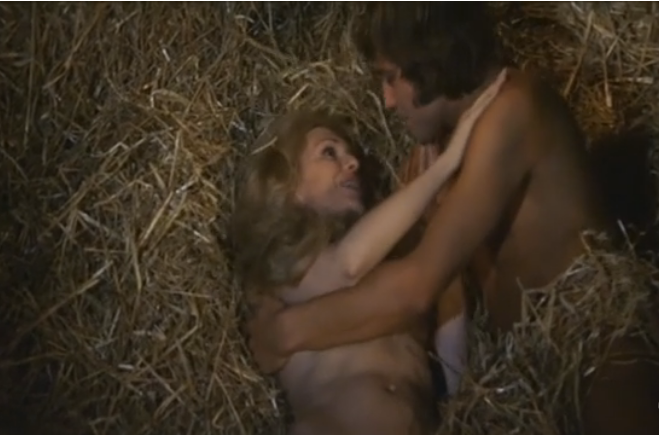
Oh yeah. Two youngsters enjoy some definitely-not-extremely-uncomfortable boning in a barn filled with hay. Oddly, an unbroken ring of hay is sitting on top of him and obscuring his junk. Not so for her, but still, I think I’d brush that shit off under the circumstances.
SEXUAL ASSAULT?
Do you even have to ask?
WHEN ANIMALS ATTACK!
None
GHOST/ ZOMBIE / HAUNTED BUILDING?
No
POSSESSION?
None
CREEPY DOLLS?
No
EVIL CULT?
There’s some pagan-looking dancing at the beginning, but I see no evidence that it’s actually a cult. There’s also a blind fortune teller, but she seems nice
MADNESS?
No
TRANSMOGRIFICATION?
None
VOYEURISM?
Just from the camera
MORAL OF THE STORY
Never live in the late 1680’s in England. Never mind the grinding poverty and constant violence and repression, there’s just too damn many names and alliances to keep straight.