Showing posts with label GHOSTS / HAUNTINGS. Show all posts

Monday, May 1, 2023

Attraction and Repulsion: Last Night In Soho and the Ambivalence of "Problematic" Art


LAST NIGHT IN SOHO (2021)

Dir. Edgar Wright

Written by Edgar Wright and Krysty Wilson-Cairns

Starring Thomasin McKenzie, Anya Taylor-Joy, Matt Smith, Terence Stamp, Diana Rigg


I like Roman Polanski's REPULSION. At the same time, I very much don't like drugging and raping 13-year-olds. The same Roman Polanski who made REPULSION also drugged and raped a 13-year old. And the same 60's and 70's counterculture which produced so much provocative, challenging art I love also produced a culture of hedonistic, celebrity-centered boundary-pushing that made him think he could get away with it. And there's very little space to "separate art from artist" when it's so obvious that the art in question is the direct result of both the specific person and the the specific culture from which it sprang -- and not always even from the more admirable qualities of that person and culture. So what to do with the fact that these things I love are also inextricably interwoven with things I find repugnant -- and not just repugnant, but things that I think need to be actively, forcefully repudiated, not just for abstract moral reasons but because they remain active and dangerous forces in the modern world? 


LAST NIGHT IN SOHO is Edgar Wright's attempt to grapple with those questions, essentially by making a vague REPULSION riff* that very self-consciously brings to the foreground the less savory aspects of the director and the time period, forcing the confrontation between our fetishization of the nostalgic past and the grim reality of that past that we sometimes conveniently overlook. The movie does this in the most literal possible way: by sending a somewhat brittle Zoomer 1960's fangirl (Thomasin McKenzie, JOJO RABBIT) back in time, where she discovers in no uncertain terms that beneath the alleged glamour and liberating social loosening of the era, there was some rampant misogyny** that somehow she never gleaned from a lifetime of consuming an apparently unadulterated diet of nothing but 60's media. (Not to be an asshole, but, like, the first thing she sees in 1965 is a huge marquee for THUNDERBALL, a not-particularly-obscure film which, uh, has some pretty strong hints that gender equity in 1965 was not exactly up to the standards of today. It kind of makes her seem like an idiot for being surprised, but as we will see, being an idiot is at least a pretty consistent character trait for her). So it's basically MIDNIGHT IN PARIS if it was in any way self-aware. 


This is all reasonably successful, as far as it goes, but it's also a little disappointing it doesn't go further. For a movie taking aim at such a fraught topic, its insights are ultimately pretty shallow and prosaic. At the end of an extremely unrushed 116 minutes (including an entire opening act that is almost wholly useless deadwood), the only thing the movie has been able to articulate with any clarity is "boy, there sure was a lot of misogyny in the 60's, huh? But those clothes and pop songs sure do rock!" an observation which is not only a little underwhelming as a central thesis, but one which has already been fully explored by the 50-minute mark (which sounds like it's late in the movie but, in fact, marks the first glimmering of any actual conflict -- I told you it takes a long time to get going!) and will not be expanded upon a single iota during the film's remaining 66 minutes. 


This disappointingly banal answer to the movie's rather more complicated questions is not just reflective of a lack of intellectual rigor, though it is that too, but is also the inevitable result of Wright's stylistic choices, which have the effect of limiting any possibility that the film might expose something genuinely revealing. The problem is that in trying to explore our perception of the past, the movie never creates a real, tangible place. It's all as blunt and exaggerated as possible, presenting the 60's alternately as a giddy fairy-tale fantasy or a cartoonish nightmare, and consequently never really interrogating its central dilemma with any nuance. In theory, the movie probably thinks it's trying to balance our cozy nostalgia with harsh reality, but since both "good" and "bad" versions of the past are ultra-stylized caricatures, it never really feels like a search for truth, more like a battle between two opposing and equally phony reductive fantasies. 


In reality, the 60's wasn't just one thing; it was a complex, sprawling era that looked very different depending on where you were, who you were, and what you wanted, and the movie can't really explore it meaningfully when it presents the past in such starkly black-and-white terms. And because both visions of the 60's are so patently disconnected from any kind of real lived reality, the movie really struggles to link the dark side of the the 60's to the continued issues of the real-world present (in fact, I'm not even sure it's trying to, which is a serious issue for a movie that so strongly wants to posit itself as a moral arbiter). Bizarrely, the script places its only blatant modern-day misogyny at the very start of the movie (there's a very effective early sequence where our protagonist gets stuck in a cab with a sexually threatening driver), and then, content that it has established the present day as thoroughly unpleasant, sends its heroine back in time to her idealized 1960's, only to gradually disillusion her of the idea that they were such a great time for women. But wait, did she (or anyone) really think the 1960's were the halcyon days of sexual equality? This ordering of events has the strange effect of sequestering the problem in the distant past, and centering the movie's conflict on re-framing our images of history rather than seeing misogyny as a long-running continuity that stretches through the past into the present. Indeed, it almost makes the issue of misogyny itself independently unimportant, a mere stand-in for the ways in which we unwisely idealize the past, rather than an important topic in its own right (which would be fine if the movie had a lighter touch, but I seriously doubt that's what it thinks its doing, given how hard it pushes its themes of female persecution).  


And if its vision of the past more generally is more baroque fantasy than honest reckoning, its portrayal of actual misogynists is even worse. There are only two type of men in the movie: venal, despicable monsters or endlessly sympathetic saints (ok, there's only one of the latter), which is a thoroughly unhelpful way of looking at things. If it were that simple, it would be no problem, would it? One would think that a movie with Polanski so thoroughly on its mind would be more aware that misogyny is much more complex than the one-dimensional mustache-twirlers depicted here. After all, REPULSION, ROSEMARY'S BABY, and CHINATOWN, just to name a few Polanksi movies, are all acutely aware of women facing various kinds of misogynist violence and dismissal, and indeed are all rather more sensitive and closely-observed in their implied critique of the patriarchy than LAST NIGHT IN SOHO ever is. These movies suggest Polanksi enjoyed a more-than-superficial perceptiveness of women's exploitation at the hands of men... and yet, in the end, he was more than willing to perpetuate that exploitation himself, and to this day seems stubbornly insistent on rationalizing his actions rather than introspecting about them. That's the kind of misogyny that's truly insidious; LAST NIGHT IN SOHO, in its search of signifiers more than genuine provocation, has eyes only for the easy, obvious villains, who would have been roundly condemned by most of society even in the 1960s. What good does that do?


So as a reckoning with our relationship with history, and as a reckoning with real-world misogyny, the movie is well-meaning but depressingly superficial considering how effortful it is. But its more interesting angle is a more complicated one. By being both a tribute to and a tacit criticism of Polanski in particular and exploitation horror in general, the film isn't just reminding us of the dangers of blind nostalgia, it's openly asking the question what does it mean that we are drawn to art built around some extremely dubious morality, often made by some extremely dubiously moral artists?


Between this film, INCIDENT ON AND OFF A MOUNTAIN ROAD, and HOTEL FEAR, I seem to have stumbled onto an unexpected run of quasi-horror films which are very self-consciously dedicated to the subject of women's' suffering at the hands of men who view them as objects upon which to act out their own desires and insecurities. Given the horror genre's --let's say uneven-- track record on misogyny, there's a level of auto-critique inherent in threading this theme into a genre movie at all, and consequently, when you're watching them there's the implicit understanding that these films are intentionally trying to right a wrong, to address the genre itself by reframing the conventional narratives in a way that challenges our assumptions. That they attempt to do this through essentially the same tools as a more traditional horror movie is at least theoretically provocative, particularly given that all three were directed by men (and with only one female writer between them, in this case co-writer Krysty Wilson-Cairns [1917, THE GOOD NURSE]). 


This in turn requires a certain level of meta self-awareness on the part of the film and the audience; we need to understand that the point here is to undermine our expectations about the way the genre will treat its female protagonists, and to do that we need an implicit understanding of the way female suffering has traditionally been used in the genre. After all, depicting female suffering is hardly novel in itself; even the most horrifically misogynist genre works traffic in images of violence against women that are at least nominally sympathetic (since that sympathy is necessary to drive narrative tension). The difference between standard horror and these more introspective efforts is supposed to be in empathy, in the humanity the film grants to its suffering women, and the degree to which it is able to contextualize their fictional suffering in a way that implicates, or at least interrogates, the complicity of the viewer, making for a premise that is necessarily involved in a conversation about the genre more broadly, and the characteristic assumptions it makes about how we will interpret screen violence against women. 


That kind of self-awareness is not necessarily a shortcoming; there is, at least, something kind of perversely interesting in HOTEL FEAR's profound awareness of how threatened the protagonist feels to have men constantly lusting after her, while at the same time the camera constantly lusts after her too -- and of course this tension can only come from a director who feels both concerned about the implicit ethics of exploitation cinema and drawn to its earthy thrills. Although obviously it would be valuable to have more female voices expressing their gendered experiences with male violence articulated vis-a-vis the conventions of genre expectations, men just as obviously need to be part of this conversation too, especially considering their oversized role in both perpetuating real-life violence and creating and supporting violent art which frequently dehumanizes women (if not outright fetishizing violence against them). The question becomes, then: what does it say about us that we gravitate to art which often presents suffering --and primarily female suffering-- as entertainment? 


As a quick look at my viewing history should make clear, I don't believe violence in art is equivalent to real-life violence, and I don't believe depiction is inherently endorsement. And in fact, believe isn't even the right word; I think there is overwhelming evidence that, at the very least, antisocial media does not directly produce antisocial viewers (if it did, I would surely be a serial killer by now). But I don't think it's responsible to simply brush off antisocial film as harmless fantasy, either. Screen violence and real-world violence are not directly linked, but they are intertwined in slippery, nebulous ways that deserve hard scrutiny, at the very minimum simply because violent art makes it very clear how vulnerable our brains are to uncritically interpreting stories through the framework a careful storyteller lays out. That, at least, should have profound real-world implications, because it's not only movies that seek to carefully frame stories to subtly delineate who does and does not deserve our empathy. If a movie can get you to laugh at a woman who gets horribly butchered, a news story can too. 


Still, I think that asking how stories affect people's behavior is not the most productive direction from which to approach this topic. Rather than asking "what does art do to people," the question should be "what do people take from art?" A subtle distinction, maybe, but a vital one. Fantasy, and even (and maybe especially) antisocial fantasy, is not inherently dangerous; indeed, I think it is foundational to the experience of being human. But we start to run into more trouble when we let particularly compelling stories begin to dictate the terms of reality for us, and begin to forget that stories --all stories, fictional or not-- are always fantasies, and we're most vulnerable to uncritically embracing the fantasies that are sold to us in the most insidiously seductive style, with the most flattering framing. This has more to do with the inherent psychological landscape within the viewer than within the art itself; the movie is an inert object, but the interpretation we apply to it is an obscure and abstract process of internal storytelling, whereby we synthesize all our understanding of the world into a prism that refracts the sounds and images into something with meaning. Consequently, the content itself isn't something which acts upon the psyche so much as something to be acted upon by the brain's endlessly complex pattern-seeking machinery. A healthy brain has the tools to establish context, letting us interpret potentially horrific content through the conventions of fantasy, and not as something which needs to be literally reflective of reality, idealized or otherwise. An unhealthy brain, of course, may struggle to do this, with potentially disastrous real-world consequences. But then, discerning how constructively your brain is processing things is not always an easy task.


Self-awareness, then, is the key here; an honest accounting of what we're drawn to about antisocial art, and a vigilance about the ways it may be very subtly strengthening our unquestioned assumptions in way which make us less empathetic and less humble about life's infinite nuance. In that sense, I think antisocial art actually becomes incredibly valuable: the fact that we're drawn to it is a good reminder that we are, in fact, vulnerable to exactly the kind of nastiness it depicts. Nevermind REPULSION or PIECES or whatever, the very powerful personal attraction I feel from the odious charismatic chauvinism of THUNDERBALL's Sean Connery is a pretty powerful reminder that I have it within me to at least tolerate, if not outright enact, some ugly macho bullshit. And I don't even know that it's such a terrible thing that I do. I don't know that I'd want to root it out even if I could -- that little bit of nascent macho asshole helps me understand the world a little better, helps me glean some insight into men who more overtly embrace that ethos, who I may not like or respect, but with whom I have to share a planet and a culture. I don't think being a good person means stamping out every last vestige of temptation in one's soul, it just means acknowledging that those things are there, and they're part of you... but mostly not a useful part, and certainly not a part that should be handed the reigns in any unchecked way. But to guard against that, you need to clarify what ugly impulses inside you need to be guarded against in the first place, and that means an honest accounting of why we're drawn to create and consume art that reflects the darker aspects of human nature in the first place.


That, in my view, is Polanski's chief fault, and the one that LAST NIGHT IN SOHO misses, much to its detriment. He understood --and better than Wright does, I think, or anyway was better at depicting it in his movies-- just how oppressive and dehumanizing the patriarchy could be to women. He just refused to see it in himself, refused to see that even in his movies, despite --and in parallel to-- their obvious (and I believe genuine) empathy, there's also a subtle sort of sadistic pleasure they take in tormenting their female characters. In ROSEMARY'S BABY (spoilers for that movie) the Devil drugs and rapes the protagonist in one of the most horrifying violations in all cinema. Nine years later, Polanski himself did the same thing, yet he never saw himself as a Devil. Maybe if he'd been able to introspect just a little deeper about what that scene stirred in him, why he made it the way he did, why he was drawn to it at all... well, we'll never know. At any rate, I don't think Polanski was possessed of a uniquely deviant psyche (the fact that Wright and I enjoy his movies so much suggests we have more than a little in common with him), and after all, he spent much of his life as a victim himself (of the holocaust, and later the Mason family, just to name two egregious examples). But when it really mattered, he couldn't, or wouldn't, recognize that he had become the victimizer.


Still, although it didn't seem to help Polanski, I think there is value, and perhaps great value, in making and enjoying antisocial art. Far from seeding innocents with evil ideas, I think it helps people --most people, anyway, myself included-- connect with their darker sides, acknowledge them, maybe even indulge them a little, and consequently become more self-aware than they would be if they had to encounter these darker urges for the first time in the real world, in the heat of the moment. Of course that's not always the case for everyone, and we would be negligent to dismiss the people --a minority, I think, but who knows?-- who lack the tools or interest for self-reflection, and instead simply absorb the fantasy, use it to structure and validate their own antisocial internal narratives. This is not a problem lightly ignored, but at the same time I think our response has to start with the people in question, not with the art they misuse. People who lack the sophistication to introspect and distinguish fiction from reality are going to be a problem no matter what, even if we were somehow able to so studiously censor their media experience that they received only the most utterly anodyne, pro-social narratives. Fostering introspection and media savvy is simply a good idea all around, for everyone -- after all, it's not like deranged psychos are the only ones vulnerable to letting a manipulative fantasy subtly strengthen their biases and assumptions about the world. And indeed, I think films like the ones I'm talking about here, that encourage (or even require) a kind of meta-intercourse with our perceptions about genre and the assumptions it rests on, may be helpful, perhaps even necessary, to shape new generations to be more mindful of the ways in which they interact with media.   


...But probably not LAST NIGHT IN SOHO specifically, though, because I'm sorry to say that I think the commentary here just isn't really any good. I appreciate that Wright and co-writer Wilson-Cairns are trying to grapple with these issues, but unfortunately the movie simply never manages to satisfying address (let alone answer) its own questions, either about the dangers of nostalgia or its ambivalence about enjoying morally suspect art by morally suspect artists. To wit: though this is all ostensibly some sort of mystery-horror thing, the moral arc of the movie (or lack thereof) is best summed up by a dress. The protagonist, a fashion student, creates this dress after being inspired by the aesthetics of the 60's, but then freaks out and tears it up after learning that the 60's were actually not so great in some ways. But then at the end... she just happily goes back to it. Why? It's not like she experiences some great character growth which helps her find a healthy perspective on the past. She just flailingly vacillates between complete rejection and blithe acceptance, never meaningfully taking stock of what is so attractive to her about this resurrected signifier of the past in the first place, and consequently unable to grapple with the reasons for either her rejection or reconciliation with the style. Once again, the movie seems utterly unable to actually engage with the the worthwhile issues it raises.


And that's a big, big problem, because it's even worse at doing the other stuff it's ostensibly trying to do, namely be a compelling mystery and horror movie. It's barely a horror movie at all; its sole horror image, of a group of faceless ghostly men, is not utterly without merit, but any potency it ever possessed is quickly dashed through merciless repetition (I'm not joking when I say there's only one horror image in the movie) and by being presented with confounding literalism, despite how stylized most of the rest of the movie is. And as a mystery, it's even more of a dire failure, hanging its entire whodunnit premise on shamelessly withholding key information and in several egregious cases outright lying to the viewer, and beyond that utterly crippled by a protagonist who's as frustratingly incompetent an investigator as I have ever seen in a movie. 


How incompetent? Her entire campaign to "solve" a murder she saw in a vision consists of what looks like an hour or two of fruitless library research, after which she runs away and never again makes the slightest attempt to turn up any clues (the only other proactive step of any kind that she takes is to go to the police and angrily demand they go solve the murder for her, oh, except she doesn't know the names of anyone involved or when it happened or have any relevant details because she saw it in a dream, and the movie acts like the cops are being some real macho assholes for not taking her seriously). If this were any other movie, I would have no choice to but interpret a female character this inept and hysterical as a shamelessly regressive stereotype of helpless feminine fragility. Obviously that's not what is intended here, but the mystery plotting is so lazy and haphazard that it's just kind of where we end up anyway. At one point, she accuses someone of being the murderer, for all intents and purposes, entirely on the strength of his being the one apparently pointless male character who is suspiciously played by a famous actor. There's literally no other reason to suspect him of anything, she has no evidence and doesn't even know his name or anything else about him except that he lived in Soho during the 60's. This should be roundly embarrassing, but the movie is so self-congratulatory about its feminist bona fides that it tries to play the fallout of this incident as a big shocking twist rather than evidence that its protagonist is a spasmodic twit. Yet another modern movie content to simply tell us it believes in strong women without actually making the effort to create one. 


And for a very performatively feminist movie, a movie which, indeed, sets itself very explicitly to the task of condemning the history of misogyny in genre movies, it's a huge problem that the female lead is such an incompetent, helpless baby. She knows, for example, that she gets psychic visions from time to time. These can obviously be quite disruptive and upsetting, but at the same time she knows this happens, she's lived with it apparently all her life and knows they're just visions and can't hurt her, and yet she just simply cannot restrain herself from screaming and freaking out as though this were really happening, at one point almost accidentally murdering an innocent bystander in her panic (!) and at another almost getting her one Black friend arrested, and at no point seeming to realize it's possible, and lo!, even desirable, to just grit your teeth and maintain some composure so that you don't look like an utter psychopath. Haley Joel Osment in THE SIXTH SENSE --a literal child-- does such a vastly better job keeping his cool, while seeing objectively more upsetting things, that you can't help but feel like LAST NIGHT IN SOHO actually has very little real respect for its female characters after all. It does not speak well of this writing, to put it lightly, that I can think of a dozen tougher and more complex female roles from actual 60's movies --and not even super-progressive 60's movies-- right off the top of my head. If you need to make your heroine this wimpy in order to make the patriarchy seem mean, maybe misogyny just isn't really much of a problem. 


And if empathy is the missing ingredient in so much of horror cinema, what does it mean to have not one, but two female protagonists here who are basically empty nothing characters defined only by their naiveté and their helpless suffering at the hands of men? Without interiority or autonomy, their suffering is really distinguished from standard genre-movie female victimhood only by the movie's hesitance to make any of it entertaining, which isn't really an improvement in my opinion. And ultimately even if they were compelling female characters lucidly decrying the patriarchy, it would all be undone by the excruciating final act, which makes utter hash out of even the bland, boilerplate anti-misogyny themes the movie has been loudly declaiming up to that point (the twist about the killer's identity should, in itself, be disqualifying for any movie that wants to claim it's feminist, and the movie's completely off-the-rails final moment is so psychotically misjudged that I can only interpret it as a tacit approval of serial murder). If one were to be charitable to the point of active ignorance, I suppose you might be able to make a case that the climactic twist is attempting to complicate the movie's otherwise fairly boilerplate themes, but considering how badly it already fumbles the boilerplate, you can imagine how deftly it handles "complicating" it. It's almost audacious in how stunningly misjudged it is, but unfortunately also too dull and hectoring to quite manage to to feel exciting in its fearless willingness to jump completely off the rails. 


So does that mean LAST NIGHT IN SOHO is completely worthless? Surprisingly, no! It's just worthless at being a meta-commentary about genre and nostalgia or being an entertaining or effective mystery or horror movie. Fortunately, although it expends a whole lot of very trying runtime on those things, they're not really what it's about. No, what LAST NIGHT IN SOHO really is, for whatever reason, is a ravishing throwback musical-fantasy, minus the actual "musical numbers" per se. Wright may like REPULSION well enough, but self-evidently what really gets him excited is gaudy, gimmicky music videos, and he indulges this fetish every single moment he gets the chance to, in the process turning out some genuinely ravishing sequences. The film's big signature setpiece, tellingly, has nothing to do with murder mysteries or faceless specters; it is a giddy one-take dance sequence where, using mirrors and slick choreography, McKenzie and Anya Taylor-Joy seamlessly double each other in-camera in a breathless whirlwind of joyful movie magic. This has not much at all to do with anything thematically; indeed, the whole complicated doubling thing is purely literal, simply reminding us that the two characters are experiencing this simultaneously. But it's also what the film is really about, as opposed to what the tedious script is about. If turning the 1960's into a gorgeous, rhapsodic fairy-tale fantasy is resolutely at odds with the movie's stated intent of an honest accounting of the past, the film is so slick and enrapturing about it that I'd happily give up every scintilla of tedious pedantic theme to keep it. If only the movie felt the same way.
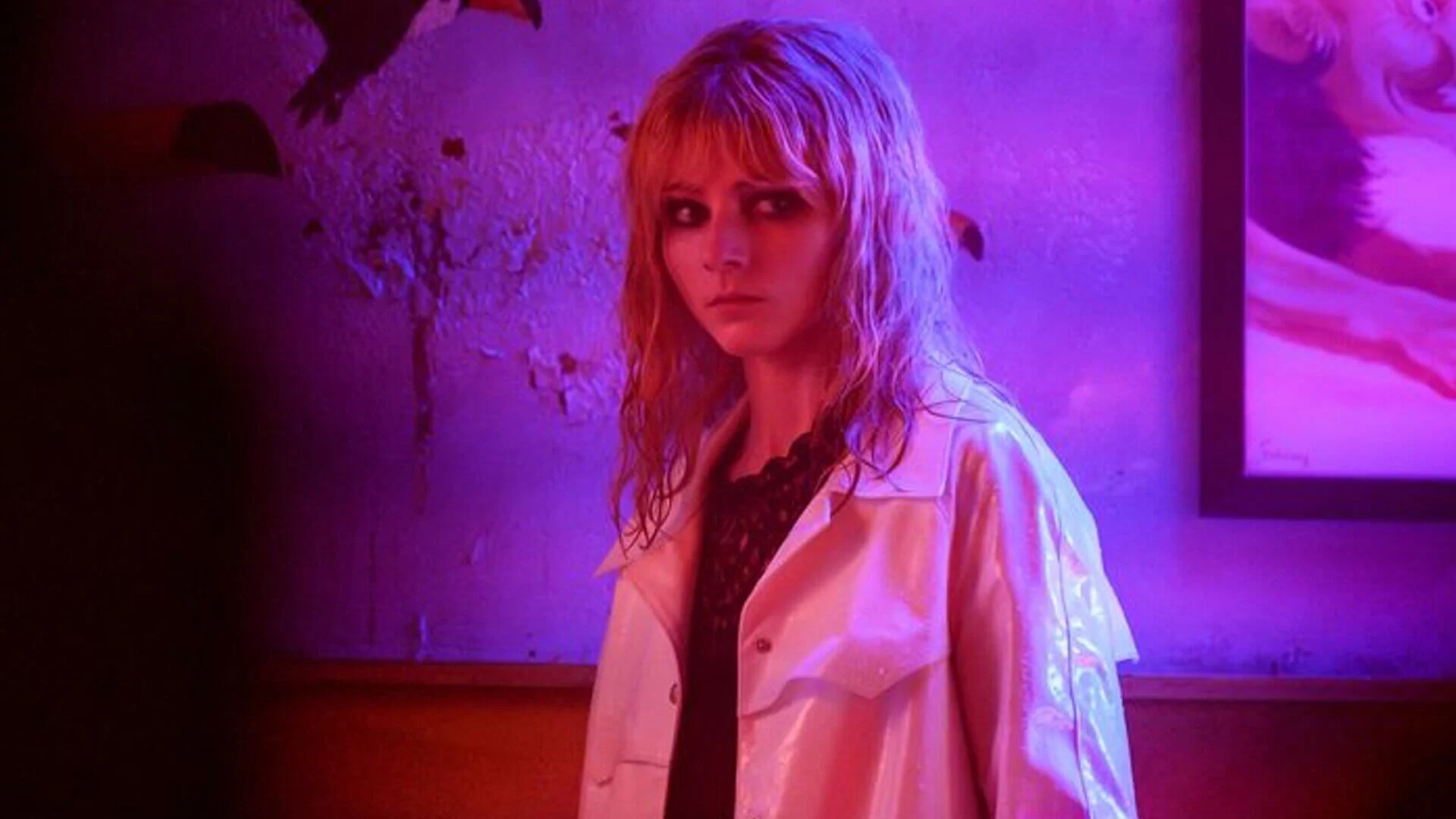

I could never wholly condemn a movie with even one scene as blissfully transporting as that one, and LAST NIGHT IN SOHO has several, which is more than enough for me to ultimately feel glad it exists. And I genuinely appreciate the questions it raises, even if it does an objectively bad job actually grappling with them. But still, it can't help but feel like a real missed opportunity -- a film with style and technique and curiosity to spare, in desperate search of a script that allows those things to flourish. Which is, I think it needs to be said, a pretty apt description of every movie Wright had made that wasn't co-written with Simon Pegg, the one man alive who seems able to channel Wright's obvious strengths as a filmmaker into films that are as structurally sturdy as they are energetic and visually imaginative. I wish LAST NIGHT IN SOHO worked on all the levels its ambition is aiming for, but in the absence of anything else really like it, I'll take what I can get. Ironically, then, this film that wants so badly to try to address the legacy of REPULSION elicits a similar reaction in me (though for very different reasons): I like it... with some key reservations.


* Wright also claimed it was his attempt at a giallo, about which many of the same things could be said. But other than his use of vivid, monochromatic color and maybe some vague gestures towards excessive style, there's less of that in here than I was expecting -- so little that I don't know that I would have noticed it if I hadn't been told to look for it. 


** But nothing else; weirdly, despite having a Black character, the movie has not a single hint that there was any other kind of injustice in 1965 London (or today). Not that every movie needs to or can address every issue, but it does seem odd since the movie is so explicitly posited as a direct cultural criticism.  

Wednesday, November 9, 2022

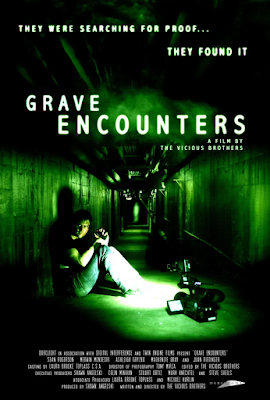
Grave Encounters


Grave Encounters (2011)

Dir. and written by "The Vicious Brothers"

Starring Sean Rogerson, Ashleigh Gryzko, Merwin Mondesir, Juan Riedinger, Mackenzie Gray


The evidence is encouraging that the high-water mark of the found-footage wave is now safely behind us, or has at least receded enough to allow us to take stock of the damage it did when it was fully upon us. Though it never entirely went away after the huge success of THE BLAIR WITCH PROJECT (not the first found footage film,* but unambiguously the genesis of the modern movement, even if it took a few years after its release to really catch fire), my sense is that the conceit make the leap from "gimmick" to "subgenre" somewhere around 2007/2008, which together logged 20 entries I can easily identify, including the first films of the PARANORMAL ACTIVITY, REC, and CLOVERFIELD series (by contrast, wikipedia lists only 26 prior found-footage film total, many of them vanishingly obscure). And it wasn't done growing; I count 19 films in 2013 and a peak 22 in 2014, after which things gradually slowed down without ever completely stopping (wikipedia lists 6 found footage films from 2021, and five so far this year).


GRAVE ENCOUNTERS, our subject today, hails from the thick of it, a time when there was still some excitement about the idea that the format might be used to do new things, although I personally was already a little sick of the whole thing. I never bothered with it at the time, but even though the conceit has lost a little of its vigor in the last few years, it's been a part of every Chainsawnukah since I watched the original V/H/S in theaters during the first one, and one tinkers with tradition at a high spiritual cost. So what the hell, once more into the breach, dear friends.


GRAVE ENCOUNTERS is a very stupid name that does not inspire much confidence, but I'm pleased to say it doesn't quite live up to the worthlessness the name implies. The premise is a simple one: a team of TV hucksters making one of those insipid "Ghost Hunters" type shows locks themselves in for a night in a supposedly haunted ex-asylum, only to find that getting out is not as simple as they might have assumed. Oh, and it's haunted.


The haunting part is the movie's weakest trait; while it's certainly more eventful than the ridiculously whammy-free PARANORMAL ACTIVITY (four years old by this point!) the events themselves are pretty basic haunted house hokum, occasionally good for a jump scare but mostly a bit threadbare (there's a person standing in the corner! Oh no, they turned around and have a scary face!) or just outright silly (there are... uh, a bunch of arms awkwardly reaching out of the ceiling? A lady disappears in a puff of smoke?). Can’t argue with the sturdy efficacy of a black-eyed, bloody-mouthed goon appearing suddenly on the ceiling and chasing you, but it’s not nearly enough return-on-investment to be worth sitting though eons of agonizing improvised circular arguments between the film’s green-faced non-characters. It’s also not something that takes any real advantage of the found-footage format, though by the year 2022 I’ve more or less given up any reasonable expectation that a found-footage film will use the format in any innovative ways.  


Fortunately, it turns out the “getting out is not as simple” part is rather more interesting than the hauntings. See, when you’re in a haunted asylum, the obvious thing to do is just to… leave. And in fact, that’s exactly what our gang tries to do. Only they find that they can’t. Every hallway just leads to more hallways. Every stairwell leads to more stairs. When they finally get to the atrium where they’re sure they entered, the door just leads to more hallways. At one point, we’re told they spent an entire day walking in one direction without getting anywhere. Or at least, one day according to their watches; somehow, the sun never comes up. Days pass. They sleep, they wake, they wander. They’re supposed to be let out the following morning, but morning never comes, and no one ever comes for them. That is kind of scary; the deep wrongness of the never-ending night, of the never-ending hallways, the feeling of being utterly trapped in a cage that has no exit, where basic rules of reality have dissolved until you lack any tools at all to fight back against your captors… that is horror on a very different level. Hell, since I already used the words No Exit, I might as well just say it: it’s existential horror. You can run from a scary ghost. You can’t run from reality itself. If true horror is, to a degree, about making you feel powerless, this is one of the most oppressive scenarios I can imagine, one wherein the rules have been rigged so that no amount of strength or speed or cleverness can save you.


It's a dark vibe, so it’s both a shame and maybe just as well the movie mostly tilts towards headier scares after a while; there’s only so much oppression you can take before things get more depressing than a movie this silly can handle. Still, there’s something here, and it gives the standard-issue BOO! moments a little more punch than they’d otherwise have, at least for a while. Still not enough to really make it worth enduring 95 minutes of annoying people shouting the same thing at each other endlessly in night-vision green (which does add to the oppressiveness of it all, but also to the monotony), and especially not to get to such a silly nothing of an ending. But I’ve seen worse, and was expecting less. When you’re expecting nothing and get a little, one tends to be grateful. Still, a film that’s making fun of Ghost Hunter type shows, even one which is at least moderately more eventful, would do well to remember that at least those shows are only, like, an hour long, and that includes commercials.


* That honor appears to go to Shirley Clarke's THE CONNECTION way back in 1961, with the first found footage horror film apparently CANNIBAL HOLOCAUST in 1980.


Thursday, October 14, 2021

1922


1922 (2017)

Dir. Zak Hilditch

Written by Zak Hilditch, based on the novella by Stephen King

Starring Thomas Janes, Dylan Schmid, Molly Parker, Neal McDonough


If you’ve been hearing a series of rattling thrums growing in intensity over the last few days, I have good news for you: it was just the sound of me revving up the ol’ CHAINSAWNUKAH to carve into another year of horror movies (we’ll return to our Oliver Stone retrospective in due time)! As you perhaps noticed over the course of the last year, my output of long-form reviews has dwindled significantly from the old days when I could count on cranking out a good 50 or 60 reviews over the course of October and November (and usually into December and maybe even the new year). But that doesn’t mean I’m not watching these turkeys, it just means that I no longer force myself to try and drag 1500 words out of some turd zombie flick that even its original makers didn’t think about that hard. Instead, I’ll write up a significantly shorter –but no less witty and incisive!—capsule review for the ol’ letterboxd account. If you don’t follow me on letterboxd, well… why the heck not? Same great content, more digestible portions. Everyone wins! It’s like a SAW movie except instead of a convoluted death trap with a specious moral lesson, you’re just given the choice of trudging on with your dull, empty existence OR being privy to my enlightening opinions on, say, BACKDRAFT 2 (yes, they made a Backdraft 2. Yes, William Baldwin’s back!). And because they’re shorter than these long rambles on the blog, I can crank ‘em out like Stephen King!


Speaking of which, we begin our long-form journey today with one of the many, many, many things King has cranked out. To give you a sense of just how god damn many movies have been adapted from (let alone ripped off) his even more voluminous bibliography: seven days into the month, I’ve already watched three without even trying. And 1922 THE MOVIE (based on his 2010 novella of the same name, which appears in his collection Full Dark, No Stars) is among the more rarified company of movies adapted faithfully from King’s work. That means there’s lots of Stephen King-y-ness in this one, for better or for worse –and while that’s not by any means a categorically advantageous feature, I think in this particular case it’s for the better. Part of its advantage here is that you can count on Stephen King to embrace simplicity. Where modern media has increasingly become the exclusive province of high-concept, hyperactively overplotted, narrative-driven genre fare, King retains a zen-like ability to focus on the details of a simple premise. Like GERALD’S GAME or THE NIGHT FLIER, 1922 THE MOVIE doesn’t have a lot of story, and in fact this can’t even boast an outré premise like those two; basically, a farmer murders his wife and then gradually starts to feel haunted by what he's done, and that's it. But the meat of the thing is in the feel of it. It's simply a closely-observed but not necessarily realism-driven portrait of this particular guy, eager to get us inside his head and simply let us sit there as King and script-writer/director Zak Hilditch (RATTLESNAKE) run him through the ringer to see what will happen.

Now, about that farmer: I think it's probably necessary to preface this by noting that Thomas Jane (BOOGIE NIGHTS), in portraying this character, goes all in on a country accent just this side of Foghorn Leghorn, very much playing with the fire of unintentional comedy. I think he's trying to sound like Tim Blake Nelson (who they probably should have just gotten for this role) but he lands dangerously in the neighborhood of SLING BLADE. The accent is not, like, imaginary; I mean, it's not like Ewan McGregor or somebody just making up an accent which has never before come out of a human. And he’s at least consistent with it. But it's a lot of accent, and it's pretty jarring to hear it coming out of Thomas Jane, especially if you have ever heard him talk before. There are certainly some people who are not going to be able to make it past that basic fact, especially since he's narrating and therefore talking through almost the entire runtime. But although your results may vary, I eventually got on board with it.


The accent is maybe even appropriate in this case, because Jane's performance very much rests on a kind of faux-folksiness which is at the core of a lot of King's stuff, and is the key to understanding how to read him. King is not a journalist, and doesn’t seem to draw heavily on his own observed experience. He isn’t interested in interviewing farmers and spend six months working on a rural farm to get the details right. He’s interested in a simulacrum of simple rural America which has little to do with lived reality, but everything to do with a strand of romantic American storytelling that he and his work are steeped in. It’s not realism, but it’s certainly not frivolous imagination either; the storybook-simplicity of the protagonist (complete with broad, nonspecific “country” accent and omnipresent overalls) allows King to slip past reality altogether and tap into the fundamental tropes that underlie our cultural stories, and, grounded in fact or not, inform who we are. This gives his work a kind of mythic quality, and turns 1922 THE MOVIE away from the gritty contemporary docu-realism which is so much in vogue in the age of the digital camera --with its unflinching crispness and ability to capture real-world lighting, potentially evoking the world of youtube—and towards something quite different, a dark folk tale which uses its hacky artifice to draw turbulent and troubled emotions to the surface from the deep world of the collective unconscious. Farmer Wilfred* James doesn't strike me as someone you could encounter in the real world (even in 1922, which is when the story takes place, and I suppose as good a title as any) but he definitely strikes me as the very quintessence of the small-time farmer in American fiction. He is mythic, archetypal; the simulacrum of a certain subset of real Americans as filtered through a couple hundred years of American cultural soup.

Which makes this a portrait not so much of a person as of a certain strand of brittle Americana. Farmer Wilfred seems at first to embody a kind of paradigmatic American ideal. He's hardworking, humble, practical, quiet, skeptical of pretension and scornful of faddish frippery. The 'Simple Kind Of Man' that Lynyrd Skynyrd sang about, or, more ominously, the "forgotten American" that Trump idealized. But the unpretentious country farmer is only admirable until up to a point; when his wife
(Molly Parker, THE WICKER MAN 2006) brazenly challenges the small authority he does possess, something rather vicious and aggrieved rises to the surface --rather easily, in fact-- and before long he's convinced himself that murder is his only option. And crucially, he lets us know that the convinced himself is doing a lot of work here; this isn’t the story of a good man who makes a foolish mistake when backed into a corner. This is the story of a man who uses the false pretense of being backed into a corner to give himself license to unleash the violent retribution he’s been nursing all along. Who is able to tell himself a story about his own victimhood which is convincing enough to validate his seething anger and justify lashing out. Even with the accent, Jane locates the bitterness and impotent rage in this quiet agrarian, lets us see how his admirable qualities subtly transmogrify into monstrous ones in ways that even he --heck, maybe especially he-- doesn't understand. And indeed, it is his very inability to unpack his feelings that is at the root of this transformation.


I’m not sure what, if anything, was going on in King’s world in 2010 that made its way into this story, but in 2017, and especially 2021, one can hardly help but read this as a commentary on the roiling cultural tension of modern America. There’s a reason I felt compelled to name-check Trump back there; Wilfred James reflects a rigidly conservative strain of American thought. He is solitary, traditional, fiercely resistant to change (he doesn’t even have indoor plumbing) and contemptuous towards outsiders, especially the despised ‘city folk.’ The whole inciting incident, in fact, arises from his wife’s desire to sell their land and move to Omaha, Nebraska, a place he is convinced (with no discernable first-hand evidence) is a land of the debased and fallen. He, on the other hand, is dead-set on passing the farm down to their son (Dylan Schmid, HORNS), who is mostly ambivalent about carrying on his father’s lifestyle but is sufficiently besotted with the neighbor’s daughter to allow himself to be manipulated into becoming an accomplice. It’s telling that the son is only tangentially interested in staying on the farm; despite Wilfred’s empty assertions that he’s acting on behalf of his kid, we know it’s empty posturing. It’s not about misguided paternal concern, it’s about standing athwart history, yelling ‘Stop!’ He simply wants things to stay the same forever, even after he’s gone, and he’s willing –eager, even-- to kill anyone who pushes back on that idea. It’s about control, about feeling powerless in the world and consequently pathologically defensive about his dominance among the few people he can control. But that just means he’s going to lose his soul first, and then lose everything anyway.


But I hasten to add, although the film is very much about this, it’s in no way an overtly political or didactic film. It’s simply a dark character piece, and a pretty exaggerated one at that. But that doesn’t mean it can’t still get at something interesting and valuable about the real world. I don’t want to overstate all this, but it just seems to me so intrinsic to, and yet so often ignored about, the reason we tell stories in the first place. The movie, unlike so much unbearable art from the last decade or so, has no interest in demonizing this guy or scoring cheap culture war points. It has no moral desire to condemn farmer Wilfred, who is, after all, a fictional character, and indeed, by adopting his perspective it even provides us reason to understand him, even sympathize with him. His wife’s snide imperiousness, layered with a subtle layer of condensation, is pretty abrasive, and it’s easy to understand why she is so loathsome to him, just as Parker’s excellent performance gives us all the evidence we’d need to re-imagine this story from her perspective. Of course she’s a little vindictive towards this stifling, selfish hayseed – but this is his story, not hers, and we need to understand his perspective to understand why he responds in the way he does. By simply placing us in the perspective of this particular character, we learn something about him, and, by extension, others who idealize the things he represents, and, to a certain extent, ourselves, since there’s certainly a part of us who can understand him. This is, I suppose, what people mean with the phrase ‘everything is political,’ in the sense that politics is just the expression of the way we want to organize the world, and the values that we believe should guide that organizing. But to my mind, this is a far, far better method to get at these underlying socio-cultural issues through art than the recent spate of genre movies which seem so eager to simply state the moral aloud and sit back and wait for the congratulations to pour in.


Which is good, because some thoughtful character work is all you really get here. There's a little sprinkling of gross corpses and ghosts and stuff (which may or may not be real, and it's such a small part of the film that it doesn't really matter which), but the horror is really more psychological. It's not a film about guilt, exactly, it's a film about decay, about everything --physically and spiritually-- in our protagonist's life falling apart the harder he tries to hold on, mostly because he's trying to hold on, whether or not he realizes that last detail. It wants us to go on this journey and simply experience it all, rather than drag the story this way or that in service of perceived genre goods. Which does not in itself sound like something that would make me happy; over the last few years, horror, or at least any horror with real ambition, has gradually just become drama with spooky music, not necessarily to the benefit of either genre. And you could very reasonably level the same criticism against 1922, which offers very little genre content you could point to; there’s probably less ghost content than Hamlet, which I doubt anyone would want to defend as a horror story. But again, the film’s willingness to go broader and more archetypal serves to its advantage; as horror has become drama, drama has increasingly become undramatic, focusing on intimate details of small stories, shrinking up into an actor’s exercise in minimalist realism. Something like 1922, with its baroque gothic affectations, neatly avoids that trap and simply delivers big, operatic, unreserved emotions. Not histrionics or camp, and not without nuance, but still far more extreme and outrageous than any self-respecting drama today would attempt, and it’s away to get away with it (assuming you think it does) by virtue of its willingness to announce itself as a horror story rather than a drama, freeing it up from the dull confines of naturalism to churn up some tumultuous human emotions into a larger-than-life frenzy which is more interested in the overwhelming way things feel than the mundane way they are.       


And in its unhurried way, it's pretty good at getting those emotions rolling; the performances are uniformly quite fine (as long as you can get on board with the accents), broad, certainly, but textured enough to feel specific and meaty, and the atmosphere is bolstered by some surprisingly nice cinematography by Ben Richardson (BEASTS OF THE SOUTHERN WILD, WIND RIVER), who clearly knows what he's doing in using the digital photography to get a lightly high-contrast, unobtrusively oversaturated effect which feels highly appropriate for the story's vaguely mythic affectation (making this a rare Netflix film which doesn't look implacably chintzy). The music, which I regret did not take much note of at the time, is apparently by Faith No More frontman Mike Patton, who, wow, I now see scored THE PLACE BEYOND THE PINES also, which is weird. 


One might reasonably wish for a film this low-concept and generally lackadaisical about incident to get a little more aggressive with the style than Hilditch seems willing to do, but the drama is sturdy enough to make it consistently compelling, and sometimes it's maybe kinda nice to have a small-scale dark drama which has faith enough in King's keen eye for little details and complications which add character that it doesn't need to overthink things. I can definitely imagine this material feeling unendurably thin if you catch it in the wrong mood, but it mostly worked for me. Farmer Wilfred, you may be a murderous, conniving, unbalanced regressive, but I enjoyed spending this time in your head. Next time, though, maybe let’s do some kind of gimmick killer thing, huh?


* Everybody calls him "Wilf," which is weird; is it normal for people named "Wildred" to go by "Wilf"? "Wilf" sounds like the noise a dog makes when it smells something it doesn't like.


Friday, October 16, 2020

The Bridge Curse


The Bridge Curse (2020)

Dir. Lester Hsi

Written by Keng-Ming Chang, Po-Hsiang Hao

Starring Janine Chang, Cheng Ko, J.C. Lin, Summer Meng, Vera Yen, Wan-Ru Zhan


            Holy moly, it’s a movie from the year of our lord 2020! I know you probably associate this blog with endless, overwritten blarney about terrible, justly obscure low-budget horror drivel from the distant past, but here’s one young enough to not even realize the unholy aberrance of the hellscape it was born into. Granted, it’s still terrible, justly obscure low-budget horror drivel. Wouldn’t want to ruin my perfect streak with something halfway decent.


            You may wonder what brought me to this particular bit of terrible, justly obscure low-budget horror drivel. The answer is: nothing in particular. It’s not like I got a tip that it was a hidden gem, or it had an irresistible title, or awesome poster art, or that I had any reason at all to think it would be remotely watchable. In fact, I had every reason to assume it would be dismal garbage. October is a purely volume enterprise at this point in my horror career. I mean, you watch as many horror movies as I do, and it doesn’t take that long at all before you’ve watched basically every single movie which might be remotely good, and even the vast majority of movies which are terrible in some distinct or interesting way. It’s not just that the low-hanging fruit has been plucked; the tree is fucking barren. The only things left to scavenge are the rotted detritus lying around the trunk, eschewed by everyone but the most masochistic addicts. Which is, it turns out, an oddly freeing experience. With no possibility whatsoever of watching anything good, the anxiety of trying to be choosey evaporates, and you can just throw on whatever random garbage happens to roll by in your line of eyesight, and it’s going to be just as good as anything else.


            Or anyway, that’s what I thought when I clicked on THE BRIDGE CURSE. But if that’s true, it bodes extremely ill for the rest of this month, because Jesus Christ, this is the bottom of a very empty barrel indeed. 


            We begin –as I suppose it was inevitable we would—with found footage. Seems that a bunch of Taiwanese college kids are fucking around with a cursed bridge, and you better believe their cell phones are out to incoherently capture the whole thing (one of them even has a fancy camera with a tripod, although, out of what I can only assume to be sheer spite on the filmmakers’ part, we will not be getting any of that footage). Someone walks up some steps in a way which causes the onlookers anxiety. A chair clatters around, all by itself. Spooky stuff. It ends with narration ominously inviting us to examine a faint gray smudge in the top right corner of the image, which it intimates might just be a glimpse of the fabled “Female Bridge Ghost” who is presumably the source of the titular bridge curse, although nobody ever refers to it by that name in the movie. Weirdly, we will almost immediately learn that the faint gray smudge is just an inconsequential camera smudge, so I’m not sure why they bother to emphasize that particular detail right at the get-go. But I’m not sure why they bother with a lot of things.


            For example, I’m not sure why most of the first 20 minutes or so is found footage, but after that we rapidly drop the conceit entirely and everything else is shot conventionally. I’m not complaining, mind you, just… why? I suppose it has to do with the framing narrative, where a plucky reporter (Vera Yen, TAKE ME TO THE MOON) on what I presume is a very slow news day, is researching the story of the female bridge ghost. But then, I’m not sure why they bothered with that, either. It definitely smacks of a production which realized when they finally edited everything that they only had 65 minutes of footage, and had to go back and do some second-unit framing-story filler to get to feature-length. At any rate, we will now be spending a not-insubstantial amount of the runtime watching an actress playing a reporter watching the movie we’re also watching, and narrating the events we are seeing, for what I can generously describe as “no good reason at all.”


gripping, gripping stuff.


            Still, watching a young woman half-curiously flicking through security footage and file folders while narrating aloud the events of the story isn’t substantially duller than the purported A-plot. That involved a group of college students at Tunghai University, Taiwan, who decide to film themselves participating in a “courage test” on the aforementioned “female ghost bridge.” Several reviews mention that this is based on a real urban legend on campus, though I can find no independent confirmation of this fact (the Wikipedia page for the university doesn’t mention any hauntings, although it does note that then-president Richard Nixon spoke at the groundbreaking ceremony in 1953, leaving open the possibility that a different part of campus is cursed by a “Male US President ghost.” Now that’s a sequel I’d like to see!). To the surprise of no one, they quickly find themselves getting picked off by a ghost with a penchant for drowning (I wonder if she knows THE DROWNSMAN?), because, you know, bridge ghost. This is made somewhat easier for the offending spirit by the fact that the students all have a distinct tendency to wander off alone, and also by the fact that for some reason they all live in the “abandoned town,” an decaying, desolate, and completely isolated structure which is, as near as I can tell, maintained by the university solely for the convenience of housing cursed students while the haunting runs its course.


What follows is a thorough and unswerving recital of every single one of the most shameless ghost movie gimmicks in the book (uh oh! The ghost is silently standing behind someone! Now she’s making a ruckus in the bathroom stall next door! Now she’s lurking under your covers while you’re trying to hide!), and absolutely nothing else of any kind. It’s brutally dull going, but at least it’s reasonably eventful, and the film is pretty short. There is not a single beat that you haven’t seen done –and done better—at least a dozen times before, but hey, compared to the Blumhouse hegemony in the US, this is practically fuckin EVIL DEAD, so it could be worse, I suppose. The movie tries to get fancy only once, with a confounding timeline rug-pull near the very end. I’m not sure if this late-movie twist is too mind-blowing for me to entirely grasp, or if it just makes no sense, but hey, at least it’s a thought; nothing else about the screenplay suggests even that low level of ambition, so I’ll take what I can get. It certainly makes more sense than the never-elaborated-upon assertion that the students are for some reason “assigned to the abandoned town.” Wha? Is this a more common part of college life than I realized? Anybody else have fond memories of spending that semester in a haunted, empty dorm building with your five friends and no one else to hear your screams? I too have lived in some grim (and in fact, specifically haunted) off-campus housing, but at least I had neighbors. And no one demanded that I participate in a “courage test.”


Anyway, THE BRIDGE CURSE sucks, but it’s not like it ever tried to claim otherwise. I mean, look at that fuckin’ poster. It’s not pretending to be anything it ain’t. You fuck around with a cursed bridge, you can’t be too surprised when you end up cursed. It’s right there in the name, idiot. Similarly, I’d have to be a pretty big asshole to look at that poster, knowingly click on it, and then complain about getting exactly what I was promised. These guys got a cursed bridge, I got a cursed queue. My bad, this one’s on me. 


CHAINSAWNUKAH 2020 CHECKLIST!

The Man Who Queue Too Much


TAGLINE

The English posters get nothing, but thanks to the awesome power of Google translate I can now confirm that the Taiwanese poster says something to the chilling effect of: “The new topic of the producers of ‘Little Girl in Red Farm’ and ‘Zongxie, adapted from the campus ghost live broadcast event.” Or, in another poster, “Live e-sports! Millions of netizens lose heart to WITNESS THE REAL GHOSTS!”

TITLE ACCURACY

More of a haunted bridge, methinks, but yes, it is definitely a bridge.

LITERARY ADAPTATION?

No, possibly inspired by a true story, or so the tagline would imply.

SEQUEL?

None, but the ending definitely leaves the possibility wide open. 

REMAKE?

No

COUNTRY OF ORIGIN

Taiwan

HORROR SUB-GENRE

Ghosts, J-Horror-ripoff, curses

SLUMMING A-LISTER?

None

BELOVED HORROR ICON?

None 

NUDITY? 

None, although one unfortunate young lady is wearing a very situation-inappropriate midriff shirt.

SEXUAL ASSAULT?

None, although we are told that the bridge ghost was gang-raped, which is a lot of fun.

WHEN ANIMALS ATTACK!

No animals

GHOST/ ZOMBIE / HAUNTED BUILDING?

Yes

POSSESSION?

Yes

CREEPY DOLLS?

Yes, one room in the abandoned campus was obviously used by the … hair styling department? And you better believe the ghost is gonna have a field day with that shit.

EVIL CULT?

None

MADNESS?

None

TRANSMOGRIFICATION?

None

VOYEURISM?

Just of the brief, found-footage variety.

MORAL OF THE STORY

Just say “no” to cursed courage tests. They’re one of the top five killers of students living in the abandoned town.