Showing posts with label MY SADSACK LIFE. Show all posts

Monday, September 30, 2019

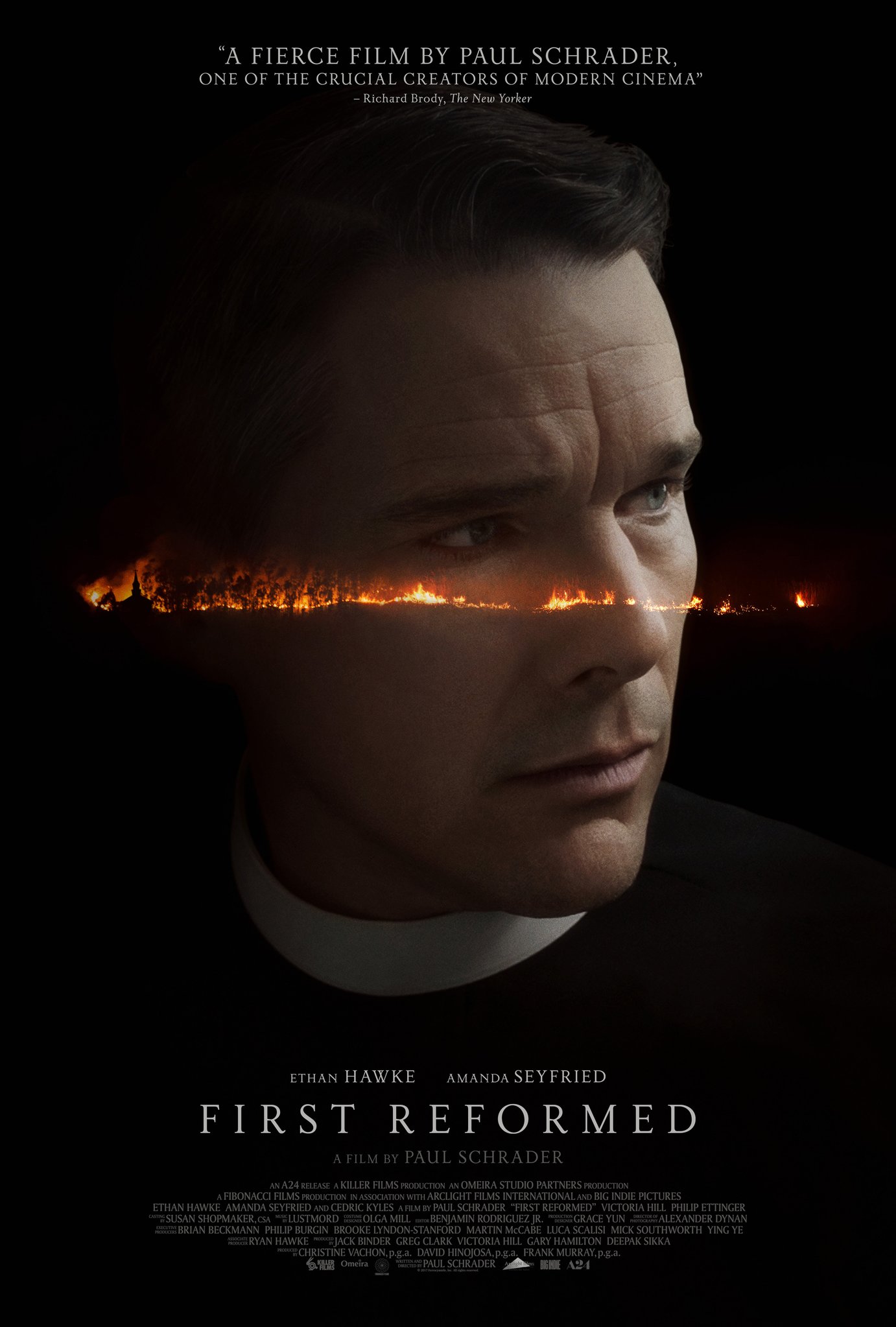
First Reformed

Image result for first reformed

First Reformed (2018)
Dir. and written by Paul Schrader
Starring Ethan Hawke, Amanda Seyfried, Phillip Ettinger, Cedric Kyles
          I honestly don’t know if this is a good movie or not. I think it is; I can definitely pick out things about it which are very finely crafted, aesthetically smart. But frankly I’m just too close to it to be able to objectively talk about it like a piece of art. More than any other movie I can think of in recent memory, maybe more than any other movie I’ve seen since I was a teenager, FIRST REFORMED feels like a movie about me, a movie which captures the world as I see it, which tries to wrestle with the particular horror of modern existence as I experience it. It is as close to seeing my own mind on-screen as I have ever experienced in a movie. If it has flaws, they are also to a large degree my flaws, and if it has strengths, they are to a large degree my own as well, at least intellectually (and the movie is almost exclusively interested in the intellectual). To give it any kind of objective evaluation would be to appraise my own mind, a task which, much as I wish it were otherwise, I am uniquely ill-suited to attempt. Suffice to say, then, that I found the experience of watching FIRST REFORMED absolutely shattering, and, perhaps selfishly, I think you might too. At the very least, if you watch it you might understand a little better who I am. That may not be much of a recommendation, but it is the one thing I can offer with any real certainty.
         I am not, like FIRST REFORMED protagonist Ernst Toller, a priest, nor, like writer/director Paul Schrader, a Calvinist. But I am very much Ethan Hawke. Not literally, of course, but I identify with the actor in a way which is very unusual for me. Despite being an American male of European ancestry, I’m an odd duck in a lot of ways, and don’t frequently see much of myself* in fictional characters. When I do, I tend to see the worst in myself rather than the best (the pathetic, self-sabotaging grifters of BUZZARD, the delusional, desperately needy Chuck Barris of CONFESSIONS OF A DANGEROUS MIND). But in many of Hawke’s characters over the years, I saw at least aspects of my better self that I encountered nowhere else. Being about ten years older than me, he was playing teenagers when I was a teenager, which is, I suspect, the period of life when we’re most apt to look to fiction for versions of ourselves, or at least ideals of what we could aspire to. Suffice to say, at a crucial moment of my development as both a cinephile and a person, Hawke embodied the kind of cool I wanted to be: intellectual, passionate, edgy, troubled. He combined the sort of rebellious, independent spirit that late-gen-Xers like me were drawn to, but tempered with an intellectual seriousness, a restless sense of curiosity about the world and an eagerness to experience it, that I found uniquely well-suited to own sensibility and aspirations. I was never going to be Sylvester Stallone, but cultured, thoughtful Jesse Walters from BEFORE SUNRISE? Maybe. Hopefully. Someday. At any rate, here was a character, and an actor, in whom I could see, if not myself, at least the self I wanted to have.
         And these years later, I still find a lot to admire in the actor. He’s had an interesting career, eschewing the easy mega-stardom that was probably within his reach in favor of more eclectic roles, from Richard Linklater experiments (BOYHOOD, WAKING LIFE) to gritty crime flicks (TRAINING DAY, BEFORE THE DEVIL KNOWS YOU’RE DEAD) to straight-up genre fare (DAYBREAKERS, SINISTER), and in all this time I’ve never once seen him phone it in. Highbrow, lowbrow, he is a rare actor you can always count on to give 100%, even in something as ridiculous and schlocky as 24 HOURS TO LIVE or the MAGNIFICENT SEVEN remake.

Image result for first reformed        
I bring all this up for two reasons: first, as far as I’m concerned, it’s always a good time to remind the world that Ethan Hawke is a God damn national treasure. Second, and more germane to the topic at hand, I feel it’s necessary to emphasize the degree to which he has remained stable my whole life as perhaps the only celebrity who represents a kind of person who I could meaningfully aspire to be. Because in FIRST REFORMED, we find him again playing a character with whom I identify to a striking degree. And that’s a real problem for me, because Schrader considers this film to be part of a loose trilogy, along with TAXI DRIVER and LIGHT SLEEPER. Those are great films, but not films featuring protagonists that anyone sane wants to personally identify with.
         Of the three, FIRST REFORMED’s Reverend Toller initially seems the odd man out. He’s got a stable (if somewhat austere and limited) life, working as a priest in a 250-year old New England church which is attended by a few parishioners, but mostly exists as historical landmark. Toller takes his liturgical duties seriously, but it’s clear his role as a priest is largely symbolic, and he’s really being retained as a caretaker and tour guide (his responsibilities include stocking the gift shop) for the old building, which is owned by a nearby megachurch and is itself primarily used for symbolic occasions, one of which is the building’s upcoming 250-year anniversary. Though Toller is outwardly functional, his obsessive journaling reveals that internally he’s a miserable husk, languishing in a self-imposed exile from the world as penance for pushing his son into the military, where he died during the Iraq war. Struggling with alcohol and hopelessness, Toller has been desperately, obsessively searching arcane religious writings for… something. Some reason to hope. Something to believe in. Some way forward. But he can’t make himself believe any of it.

Image result for first reformed        
His quietly imploding world of personal despair is interrupted by someone looking to him for the very thing he can’t seem to find for himself: hope. That would be Mary (Amanda Seyfried, JENNIFER’S BODY) the pregnant wife of environmental activist Michael (Phillip Ettinger, COMPLIANCE, BRAWL IN CELL BLOCK 99), a man so pessimistic about the future of the human race that he thinks bringing a child into a world of such dismal prospects is in itself an amoral act. Mary hopes Toller can talk him out of his bleak worldview, and though Toller doesn’t think he’s up to the task, and even suggests she might be better off seeking help elsewhere, he reluctantly accedes to talking with Michael. Unfortunately for him, Michael’s despair is very much rooted in hard fact. He’s spent his life trying to save the world, only to see it sink deeper and deeper into ruin in ways which are specific and quantifiable. He has graphs and charts, a mountain of data that supports his prognositations of doom. Toller is an intelligent guy with the usual stock of religious apologia, but as much as he enjoys this rare opportunity for a lively intellectual discussion, he privately knows that Michael is right, and there’s nothing, ultimately, that he can say to overcome the simple fact that all available evidence seems to point to despair as the most logical reaction.
         And this realization –or perhaps, this crystallization of what he already knew, on some level—inexorably pushes Toller to think about his own role in all this. And a problem of this dire scale is a dangerous notion for a man with nothing to lose to dwell on.
         This scenario, then, has, in some ways, a very similar shape to Schrader’s most famous and celebrated screenplay, 1976’s TAXI DRIVER: again, you have a guy with nothing to anchor him to society faced with an infuriating injustice that the world seems incapable of even noticing. But there’s a key difference between them, and it’s the heart of why this movie was so particularly shattering to me. It is, simply, that Michael, and subsequently Toller, are simply right. TAXI DRIVER’s Travis Bickle is a psychotic, a deranged obsessive outsider whose fixation is rooted in his own alienation, and spurred by the perverse extremities of human corruption which transform the world around him into a lurid grotesquerie. But Toller isn’t any of those things, and his world is a much more mundane, veristic one. He’s depressed and guilt-ridden, but there’s no question that he’s also a functional adult, a thoughtful, intelligent guy not in any way inclined towards cheap fanaticism or radical destructiveness. And the villains of his story are depressingly banal; they’re not exaggerated monsters, in fact their very evil flows from how reasonable they are, or at least believe themselves to be. Toller’s boss at the megachurch (Cedric “The Entertainer” Kyle[!], THE ORIGINAL KINGS OF COMEDY) is a well-meaning, friendly guy who seems to genuinely care about Toller’s well being. But he has a huge organization to run –an organization that likely does a lot of real good in the world!—and it needs funding and structure, and that means cooperating with, rather than challenging, the avatars of social and economic power. In fact, doing so looks like sanity to him, looks like what a reasonable, responsible figure of authority ought to do. And that means Toller’s stubborn, disruptive moral crisis looks like instability, if not outright derangement. And the truth of it is, it is instability; it’s exceedingly inconvenient for someone so invested in the system to have some kind of earnest idealist poking at its foundations. But Toller isn’t crazy; he’s unhappy, isolated, unstable… but he’s sane. It’s the world that’s insane. And in an insane world, a truthful, sane response looks like madness.
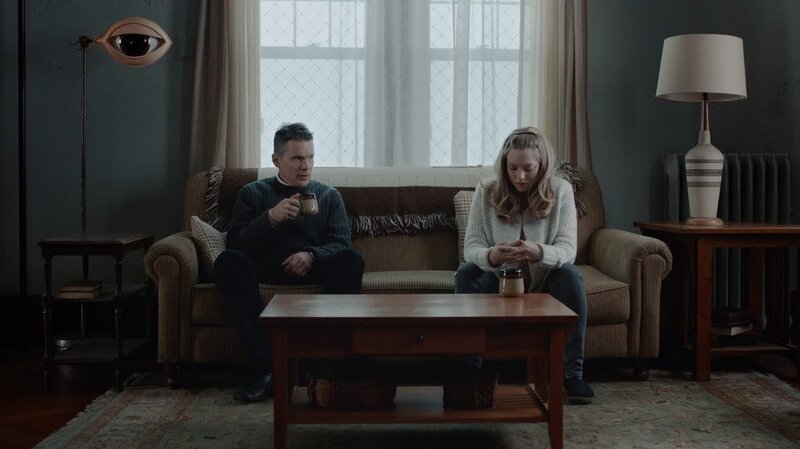
Image result for first reformed
I mean, let’s just talk it out, here, shall we? We have a moral imperative to future generations, to the continued existence of life, right? And if we encounter people actively and selfishly working to destroy that future, we have a moral obligation to oppose them, right? And if they use their ill-gotten bounty to seize power and prevent us from opposing them within the system they can set up and manipulate to their advantage, our moral obligation doesn’t simply end there, right? We still have a moral obligation to take action to affect real change, to do everything which is within our power, especially in the face of a scenario as grave as the current one, right? Even potentially at the cost of our own lives? If there’s a moral argument that lets us off the hook, I’ve never heard it. And yet, this logic has led us to some extremely troubling possibilities. If we follow the values we claim to believe in, it brings us inevitably to somewhere we don’t want to go. But if we shrug them off and tacitly admit that we never really believed in them to begin with, what does anything mean?
That’s the thing about FIRST REFORMED which, at least to me, feels so gutting. I can’t think of another work of art which feels so honest about how hopeless the world is. Which is to say, there are plenty of dismal, hopeless movies about the inevitability of suffering, but this one comes by that hopelessness is a uniquely intellectual way. There is no obvious weakness in Toller’s logic, there is never any point where you can argue he’s missed something or has other options. (vague SPOILERS follow) If he believes what he professes to, then the only two options are either the one he takes or the one Michael takes; the “best” option the film offers, and the one it ends on, is maybe he just gives up and tries to live a happy life and not think too much about the stuff he claims to believe in. (End vague, minor SPOILERS)
In short, any sort of intellectual honesty about our responsibilities to the world leads to a miserable selection of impossible solutions. It’s the perfect microcosm of the inescapable dismal logic of my life so far, and the reason I don’t know that I’ve ever seen a fictional character that I so profoundly saw myself in. I’ve struggled with this very dilemma myself, and my continued existence is less a testament to my successful moral reckoning than my cringing willingness to dodge these questions and retreat back to the simpler comfort of living my own small life. But that solution comes with its own sort of fatalist emptiness, a willed myopia in the face of total hopelessness that anything can be done to save humanity from itself. We’ve come too far, it’s too late now. This gets worse and worse from here, and all we can do is watch it all fall apart and try and cling to our tiny lives and try to put it out of our minds as much as we can.
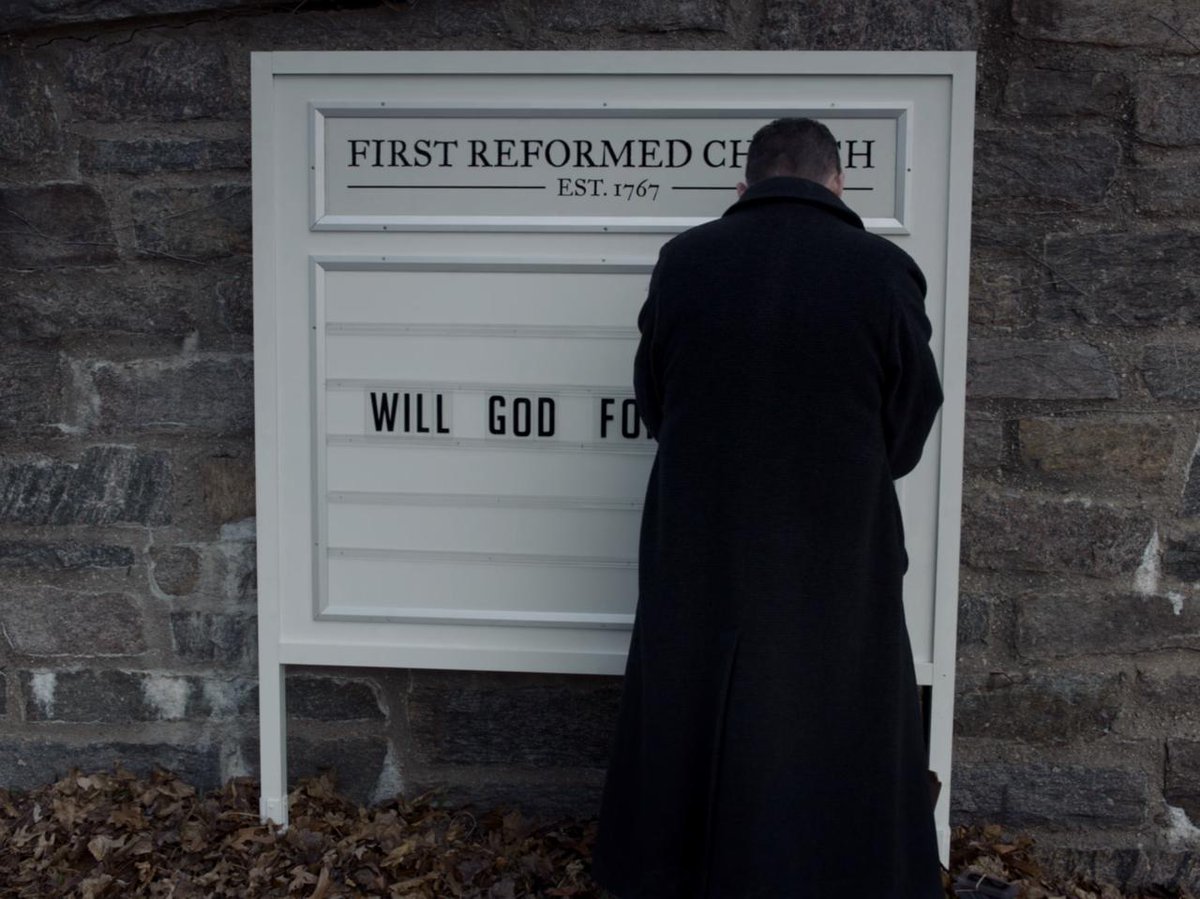
Image result for first reformed 
****************************
(END SPOILERS FOLLOW – read only once you’ve seen the movie) And indeed, it’s on that very note of dissatisfying uncertainty that the movie ends. And it’s an appropriately jarring ending which suddenly swerves away from the fatalist TAXI DRIVER climax it seems to be headed towards, instead settling into something much stranger and more mysterious. It builds to the perfect apocalyptic pitch of inevitable tragedy… and then, suddenly, a little glitch throws the whole thing off. Toller has gone too far now to turn back, and yet suddenly he can’t go forward. It’s a beautiful evocation of how life can disrupt our plans, even when we’re at our most certain.
(END SPOILERS CONTINUE – read only once you’ve seen the movie) I mean, as upsetting as Toller’s solution is, it’s also very much a relief to him; he’s miserable anyway, and this is a chance for an escape as much as it is a strike against the evil of the world. He’s finally at peace, he finally has purpose, finally has some hope that he can do some good. And then, just as he’s reached the point of no return, the situation shifts and he finds his certainty that he’s doing the right thing colliding head-first with his deep care for another person. It’s an absolutely irreconcilable situation; his conscience won’t let him do what he was planning, and yet it’s the only thing left that he can do. The only thing to survives that paradox has nothing to do with philosophy or conscience, it’s just his simple instinctual need for human connection. Something innate, immediate, physical, far removed from both thought and consequences, but no less inescapable, though it’s something he’s spent the whole movie trying to escape. It’s strange and awkward and confounding, and that’s just how life is. Certainty is easy, but life has a way of turning your most ardently held philosophy into hopeless chaos.
(END SPOILERS CONTINUE – read only once you’ve seen the movie) Which brings me back to my own life again – a selfish thing to do in a movie review, I know, but something I can’t bring myself to avoid in a movie which feels this personal. I’ve always used this blog as more of a journal than a catalogue of artistic merit, and with this particular film there’s no escaping it, my reactions are too intrinsically linked to my own struggles to separate them out and pretend this is in any way an objective discussion of a film. I relate so intensely to Toller’s philosophical free fall because I’ve lived it. I think I can say without false modesty that I’m a guy who desperately wants to do the right thing (regardless of how rarely I manage to do so), and that the only approach to that goal that I ever understood or related to comes through rigorous intellectual inquiry. Other people relate to things more empathically, and I think that’s good and necessary, but it’s not what I’m equipped for. Rational analysis is the only way I know to make sense of the world and how we’re supposed to live in it. I think Toller would probably describe himself the same way, and that’s why I see so much of myself in his complete disarray at the end. When a person like this follows what seems to be an irrefutable logical argument to a conclusion which gives you a rare sense of certainty and purpose, only to find that it brings you to an impossible, unworkable scenario… it’s destabilizing on a level that’s hard to even describe. I suspect it’s somewhat akin to suddenly losing your deeply held religious faith. You go through a period where everything feels like some kind of giddy, nonsensical dream. You feel panic, desperation; every action you take feels random and out of your control. You want to die, you want a sign, you want something to resolve it all, you crave that apocalyptic sense of self-destruction that was going to wrap everything up so neatly. 
But nothing ever comes, and then you just keep waking up every morning, and finally you have no choice but to do the hardest imaginable thing, which is to just keep living. The end of FIRST REFORMED is the best portrayal of that mental journey I’ve ever seen on screen; it captures the abruptness of it, the frustration, the uncertainty rushing back in all at once, and, most of all, it captures the infuriating open-endedness of a desperate question which doesn’t have an answer. When you find out that you’re actually going to have to live, even though you don’t want to and don’t have any clue what you’re supposed to do about that. It’s strange and disorienting and awkward and beautifully unfinished. 
***************************
Related image
Very few works of art can support a vision that bleak, and almost none ever try to reach that emotional point through intellectual rigor instead of emotional manipulation. I doubt it’s the best way to reach most people, but to me, watching this felt like having my guts ripped out. And yet, I’m not sorry that I did. It’s a relentlessly miserable, despairing film, and yet I emerged from it feeling oddly comforted. In a funny way, as hard as it was to watch, I felt a little less alone after seeing it. I’ve already been through this, lived through it, fought through it, maybe even self-indulgently wallowed in it. I know this terrain intimately and deeply. My demons are already all-too-aware of the litany of despair which FIRST REFORMED inventories, and they emerged from the experience without any fresh ammo, but perhaps somewhat cowed to be dragged out in the open with such vividness and empathy. Neither Paul Schrader, Reverend Toller, nor I have managed to wrestle an answer out of the hopeless paradox of existence, but having fought through it with them, I feel a certain spark of camaraderie. If I still don’t understand, there’s a certain succor to at least feeling understood.

*Which should by no means be taken as an argument against greater diversity in film; if anything, it should be read as an argument for more. Thousands of cis white male actors and I still find it astonishing when I see one who I actually feel some personal identification with. Imagine how a trans Indonesian plumber or someone must feel! We need more stories told!

THE BEST OF 2018, AS SEEN FROM 2019: THE SERIES


Friday, January 13, 2017

Regression

Why The World Is Wrong About "Regression" (the movie, not the psychological technique)

Regression (2015/2016)
Dir and written by Alejandro Amenábar
Starring Ethan Hawke, Emma Watson, David Thewlis


I’d like to take a moment to tell you why everyone in the world is wrong about REGRESSION. The world did not take to REGRESSION. This was a movie which was received so badly that it didn’t even generate some quote-worthy vitriol, didn’t inspire hate or condemnation. Just the kind of mild, sustained annoyance that comes from having someone dull waste your time for 106 minutes. And I can completely understand that reaction, first of all. Our buddy Dan P pretty much had that exact reaction, an escalating exasperation for a film so completely empty of anything good that it feels marginally insulting, like the filmmakers must really think you, personally, are an idiot if they thought this was going to be good enough to entertain you.

I understand that reaction, as I said. But I don’t agree. I think I sort of loved it. Which raises the very legitimate question of whether or not I’ve finally just become some sort of Armond White internet movie troll, who has to instinctively size up the collective reaction something is going to get and then puckishly assert, with a certain anarchic brashness, the exact opposite. I do wonder about that sometimes. I loved LOST RIVER, for crissakes, and nobody loves LOST RIVER. I doubt even its creators would be willing to put forward as full-throated a defense as I would. But I swear to you, if this is indeed what has happened to me, it’s not intentional, nor is it conscious. Honest, I really prefer to agree with everyone. I argue because I must. If I have become a troll, it was not by choice.

No, I think the problem is that I just watch too many movies. I’d guess that I average more than a movie a day, and in October significantly more. Watching that many movies is not normal or healthy, clearly, but I'm willing to do it for you, my beloved reader. But aside from being socially and emotionally crippling, it also has the effect of gradually reshaping the very act of watching movies in itself. You can’t watch that many movies and expect most of them will be good. The majority of movies you watch are terrible, and gradually you see so many of those that even when a decent version of the same crap comes along, it’s so utterly rote and predictable that it can be hard to get too jazzed about. Eventually, you notice that the things you enjoy have drifted alarmingly far from anything that anyone you know enjoys, or even understands. You gather friends to watch your new blu-ray of HOLY MOUNTAIN and are genuinely surprised that they find it completely alien and unpleasant. And one day, you finally realize that the problem is not them, it’s you.* You’ve finally seen so many movies that the traditional metrics we use to define successful cinematic “art” have almost no real impact for you anymore. You don’t really care if something is “good” or “bad” anymore, because you’ve seen it all so many times you barely notice it. The only thing that gets a response from you are movies which have even some small little detail which is different. And they may well be terrible in nearly every other way, but you gradually find yourself preferring the incompetent and exotic to normal movies which are technically competent but depressingly generic.


I say all this, because inherent in that method of examining cinema is something fundamentally meta, if not out-and-out postmodernist. To identify works which have something unique and interesting about them implies a deep awareness of what our expectations are as viewers, and a deep awareness of the way cinema, as a narrative medium, is typically constructed. It’s the reason obnoxious people like me sit in a movie theater and immediately tell their viewing companions what the twist is going to be in every movie they see a trailer for, with near-certainty. And it’s the reason that I was able to perform the feat of deeply enjoying REGRESSION. You see, this is a movie with twist. (Maybe). But my entire enjoyment of the film stems from correctly identifying that twist not just from the trailer, not just from the first few minutes, but from the fucking box art. If you too see exactly what the movie is up to, I think you might enjoy it, for reasons I will explain. If you somehow fail to see the twist coming, I can only surmise that you will feel insulted and furious. The question is, then, just exactly how obvious is all this really supposed to be? Does writer-director Alejandro Amenábar (ABRE LOS OJOS, THE OTHERS) know that we know, but still plays along for a very clever thematic reason, or does he think he’s smarter than us and totally pulling the wool over our eyes?

This question of intent is pretty important in trying to evaluate REGRESSION, but there’s no way for me to speak to this issue without talking about the so-called “twist.” So consider yourself warned, I guess, but then again, there’s probably no way to enjoy this without knowing the twist, (which frankly you’re about to figure out anyway from the brief plot description I’m about to give), because you’re an adult human being who has seen a movie before. Here is the plot of the movie, without the spoiler:

This story is inspired by true events. The year is 1990.

Ethan Hawke (SINISTER, BOYHOOD) plays Minnesota Detective John “Reg” Ression, one of those movie cop detectives who can be counted on to go too deep into a case until they’re exhausted and dreaming about the case and have to make one of those big complex charts on a bulletin board with string linking together all the suspects and clues. In this case to change it up they have him do that in notebooks and chalkboards instead of on a bulletin board, which is about as close to shaking up the usual formula as the movie ever dares to get. The particular case he’s about to get Too Deep into revolves around Angela Gray (Emma Watson, a 26-year-old British child star, making about as convincing a 14-year old Minnesotan hayseed as she’d make an MMA champion), who claims she’s been raped by her pathetic, fundamentalist dad John (David Dencik, TINKER TAILOR SOLDIER SPY). Dad seems a little unhinged, but he swears his daughter is telling the truth… except that he doesn’t remember anything. Suspecting a repressed memory, the detective enlists the help of psychology professor Ken Raines (David Thewlis, THE ISLAND OF DR. MOREAU) to try and unlock the memory through a new method called hypnotic regression. Under hypnosis, John does remember the incident… only, he also remembers there was someone else there. Someone wearing a black robe. Uh oh. Soon, other people under hypnosis also start to remember black-robed figures, including some prominent townspeople. Before you know it, our heroes find themselves enmeshed in a sinister Satanic conspiracy which just might go all the way up to Hillary Clinton (they don’t mention her specifically, but it stands to reason).


Except that (spoilers start here) they don’t, obviously. I feel weird using the word “spoiler” for knowledge which it would be insulting to suggest you didn’t infer from that plot setup, and especially weird for using the word “spoiler” for knowledge which can only improve the film, but that’s the odd position I find myself in. See, it’s obvious from frame one of REGRESSION that this is going to be a twist movie, and equally obvious there can be only one twist to come out of this premise: Angela is full of shit, she made up the whole thing and then it spiraled out of control because regression hypnosis is a bogus pseudo-science. Which you would probably have to assume anyway (even if you knew nothing about movies) because you are (hopefully) already familiar with the “real events” the movie is referencing: the Satanic Panic, which gripped the US in the late 80’s and early 90’s, ruining many lives and making heavy metal seem way cooler than it actually is before ending with a whimper when people suddenly realized it was total horseshit. While this year’s #pizzagate debacle taught me that there are, in fact, many people who did not learn a lesson from that national disgrace, I have to believe, for my own sanity, that most Americans do not need to watch a Hollywood thriller to learn that Satanic conspiracies are not real. But even if they did, having a total 180 twist ending would still be a frustrating narrative device.

There’s a million movies that end with this kind of infuriating movie-negating twist, going most directly back to PRIMAL FEAR (which seems to have lit the fuse on the modern mindfuck thriller, which was then thoroughly and irreversibly exploded by THE SIXTH SENSE) but originating at least as far back as THE CABINET OF DR. CALIGARI in 1920. In fact, it seems like every fucking thriller these days feels the need for some kind of mindfuck twist, regardless of how nonsensical or pointless it makes the entire movie which came before it. But as twists go, this one is particularly insipid, because of course it completely repudiates almost the entire movie which came before it. All those scary moments where we think we glimpse hooded figures, all those nightmares about satanic baby sacrifice… none of that happened. We just watched a film in which nothing happened, in which the main characters got really scared about nothing, and no forward progress whatsoever was made. I think you can begin, now, to see why this was such a frustrating and irritating viewing experience to most people. And nothing about the way it approaches this material seems to indicate any hint of awareness of how obnoxious it is to shoot a completely conventional horror-thriller and then rescind the entire thing in the last ten minutes. Particularly when the actual horror-thriller part is very much in the standard paranoid hint-don’t-show mold, and consequently almost completely lacking in money shots or genre payoffs. If you’ve already figured out that there’s nothing real going on here, there is desperately little in the movie that hasn’t been repeated so often in this genre that it barely even has any meaning anymore.


But ah, therein lies the possible brilliance of the film. Everything about its premise and execution is so completely conventional that it seems almost archetypal. You have your over-the-line cop, you have your shadowy conspiracy, you have your tough-but-caring sergeant, you have your uncaring system which doesn’t believe our heroic detective’s intuition, you have your damsel in distress. And everything plays out exactly the way you’d expect it to… except that you already know that this is going exactly the opposite way the characters think it is. That forces you to experience the story from a critical perspective instead of a narrative one.

Regardless of whether it was intended or not, this has the clever effect of completely undermining all the expected conventions of this sort of film. You’ve seen a million cop flicks where the over-the-line detective shakes down an uncooperative suspect in custody and gets too aggressive with him and the other officers have to step in and drag him away. But we accept that it’s just because he cares too much, that he’s frustrated because he knows he’s right, but the evildoers are trying to slip their way out of justice. We know that, because we understand the conventions of this genre. Such films use our expectations about cinema to assure us that it’s OK, he’s the good guy. Here, though, we can’t hide behind that comfortable assurance -- this particular suspect in police custody is almost certainly completely innocent, and we’re watching the “hero” of the movie violently abuse someone who can’t possibly give him the information he wants.

This ingeniously turns the entire framework of the movie on its head, forcing us to re-experience every expected beat of this familiar cinematic contrivance, except with the knowledge that our heroes are wrong and they’re actively making the world worse the harder they try to get to the bottom of this non-existent mystery. It’s a meta horror movie superimposed on a conventional horror movie, and that creates a particularly unsettling dissonance which I’ve never quite experienced before. Poor Detective Ethan Hawke knows he’s in a horror movie; he just doesn’t realize that it’s not the one he thinks he’s in. He thinks he’s the hero, and everything about the way his story is presented backs that up, makes us understand exactly why he would think that. He has absolutely no idea that he’s actually the villain, which is what makes him so much more dangerous and tragic. He’s crossing the line in his desperate effort to do the right thing, and we can only watch in horror as every step he takes ruins more lives and brings him further away from the truth (Hawke’s near-mega intensity just makes his folly all the more believable).**  


It’s a terrifying cautionary tale of how easy it is to get stuck on the wrong track and still convince yourself that you’re right. And, crucially, it makes sense to us, because it’s entirely presented in a context with which we’re already powerfully familiar. In a normal version of this movie, the detective would be completely right, and that’s how he experiences these events. We’re watching the movie he thinks he’s living through, except with the knowledge that it’s all wrong. We can understand why he does what he does, because he does exactly what you’d expect him to in a movie like this. It’s just that this time, he’s eventually going to have the legs completely cut out from under him. That’s the genius here: it’s a subversion of a modern mythic narrative which forces us to suffer through the entire story, watching as each new convention backfires more spectacularly -- but without the relief of allowing us to condemn the characters, since by the very act of acknowledging the mythic nature of the story arc, we acknowledge that we fully expect and condone the characters going through exactly this arc. We’re just as complicit as they are in being misled by our expectations.

Sadistically, the movie constantly teases our characters’ ruinous lack of awareness, giving them ample opportunity to figure out that they’re on the wrong track, but then dragging them right back into it. And it plays pretty fair with them, considering how mercilessly it sets them up to fail. They’re not idiots, and they’re not bad people. They really think they’re being logical and practical about all this, but they’re starting from a false premise, so every subsequent assumption they make is wrong. The movie is fraught with moments where one of them notices something off, and almost figures it out. But the psychologist doesn’t know much about detective work, and the detective doesn’t know much about psychology, so no one can see the big picture. They reassure each other whenever one of them is having doubts, and the whole thing becomes a downward cycle of confirmation bias. And of course, it’s personal, too; when confronted with the idea that maybe, just maybe, regression hypnosis doesn’t reveal hidden memories, but instead a highly suggestible unconscious state, the scientist in Raines suddenly sees the truth. But then the ego kicks in as he realizes that would undermine his whole career. And he forces himself to unsee it.

By the way, that guy over Hermione's shoulder is Lothaire Bluteau, fuckin' JESUS OF MONTREAL himself! Nice to see him still getting some work. Actually this movie is full of interesting character actors in small roles (Bluteau, Dale Dickey, David Dencik, Peter MacNeill, Julian Richings) who make their standard-issue roles a lot better than they deserve to be.

I guess I have to admit that maybe this got to me a little more than it otherwise might have because of the unique way it juxtaposes narratives with objective reality. I’m obviously looking at the world right now with some mix of horror and despair, as I watch my beloved country (America) start down what could be a very, very scary path. I’m looking at these Trump voters, and I just simply can't imagine what they could possibly be thinking that would make this seem like a good idea. This is pretty extreme stuff we’re playing with here. This isn’t stuff which I don't think it’s possible to have a simple political disagreement about -- either I’m right about how dangerous this approach is, or I’m completely crazy and everything I think I understand about government and reality is wrong.

And I can’t discount that possibility. We all have an idea about what kind of movie we’re living in, and I think we probably all imagine ourselves as the hero on some level. But it’s easy to imagine someone watching the movie of our lives slapping their foreheads over how frustratingly shortsighted we’re being, how we can’t see the obvious no matter how many times it throws itself at us. Hell, I can look back at my own life and see times where I can hardly believe how caught up I got in a narrative which turned out to be totally bogus. It didn’t just feel right at the time, it felt inevitable. I’ve seen this movie, you think, I know what happens. But of course, the whole reason we need narratives is to try and make sense out of the chaos of reality. They’re a comfort, not a truth. REGRESSION, whether it means to be or not (and, truthfully, I think the case for “not” is probably the stronger one)*** is a sobering reminder of that fact, and its potential to turn well-meaning people into an instrument of great harm. As a straight horror movie, it’s completely played-out, predictable, and dull, with a flourish of intelligence-insulting in its finale. But as a parable about the danger of believing your own story, it’s genuinely horrifying.

*Although in that particular example it’s actually them, because fuck you all, HOLY MOUNTAIN is a delightful movie that deserves and demands be loved by all who gaze upon its glory.

**Man, is that guy great or what? This is a total nothing of a character, but you wouldn’t know that from how hard Hawke works to make him come to life.

***It is, however, obviously designed as a movie which will read very differently once you know the twist. So whether you think we’re supposed to know the first time around, or it’s just designed to be re-watched with that knowledge, the intention is certainly there.  

Also, this is in the movie. I'll let you decide if that was a good or bad choice.

Wednesday, October 2, 2013

The American Scream: A Prelude to Chainsawnukah

The American Scream (2012)
Dir. Michael Stephenson

Or, “How Samuel Jackson’s Arm Made Me a Better Person”


This is a movie about what a few families in Fairhaven, MA do to decorate their yard for Halloween. But in a larger sense, it’s about obsession, creativity, community, loss, fear, and the American Dream. Which is good, because Halloween is a pretty big deal to me, too, and this is an interesting start to a discussion of why that is, and what it means.


First, though, the players. We meet Victor Barbiteau, in danger of losing his IT job by day, obsessive, visionary creator of the phantasmagoric by night, along with his amazingly accepting wife and somewhat more enthusiastic children. We meet Manny Souza, construction worker, family man, whose over-the-top Halloween show seems to grow more elaborate every year. And we meet Matthew and Richard Brodeur, an unemployed father/son duo who create their own ramshackled Halloween wonderland and are decidedly… odd. All three are “home haunters,” which as we learn is a small but fierce community of obsessive Halloween decorators around which there has sprung up a small cottage industry (which I myself have probably done more than my share to prop up). At first glance, the three protagonists --who all know each other-- seem to be on the same page. After all, they all share the same unusual fixation, they collaborate with each other and other “haunters,” they experience the same frustrations and lack of understanding from non-haunters who can’t figure out what’s motivating these nutballs to go to all this trouble.


But the more we get to know them, the more it becomes clear that although the symptoms are the same, the disease is different and distinct in each man. Barbiteau is motivated by his desire to recapture the youth he lost with the Branch Davidian cult (not his fault, his mom was a member). Souza is motivated by his desire to share a memorable project with his family. And the Brodeurs… uh, who knows what they’re thinking. If there’s a reason behind their efforts, they never mention it. They haunt because they must.

The Barbiteua clan. Who paints a coffin Lake Placid Blue? That truly is horrifying.


The movie tries to give us revealing suggestions from each man about why they’re compelled to build life-sized Egyptian statuary and buy discount (used?) coffins off craigslist and so forth. But really, I’m not 100% buying. Barbiteau, probably the most fanatical --he ends up directing a crew of volunteers and spending most of his disposable income in the quest for what admittedly ends up being an absolutely jaw-dropping creation-- offers a variety of explanations, from the lost Halloweens of his childhood, to the need to share a Holiday with the community (Thanksgiving and Christmas are for family, he says, but Halloween is for the whole world) to the power of fear in our psyche. All are probably part of it, as they probably are on some level for all the families we see. Really, though, I think these guys do it because they’re simply creative people. The have to build, they have to create, and this is simply the outlet that they’ve found. The specific motivations are probably complex and obscure, by the desire to do something is overwhelming. The proof is that they simply started one year by taking a shot a building something themselves, more or less on a whim, and that it’s spiraled out of control ever since. The creative impulse is powerful, and it will find a way. Whatever you tell yourself and whatever you can articulate about your motivation, the drive to make something bigger, better, crazier, and more elaborate will win the day.


Since we are entering the Chainsawnukah season, though, I think the most interesting aspect of the film is the one least explored. The question is not necessarily why do these guys build this stuff, but who are these complete strangers who come from far away to be scared by them, and also why do I want to do it so badly, too? Barbiteau offers a tantalizing explanation (and also sounds like he and the good Dr. Jonathan Crane would have a lot to talk about): “When you’re scared, you’re most alive.” There may be some truth to that. Fear is invigorating, fear has the capacity to remind you of the scarcity and fragility of life, reminding us to never take life for granted. And fear does it without the depressingness of having to watch Susan Sarandon die of cancer or something. Fear activates your brain in a way which makes it hyper-alert, releasing adrenaline, focusing your attention, forcing you to actively and intensely engage with the world. Treating ourselves to known artificial fears activates a very primal part of our brain and causes us to undergo a great intensity of experience without actually putting ourselves and loved ones at risk. So he may have a point, there’s definitely something there.

The Sauza clan.


But there must be a second part, too, that doesn’t have to do with fear. Or at least not the same kind of startled, heart-pumping fear that a guy in in a monster mask jumping out at you will produce. I mean, plenty of things trigger the fight-or-flight response in our brain; a loud air horn will do the job nicely, and you don’t see people lining up for that. So I maintain that there’s something about the macabre that may be related to fear, but isn’t at all the same thing Barbiteau is talking about. There’s something deeply, perversely appealing about the grotesque, the disgusting, the disquieting, which has nothing to with anything as superficial as a scare. In fact, Barbiteau eventually even acknowledges that “I don’t understand my reasons,” perhaps genuinely flummoxed at having to explain his objectively strange fixation, or perhaps a little afraid to probe much deeper. I mean, if you’re a guy with two adorable kids and a very understanding wife who is willing to tolerate this sort of shenanigan, maybe you’re not too keen to really dig deep into the motivation for your fixation on the icons of death.


Fortunately for me, I have no dependents who might get creeped out by psychoanalyzing the darker aspects of my soul, so I have the luxury of wondering what it is about horror that brings me back to it with such passion every year around this time. Why is it that every year, I seek out a universe of fucked up shit that so many people spend their lives actively avoiding? Why does THE HUMAN CENTIPEDE make me giggle like a schoolgirl, when to most people the very concept results in an immediate gag reflex? I mean, I’m a nice guy. In real life, I loathe violence and suffering and depravity, and to the best of my limited ability I try to work against it. So why do I love it when it shows up in my movies?


I’ve been asked that question a lot, for most of my life. And the best answer that I’ve ever come up with is that I can be a nice guy because I love this stuff. I think every human has the capacity to enact things which are unimaginably horrible. As this year’s most painfully horrifying film, THE ACT OF KILLING, makes clear, it’s a complete self-serving illusion to believe that there is some kind of clear dividing line between the good guys and the bad guys. We’re all people, we all live, we all love, laugh, cry, scream, eat, watch a movie every now and then. Sometimes we do wonderful things, sometimes we do terrible things. Most of us in our lives will do some mixture of both, though perhaps it’s easier to swing towards the positive in the relatively peaceful, resource-abundant modern Western world. I have one major advantage in this: most of my life, my destructive impulses have focused inward rather than outward. I am very seldom tempted to hurt other people, but with myself and my own life, it can be very difficult not to give in to negative impulses. If you’re in introverted person, it’s likely a fight that you’ll have to wage your whole life, and it’s also one that only rarely makes it to the surface long enough to involve anyone else. So you spend a lot of your time living down in the black pit, with all the nameless, formless vague thoughts that weigh down on you like the water at the bottom of a dark ocean. You either learn how to live with, and co-exist with these dark sirens of the subconscious, or, well, you don’t.


And that’s where the horror fan comes in. I was a sensitive child. I remember vividly the day of my youth that I first really listened to the lyrics to Warren Zevon’s immortal nightmare boogie “Excitable Boy” and it reduced me to tears. I used to feel the pain and horror of the world so, so vividly that some days it was paralyzing. Some days it felt like the world itself was screaming in horror, like the primal figure in Munch’s famous painting. I would shut my eyes tight and run out of the room at a death on TV, even a fictional one, because otherwise it would haunt me for days. I guess I was trying to deal with the awful permanence of mortality, with the abominable injustice of loss, and trying to reconcile the horror of the universe which would allow such cruelty with the sublime and awe-inspiring universe I already knew to exist. My response was to shut it out. Most children have adults to shield them from life’s uglier side; I suppose I did too, but like most kids it didn’t take long for me to put the pieces together and uncover the darker strands of the world at the edges of our perception. And once I’d seen them, I wanted to part of them. I didn’t need adults to try to censor the world for me; I took to that task myself, and with the dogmatic intensity only fear can really produce.


And then JURASSIC PARK happened. The moment with Samuel Jackson’s arm --which today plays as almost a parody of ridiculous unearned movie scares-- was at the time the single most horrifiying thing I had ever seen in my life. It happened too suddenly to look away, and once it had made it through my eyes, it took up residence in my mind. I had nightmares about it, that image burning itself into my brain to spring forward when I least expected it.


But a funny thing happened, too. The more it stuck with me, the more fascinated I became with it. JURASSIC PARK is a pretty scary movie for a fourth-grader, but it also has Spielberg’s unmistakable sense of rollicking fun, and that energy has at least as much power as the horror. And they were intertwined, somehow; as repulsed as I was by the image of death and terror, it was so closely interwoven with the power of the tale being told that it became impossible to entirely disentangle them. And my horror became entangled with excitement, and even a cautious, quietly urgent curiosity. The horror wasn’t going to leave my head, and so I simply had to get used to this new, frightening but subversively compelling permanent occupant. The horror wouldn’t leave leave the world I inhabited any more than it would leave my head, and increasingly, being paralyzed by the pain was turning me inward, planting seeds of despair and isolation that took root early and grew live creeping kudzu into other parts of my psyche. So the only option left became to give in to the pull of the dark. To live with it, I had to know it, and to know it I had to explore it. And so I started on my adventures in horror cinema, into House Haunting, into the music of Nick Cave and Warren Zevon and Metal and punk and horrorcore and, eventually, my personal heaven, the Theatre Bizarre.


The greatest haunt of all


Seeking out darkness in art did not desensitize me to horror, as you might first suspect and as censorship advocates might be quick to suggest. I still ache at the pain and cruelty in the world, and rage at the universe’s monstrous indifference to suffering. And there are still some things which go too far for even for me, mostly articles of simple puerile sadism, which I dearly hope I will always find repugnant, unpleasant, and --perhaps most damningly-- juvenile and unimaginative. But mostly, the dark arts have helped me become paradoxically more sensitive. Not only to the suffering of the world, but crucially to my own life, helped me actually face the darkness inside and discover it’s unique and ultimately ridiculous character. Ironically, our worst impulses are often the most blatantly absurd, and the easiest to tame and direct once we’ve managed to face them, to force them into the light where we can put a shape and a name to them and thus deny them the power of their more nebulous kin. Horror cinema and the whole Halloween season give us the gift of allowing us to, for a short while, bring the whole ridiculous circus of anger and fear and perversity and self-destruction and superstition and vulnerability out into the limelight, parade it about your our amusement, celebrate it as part of ourselves, and let it retire back to the twilight of applause and merriment. It’s part of us, it’s part of the human experience, and as such it has only the power over our lives that we give to it. It is, I think, the ultimate explanation behind the home haunters in AMERICAN SCREAM, and the reason why their fixation represents a triumph over fear as much as a celebration of it. And for me, personally? If I have to watch THE HUMAN CENTIPEDE PART III to find its face and make sure it stays where it belongs, well, it’s something I’ll do with a huge smile on my face, and hopefully with some good friends too. And some whisky.


And so, ladies and gentlemen, let the horror festival begin. Last year I watched in excess of 40 movies, and if October 1 was any indication, there’s plenty more out there for me to find this year. Join me, as we celebrate the grotesque, the depraved, the horrific, the macabre, the just plain bizarre, and of course the grindingly incompetent world of…

CHAINSAWNUKAH: 
FESTIVAL OF FRIGHTS 2013: 
THE SEARCH FOR SCHLOCK