Showing posts with label WORLD WAR II. Show all posts

Wednesday, October 23, 2019

Overlord


Overlord (2018)
Dir. by Julius Avery
Written by Billy Ray, Mark L. Smith
Starring Jovan Adepo, Wyatt Russell, Mathilde Ollivier, John Magaro, Pilou Asbæk


I have a special fascination with genre hybrids, and, of course, particularly with horror genre hybrids. And there is no shortage of these; horror is an almost endless malleable genre, able to absorb other tones, styles, iconography, and structure, which makes almost unlimited mash-ups possible. I’ve seen horror/comedy, art-horror, action-horror, horror-westerns, horror/romances, horror/crime, sci-fi/horror, superhero horror, even horror documentary, just to name a few. These genre-straddling exercises can be fun because they shake up the usual formula and expectations we have for stock fiction structure, but they’re even more interesting to me as experiments with the very medium of genre. Smashing different tropes together and seeing what survives can be revealing about the nature of the genres themselves: why they work, what they mean, what elements are essential to the mechanism, and what elements turn out to be surprisingly replaceable. Consequently a WWII-men-on-mission movie crossed with a zombie/mad science flick sounded right up my ally. Not, of course, that it would be the first war/horror hybrid I’d ever seen, nor even the first Nazi zombie flick I’d ever seen (they go back to fucking 1941’s KING OF THE ZOMBIES and its first sequel, and run comfortably through 1966’s THE FROZEN DEAD and 1977’s SHOCK WAVES to 1981’s ZOMBIE LAKE to modern schlock like 2009’s DEAD SNOW). Still, the men-on-a-mission element (a venerable subgenre in its own right) struck me as a good angle, as did the historical setting. If OVERLORD could hardly boast at being the first to get here, I still thought there was a solid chance it could generate something interesting from its motley collection of genre elements.

Or at least, I did until I saw it was a JJ Abrams production. OK, he didn’t direct it (that would be Julius Avery, his sophomore film after the go-nowhere crime thriller SON OF A GUN) or write it (that would be Billy Ray, of a very weird career that begins with THE COLOR OF NIGHT and runs from the laughably inept VOLCANO and SUSPECT ZERO to the rather classy STATE OF PLAY and Oscar-nominated CAPTAIN PHILLIPS, and Mark L. Smith, who has a much more consistent resume of middlebrow horror trash except that he co-wrote the fucking REVENANT!). But even from the trailer, I could see that this would be a strictly Abrams affair. By which I mean, slick, flashy production and a relentlessly overthought structure hiding the fact that there isn't any real content at the center of it all. That Abrams touch.


Sure enough, that’s exactly what happens here. Despite OVERLORD's near-constant attempts to twist itself into shapes convoluted enough that they might elicit a flicker of mild surprise, the only actual unexpected thing about the movie is how long it takes for the genre-hybrid element to enter the picture. It’s a men-on-a-mission WWII story for much longer than it’s a horror movie, and it’s surprisingly committed to that war movie angle --at least financially, which is the only meaningful measure of intent here—obviously spending a good portion of its ample budget on rather extravagant battle scenes, as well as a Bokeem Woodbine (WISHMASTER 2: EVIL NEVER DIES) cameo. Some of it is rather nicely appointed; the aerial battle that opens the film is efficient enough to be exciting in a empty sort of way, and the cinematography by Laurie Rose (every Ben Wheatley film) and Fabian Wagner (JUSTICE LEAGUE) is perfectly handsome, if a bit bland. But of course the movie-killing problem here is that this is not a men-on-a-mission film; we know from the damn poster that this is all just a feint, that their war movie chicanery is a prelude to an abrupt swerve towards an altogether different kind of movie (the kind with Nazi zombies, AKA the kind of movie that you’d actually be interested in watching). Consequently, any real investment we might have in the first half of the movie is stillborn. The cast is adequate, but nowhere near committed enough to instill their one-note characters* with anything that would independently be worth our time, and so a huge portion of the film just becomes a tedious waiting game while they coyly tease that we’re eventually gonna get to the good stuff.

And then, finally, we get there, and… the movie suddenly ends! After more than an hour of teasing us with some good old fashioned Nazi zombie fun, we officially learn about the existence of experimental Nazi super-zombies and then easily dispatch them (as well as a couple hundred of their living colleagues) in what feels like 20 minutes of a overlong 110. It feels unbalanced, like the movie is missing an act or something. They finally get to the zombies, and then jump right into the big climactic fight scene (which isn’t really any great shakes itself, though there’s a gruesome CGI-assisted facial wound which is pretty cool) without any warm-up.

That leaves us with a movie which pretty much spends its whole runtime threatening to happen without ever getting there. A movie which has a lot of stuff in it, but never commits to any one thing enough to make an impact. A movie which is all conspicuously moving parts hiding an empty center. A mystery box with no mystery. You know, a JJ Abrams production. I’d still be interested someday in seeing a men-on-a-mission/horror hybrid,** but this isn’t really a hybrid at all. You’d have to be two things to be a hybrid, and this isn’t enough of anything to make for an interesting experiment.


*Or less; the movie can’t seem to make up its mind about what Wyatt Russell’s single note is even supposed to be, and he vacillates wildly from badass cynic to straight-up villain with no real logic or benefit to the story.

** There are, of course, already a couple; DOG SOLIDERS, for example, or DEAD BIRDS, THE SUPERNATURALS, THE BUNKER, THE HILLS HAVE EYES 2 (2007). But not too many prominent examples.


CHAINSAWNUKAH 2019 CHECKLIST!
For Richer or Horror

TAGLINE
IMDB says Stop The Unstoppable, but I didn’t notice that on any of the posters.
TITLE ACCURACY
It’s supposed to take place during operation Overlord but other than that there’s not a lot of reason for that to be the title, especially in light of the existence of the 1975 British docu-drama OVERLORD, which is actually about the real Operation Overlord and uses real war footage, and also happens to be one of the greatest war movies ever made.
LITERARY ADAPTATION?
None
SEQUEL?
None
REMAKE?
None.
COUNTRY OF ORIGIN
USA
HORROR SUB-GENRE
Zombie, Nazi-Zombie, mad science
SLUMMING A-LISTER?
Bokeem Woodbine?
BELOVED HORROR ICON?
None
NUDITY? 
None.
SEXUAL ASSAULT?
Yeah the lead Nazi gets really gross and rapey with a captive French resistance member. Did they really not think we had enough reason to hate this character?
WHEN ANIMALS ATTACK!
No
GHOST/ ZOMBIE / HAUNTED BUILDING?
Zombies, although of a mad-science sort
POSSESSION?
None
CREEPY DOLLS?
None
EVIL CULT?
None
MADNESS?
None
TRANSMOGRIFICATION?
Yes
VOYEURISM?
Our boys spend much time –like, too much time, in fact-- hidden in an attic watching Nazi soldiers stand around and act like assholes to the homeowner downstairs.
MORAL OF THE STORY
Now more than ever we need to take the time to appreciate how baller FRANKENSTEIN’S ARMY was.


Thursday, October 20, 2016

The Beast in The Cellar


The Beast in The Cellar (1970)
Dir and written by James Kelly
Starring Beryl Reid, Flora Robson, John Hamill, T. P. McKenna

Yeah, none of this is in the movie. And I don't know who those two young ladies in the corner are but they're definitely not our protagonists.

What we got here is a dishwater-dull entry into the “crazed-cannibal in the cellar” genre. Except without the part where the crazed cannibal does anything. There are a handful --maybe four or five at the very most-- of brief POV stalking scenes, which end abruptly with either A) a scream and a quick edit or B) completely indecipherable closeups and rapid editing of some kind of injury occurring, but completely obscuring precisely what is happening or what is causing it. This takes up maybe a generous 5-7 minutes of screentime total, and that’s all the crazed cannibal action you’re going to get. You should know that up front. This is not a movie with any good stuff in it. I already had my suspicions when I noticed it was a Tigon Production; as we all know, as far as British schlock studios go, Tigon was the poor man’s Amicus Productions, and Amicus was the poor man’s Hammer Productions, and Hammer was the poor man’s “a real film studio,” so this is pretty far down the line. Tigon did manage to produce a small handful of low-budget winners in the late 60’s and early 70’s (WITCHFINDER GENERAL, BLOOD ON SATAN’S CLAW) but the words “from the studio which brought you THE BLOOD BEAST TERROR” do not exactly inspire confidence that they’re working overly hard to entertain.


So yes, there IS a beast, of sorts, in the cellar. But the vast, vast majority of the movie is actually a two-person familial drama about two elderly sisters (Beryl Reid, THE ASSASSINATION BUREAU, THE DOCTOR AND THE DEVILS, and Flora Robson, BLACK NARCISSUS, CLASH OF THE TITANS) who drink tea and talk in a polite, roundabout way about how they fear someone or something they keep locked in the cellar may have been getting out and causing murders. That’s a solid 80% of the movie, right there. While there’s something kind of endearing about a exploitation genre movie which is almost entirely devoted to two older ladies drinking tea and elliptically speaking around any specific details about their past, it’s also absolutely unbearably dull going. I mean, Reid and Robson are both fine actresses, but this is not exactly gripping dialogue here. One scene finds a visiting soldier (John Hamill, the fantastic-sounding THE OVER-AMOROUS ARTIST) recounting, in almost word-for-word, beat-by-beat detail, every single moment from a scene that the audience watched in full not five minutes prior. He returns maybe five more times to similarly gripping results, and to have a baffling nonromance with a pretty young nurse (Tessa Wyatt, ENGLAND MADE ME)  who keeps being brought back into the story as if she’s eventually going to be important, but never turns out to be.


The explanation as to who or what is locked in the cellar doesn’t arrive until the very end, when one of the old ladies, more or less unprompted, relates what turns out to be a meandering, multi-generational family history in such a long-winded way that it appears day turns to night and even the police inspector learning the truth behind the sudden increase in mutilated corpses appearing in his district looks like he can barely keep his eyes open. Which would make sense, because of all the possible reasons to have a beast in the cellar you could possibly imagine, this has to be the single most uninteresting one the mind could devise. I’d spoil it for you but there’s not really a twist or anything to spoil, given that the explanation manages the amazing feat of being both utterly nonsensical and staggeringly boring. It does involve both World Wars, and the physical and psychological toll they took on those who fought in them, which sort of begs you to read this as some sort of allegory, but if that’s how it is intended it would take a more sophisticated scholar of wartime British history than I to parse it. If you’d like to try your hand at wrestling some meaning out of it, here are the pieces you’ve got to work with, boiled down from what seems like 90 minutes of exposition to four basic points (SPOILERS, obviously, not that this is really interesting enough to be spoiled):


1: The sisters are really into their Dad, and keep talking about how great and handsome he was to an uncomfortable degree, and I really assumed the “beast” was going to be the result of some sort of repressed incest incident. But nope. Instead: (SPOILERS CONTINUE)


2: Dad Went off to WWI, and they thought he had died. But then he came back but was physically and psychologically scarred and really kind of an asshole thereafter. But not enough so that they had to lock him up or anything, so he’s not the beast in the cellar. Just a dick. (SPOILERS CONTINUE)


3: They also had a younger brother, who for some reason Dad never liked. They really stress this point but it doesn’t matter because then Dad died of old age, and that was the end of that. Good thing we know his whole fucking life story now. (SPOILERS CONTINUE)


4: Then World War II came along, and, remembering the bad times their Dad experienced after the first World War, the sisters decided they didn’t want their brother to join the army, and figured it would be a better idea to just wall him up in the basement until he became a mindless cannibal. So they did. And that’s the story of the Beast In The Cellar. (END SPOILERS)


Obviously that feels like it should have some kind of subtextual interpretation about war, but whatever it’s supposed to be I can’t figure it out. Obviously war is bad, but maybe the point is that trying to prevent people from going to war is even worse? But even if that’s what the movie’s getting at, what real-world parallel does that have? The only thing I could come up with is maybe some kind of rebuke to Chamberlain and the pre-WWII Nazi appeasement crowd. But was there really much point in criticizing Chamberlain by fucking 1970? And even if there was, I don’t see how the actual Beast In The Cellar fits into that metaphor. What, Nazi appeasement turned the nation’s potential fighting force into insane, isolated cannibals? I don’t get it. Even at my most generous interpretation, it’s as shitty a metaphor as it is a movie, and it's 30 years too late to be relevant or even bold. Subtext rejected.


Anyway.


The movie briefly shows some flickers of life halfway through when one of the two old ladies has to try and cover things up by disposing of an inconvenient corpse with its eyeball hanging out. You don’t get to see too many horror movies where a polite old British lady has to awkwardly drag a mutilated corpse around, and I approve. But that’s only one scene and it’s indifferently executed. There are essentially no other entertaining scenes of any kind. A total anticlimax of an ending definitively puts the nail in the coffin, and firmly establishes this one as aggressive anti-entertainment, though kudos to the composer Tony Macaulay for really, really working hard to try and sell us on the idea that any of this is interesting. I mean, it’s a big, rich dramatic score which is almost laughable in the face of how boring the actual story is, but you gotta respect the guy for trying. Fortunately he had a day job to fall back on: he was a songwriter for what looks to be half of the big hits of the 60s, including Build Me Up Buttercup (performed by The Foundations) and Don’t Give Up On Us (performed by David Soul) as well as singles for Donna Summers, The 5th Dimension, Andy Williams, Scott Walker, and others. I can neither confirm nor deny that Build Me Up Buttercup is loosely based on the plot of THE BEAST IN THE CELLAR, but it would make about as much sense as anything else in this turkey.

I didn't think it was possible, but this French poster is even more misleading than the British one. And the "beast" is definitively NOT "Moitie Humain, molitie Animal... 100% Terrorisant!"  that is just a filthy French lie.


CHAINSAWNUKAH 2016 CHECKLIST!
Good Kill Hunting


TAGLINE
A Chill-Filled Festival of Horror! -- a blatant lie if I ever heard one, unless you find old ladies drinking tea and talking evasively about their childhood to be in any way “Chill-filled” a “festival” or a “horror.”
TITLE ACCURACY
It’s not a beast, I guess there is a cellar, though.
LITERARY ADAPTATION?
No
SEQUEL?
None
REMAKE?
No
COUNTRY OF ORIGIN
UK
HORROR SUB-GENRE
Cannibal killer (basement-dwelling variety) / Maniac. I guess in the loosest possible sense also Slasher, since we do get some stalking and killing scenes peppered in there occasionally.
SLUMMING A-LISTER?
None
BELOVED HORROR ICON?
None
NUDITY?
None
SEXUAL ASSAULT?
No
WHEN ANIMALS ATTACK!
No
GHOST/ ZOMBIE / HAUNTED BUILDING?
No
POSSESSION?
No
CREEPY DOLLS?
No
EVIL CULT?
No
MADNESS?
Definitely
TRANSMOGRIFICATION?
No
VOYEURISM?
Yes, we get a beast-in-the-cellar POV
MORAL OF THE STORY
“Don’t lock people up in the basement until they go insane because you fear that going to war will have a negative impact on their psyche.” Really though, the real moral is we definitely need more horror movies starring nice old ladies. But they need to be a lot better than this.


Thursday, March 31, 2016

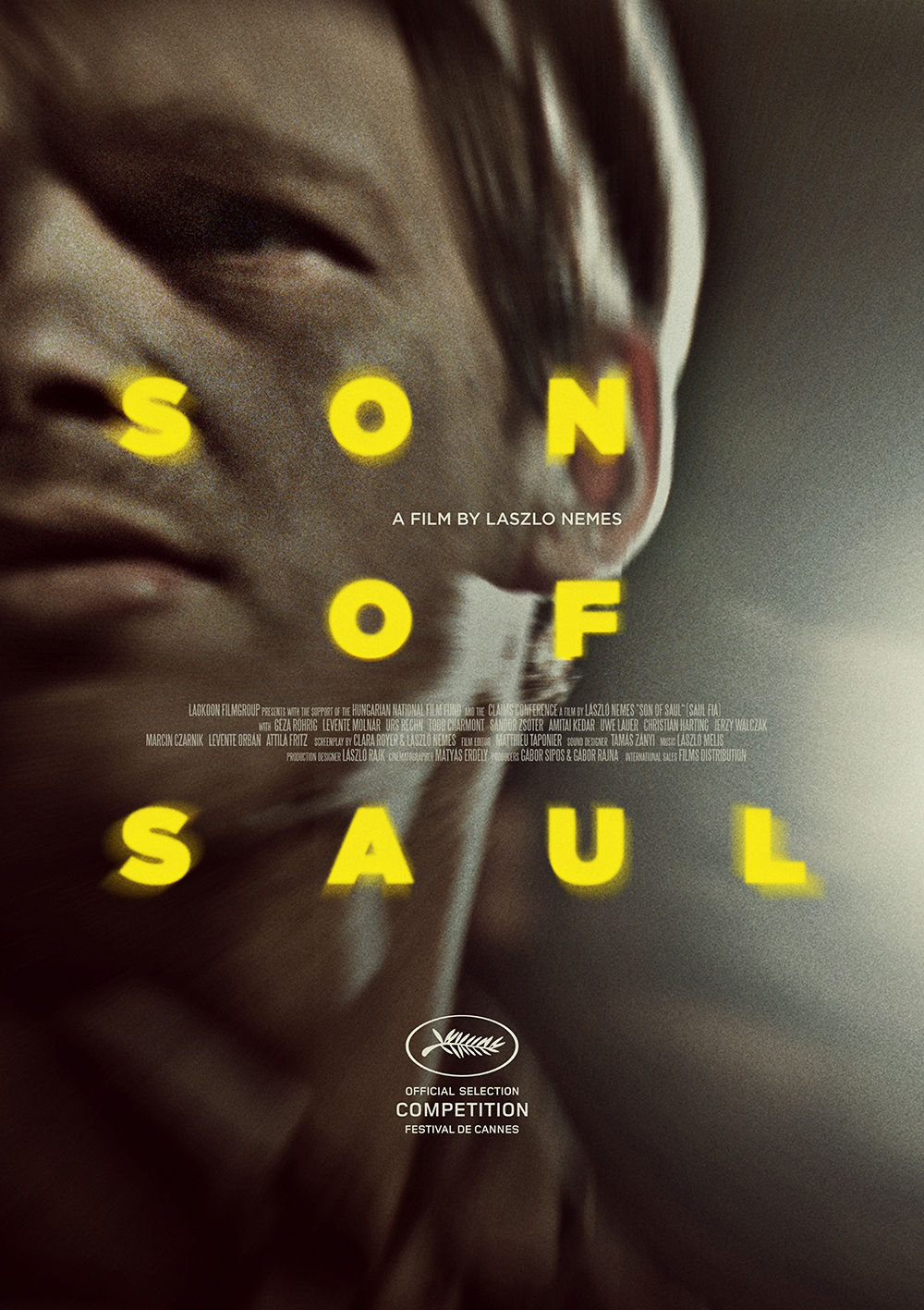
Son of Saul


Son Of Saul (2015)
Dir. László Nemes
Written by László Nemes, Clara Royer
Starring Géza Röhrig, Levente Molnár, Todd Charmont, Urs Rechn


“And I don't think we really need another film about the Holocaust, do we? It's like, how many have there been? You know, we get it - it was grim, move on. [But]... I've noticed that if you do a film about the Holocaust - guaranteed Oscar,” says Kate Winslet in her 2005 episode of Extras. She subsequently went on to win a Best Actress Oscar three years later… for a film about the Holocaust. Incidentally, this one also won. Ain’t life too funny? But yuks aside, she’s not wrong, Holocaust films are only slightly less ubiquitous than Dracula adaptations these days. And yes, we get it - it was grim, and --if movies are to be believed-- usually also it inspired heartwarming acts of compassion. Is there really a lot more to say about this? SON OF SAUL answers Kate directly: yes, there is. At least a little bit more, and especially if said with this degree of stylistic verve and audacity.


This --holy cow-- debut feature of Hungarian director LászlĂł Nemes somehow finds an intriguing new angle on abject human suffering, depicting Saul, a Jewish-Hungarian prisoner in Auschwitz. Saul has been commandeered into a job as a Sonderkommando, a forced laborer whose job primarily consists of helping the Nazis recover valuables from, and dispose the bodies of, gas chamber victims. This work has clearly taken a significant toll on his mental health, and the brilliant 35mm camerawork by Mátyás ErdĂ©ly (THE QUIET ONES, JAMES WHITE) emphasizes his self-protective myopia by maintaining a tight shallow focus on Saul and leaving everything outside a few feet from his head a hazy blur. I should say, maintaining a radical tight focus; virtually the entire movie follows Saul and his perspective --and frequently just the back of his head-- as he wanders through a mercifully blurry hellscape which had become horrifyingly routine to him. But Saul’s numb withdrawl is broken when he finds a corpse of a young boy who he insists (despite some evidence to the contrary) is is son, and he becomes singlemindedly fixated on finding a rabbi to give the boy a proper burial. This task --difficult enough in a death camp-- is further complicated by a burgeoning prisoner revolt which requires Saul’s increasingly unstable help, substantial language barriers, and the ever-present danger of getting shot or thrown into the gas chamber with everyone else. Against all odds, then, SON OF SAUL is actually more thriller than weepy-eyed melodrama, a harrowing race-against-the-clock by a man who literally has nothing to lose, and will risk his own life and anyone else’s in this final, clumsy, fanatical gesture towards not entirely losing his soul.  


As Saul, Hungarian-born Bronx-based poet GĂ©za Röhrig (who had acted only twice before, in two late 80’s TV productions) brings a stubborn, stoic intensity to a complicated and not always entirely sympathetic role. Saul is so single-minded in his pursuit of dignity for the dead that he frequently abandons the living, giving us something maybe genuine new in a Holocaust film -- some deliberate moral ambiguity. He’s had to endure unimaginable horrors, but he’s also not a passive victim or a saintly martyr, he’s a flawed but fierce man dealing with being pushed to the outermost extremes of the human condition the only way he’s able. It ensures the film is about more than a simple revolt against the forces of inhumanity, and it makes Saul’s redemption arc all the more uncertain.


These nuances are good, because as upsetting as it is, Nemes crafts such kinetic, intense scenes with his showy, relentless handheld-camera takes that the movie actually threatens to be exciting. Fortunately it’s about stuff too, so we’re not put in the uncomfortable position of recommending an art film set in Auschwitz simply because it’s inarguably an edge-of-your-seat white-knuckled thrill ride. Please don’t credit me on the poster with that quote, thanks guys. But seriously, there are sequences in here so wildly immersive that you’ll forget you’re supposed to be all reverent about this and simply get lost in the wild abandon of the filmmaking. At its best, though, it does both -- a sequence where Saul accosts a group of new arrivals marching to their deaths in a corpse-strewn firepit is as nightmarish and gut-wrenching as anything which has ever been put to celluloid, but also packed with both powerful human moments and a terrifying, desperate urgency which can’t help but be thrilling even as it is utterly repulsive. Cinema doesn’t get much more powerful than that. It’s a sequence which I expect to remember very vividly many years from now.


But there are quieter moments, too, which are no less powerful. Saul can be a difficult character to entirely understand or identify with, but there’s no missing that there’s a lot going on behind his eyes. In fact, just before the scene I just described, there is another, almost equally intense scene, on a much more intimate scale. Saul is tasked with picking up a crucial item from a fellow conspirator named Ella, who he says he doesn’t know. But when he sees her, it becomes obvious they do know each other. Who she is, exactly, and how they know each other --let alone why he would lie about it-- we are never told. But they have a fraught, emotionally painful conversation with just their eyes, in total silence. Much of the movie evokes the searing, virtuosic depictions of chaos and horror in things like COME AND SEE and CHILDREN OF MEN.* But it’s impressive that Nemes can find such rich and mysterious feeling in smaller moments, too. It’s this sort of brilliant evocation of both the subtle and the grandiose that helps SON OF SAUL transcend pigeonhole labeling. We may not need any more film about the Holocaust, but this is simply a great film -- and we need all of those that we can get.

*And I don’t mean it’s derivative; comparing anything to COME AND SEE is among the highest compliments one can pay.


You loved the movie? Buy the merchandise! Collect all four limited-edition slurpee cups!