Showing posts with label EXISTENTIAL DREAD. Show all posts

Thursday, September 5, 2019

Zama


Zama (2018)
Dir. and written by Lucrecia Martel
Based on Zama by Antonio di Benedetto
Starring Daniel Giménez Cacho, Lola Dueñas, Matheus Nachtergaele, Juan Minujín

ZAMA is a curious, quiet little period piece which is so subtle and unpushy that I didn't entirely realize it was a comedy until maybe halfway through, and didn't realize it was a horror movie for a while longer, though in retrospect it's very much both, albeit in the most dry, deadpan, and existential iterations of those two genres possible. It's the story --or, perhaps, the anti-story-- of Don Diego de Zama (Daniel Giménez Cacho, CRONOS and WE ARE WHAT WE ARE, beyond perfection in a role which requires him to paradoxically overwhelm the audience by underplaying everything), a minor Spanish official in colonial-era Paraguay, desperate to be transferred out of this rural backwater, but miserable enough to be unable to avoid self-sabotage before that can happen.

The primary tone, then, is one of crushing stagnation, the slow-motion horror of being gradually buried alive in a thousand tiny setbacks. For the longest time, the movie is basically the DISCREET CHARM OF THE BOURGEOIS set in 18th century Paraguay, with Zama's many pathetic attempts to escape his miserable purgatory perpetually offering a brief flicker of hope before leaving him even worse-off than he was before, his stockpile of hope emptied just a little further. The movie wavers close to out-and-out absurdism in the litany of indignities it lavishes on its milquetoast protagonist, piling up his woes so gradually that they barely register until they reach critical mass. Gradually, though, the comic insults begin to add up in wilder and wilder ways (he's forced to move into a haunted hotel at one point!) while the style of the film remains as blithely reserved as ever, resulting in a disconnect which is at once very funny and quite existentially disturbing. The sense of escalation is gradual, but as irresistible and flattening as a glacier, and by the film's end things begin to spiral out of control in increasingly blunt, visceral ways. Indeed, the final section (the film, reflecting the apparently excellent 1956 novel it adapts, is really three mostly self-contained chapters) suddenly plunges into a vivid, desperate jungle nightmare that I'm required by law and tradition to compare to AGUIRRE, THE WRATH OF GOD, finally paying off the first two acts' gradually escalating sense of human-crushing chaos while losing none of the film's quiet potency.


All throughout, director Lucretia Martel (LA CIENAGA, THE HEADLESS WOMAN) maintains a disinterested reserve, as though the camera barely finds Zama interesting enough to bother following him, instead peering curiously around its protagonist into the world of colonialist horrors barely noticed by him, but which can hardly fail to disturb a modern viewer (most notably the ubiquitous enslaved native Paraguayans, who the story and characters completely ignore but the camera finds pointedly relevant). Zama, who can't even control his life, barely manages to stay at the center of his own story, with Martel's unfussy deep focus shots and vivid evocation of a bygone world (which is, perhaps, not so alien to our own as we would like to believe; note the thoroughly modern musical choices) filling in the ellipses of the go-nowhere narrative with a rich, endlessly fascinating tableau of life.

Martel has made only three other movies, all of which seem to be highly esteemed, but none of which I’ve ever seen. They’re definitely on the list now, though; I mean look at this lady. I like her style:


A little research suggests that she’s most known for her caustic, deadpan satire at the expense of her native Argentina’s bourgeois upper class, and you could certainly read something of that into ZAMA, if you were so inclined. There’s something very revealing about the film’s ostensible focus on Zama’s stagnating ennui in the face of the shocking brutality going on all around him. He’s a laughingstock, yes; but our chuckles at his expense catch in our throat when we see the horrors of the system this man is casually supporting. That he is completely and utterly ambivalent to that system pushes the discomfort even further; it would be appalling but comfortingly comprehensible if he were a fervent believer, but to see such a vacuous, indifferent man perpetrate such horrors with halfhearted disinterest is singularly chilling… and easy to relate to. Zama isn’t an actively cruel man; he’s too consumed by bored self-pity to take sadistic pleasure in having slaves whipped or natives executed. Instead he barely even notices. The savagery he’s taking part in doesn’t even register in the face of his all-consuming moping. And are we really so different? The period setting merely allows Martel to quietly push the audience to notice the cruelty of a system that daily life inures us to. If Zama were a modern-day bureaucrat disinterestedly crushing the poor and vulnerable with the faceless, impersonal power of the state, we probably wouldn’t even notice it. We’d take at face value that his wounded self-esteem really is what the movie finds interesting. Because he would look like us. 

 Anyway, my real point here is that the movie contains some of the best damn llama acting I've ever seen in my life. I mean, this fucking lama has enough charisma to make The Rock look like Ryan O’Neal.* Poor Daniel Giménez Cacho gives the best performance of his career, and still gets upstaged by an errant llama (you'll know it when you see it). Perfectly fitting, I guess, for this particular vision.


THE BEST OF 2018, AS SEEN FROM 2019: THE SERIES


Monday, November 19, 2012

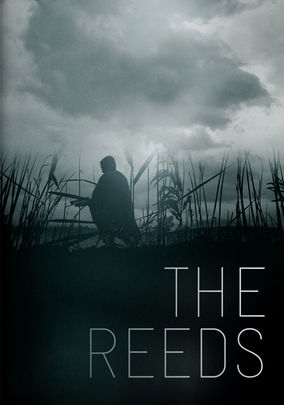
The Reeds

The Reeds (2010)
Dir. Nick Cohen
Written by Chris Baker, Mark Anthony Galluzzo (“contributing writer,” whatever that means)
Starring Anna Brewster, Geoff Bell, Daniel Caltagirone


    Another from that indie horror “8 Films to Die For” circuit (in this case from the first last year, 2010), this one shares a lot in common with fellow British indie horror wannabe SALVAGE. Again, we got a bunch of pretty young Brits giving reasonably good performances at being menaced in a closed location by a mostly unseen evil. I have to confess, though, that I kinda liked this one, even though there’s not much original here. It’s the same old ghostly shenanigans, but it has basically the gimmicks from maybe three average horror films mashed together to make a single film that may not completely make sense upon further reflection but is at least complete enough to hold your interest. Independently, none of these gimmicks would be enough to blow your mind, and even together they’re derivative as hell-- but it does make it kind of difficult to guess where things are going.

The strength of the movie, though, is actually in its execution more than its labored concept. We’ve got your typical motley crew of college kids to pick off, and this time they’re on a boat stuck out on a winding marsh somewhere. Not really much of a concept to build off of, but cinematographer Dennis Madden manages to evoke something very eerie about the endless fields of swaying reeds which seem to expand as far as the eye can see in every direction. It feels strange and lonely and isolated, but with a kind of desolate beauty, too. That helps bolster the weirdness of everything that happens, so even when the movie doesn’t quite have the imagination to truly creep you out, it still has a unique spooky flavor to it. You don’t see too many movies that marry genuine beauty to uncanny dread, so even if the horror isn’t the best it’s kind of a treat to see the two paired so successfully here. Next time, I hope director Cohen stops worrying about the story so much and lets some nightmare logic take ahold of his pretty images and unusual setting. 

And check out Dan P's take as ABBOT AND COSTELLO MEET THE REEDMAN.

CHAINSAWNUKAH 2012 CHECKLIST!

LOVECRAFT ADAPTATION: No.
BOOBIES: Don't think so.
> or = HERSCHELL GORDON LEWIS LEVEL GORE: Nah, not too bad.
SEQUEL: Not a sequel to BRASSED OFF as far as I can tell. Proposed prequel THE WOODWINDS has yet to get off the ground.
OBSCURITY LEVEL: High. Indie horror no one would ever have heard of except for its inclusion in the After Dark Festival.
MONSTERS: None.
SATANISTS: There's some kind of weird ritual, but I don't think Satan is directly implicated.
ZOMBIES: No.
VAMPIRES: No.
SLASHERS: Not in the traditional sense.
CURSES: Nothing specific.
ALEX MADE IT THROUGH AWAKE: N/A. Alex points out that she was, in fact, awake for possibly as much as two or three minutes at the very start.

Wednesday, February 29, 2012

Terribly Happy

Terribly Happy aka Frygtelig lykkelig (2008)
Dir. Henrik Ruben Genz
Starring Jakob Cedergren, Lene Maria Christensen, Danish Tom Sizmore


    TERRIBLY HAPPY is a Danish film about a tightly-wound Cop (Cedergren) who gets transferred to the boondocks of Denmark (the deep South, I guess it’s the same everywhere) for an initially unspecified fuckup in the city. It’s a close-knit community, and he’s an obvious outsider without enough context to quite be able to discern what the townsfolk are up to.  And they’re a colorful enough lot that they’re definitely up to something. There’s the town Tom Sizmore lookalike bully, his aggressively sexual wife, their creepy daughter, a Dennis Hopper lookalike with a big scar on his face, a manically grinning shopowner, the self-professed “town quack”. And then there are those people who recently disappeared but no one seems to be looking for. And that bog just on the outskirts of town with a truck parked in the center. Our boy plays it carefully, not really sure what’s going on but not oblivious to the fact that there’s more than meets the eye here. He’s not really sure what they’re capable of, and we’re not exactly sure what he’s capable of. But he keeps his wits about him and  tries to figure out what’s going on as the situation gets tenser and more potentially explosive. Then one day his cat tells him “Good morning”* and we realize this isn’t even close to the worst of it. 

    This is the first film I’ve seen in a very long time which can appropriately be called Hitchcockian (or Hitchcockionian, if you prefer) in the gleeful way it tightens the noose on its protagonist. Like Hitchcock’s best (but not like NORTH BY NORTHWEST. Fuck that one), it keeps tight control over its twisty, turny plot while at the same time maintaining a laser-like focus on keeping you entertained through a winning mix of imminent sexuality, boiling tension, and oblique black humor. It’s confidence in escalating the predicament of our lone cop is truly impressive, as it finds ever more devious ways of evolving into something different than you though it would be. Every time it seems like we’re getting the handle on the situation, some elegantly perfect new wrinkle emerges. It toys masterfully with our expectations and even our loyalties, shifting our sympathies between characters and gleefully setting up hidden moral trap for the unsuspecting viewer to walk into. It’s a wildly ambitious setup, but executed with such a diabolical confidence that it never seems pretentious or even arty -- just relentless.

    The style has been compared to the Coen Brothers, David Lynch, and I just compared it to Hitchcock. That may be overselling it slightly; for one thing, director Genz is not quite a visual master of that caliber, nor able to communicate as eloquently through pure cinema. But in terms of tone, those names are a good fit**. It successfully evokes the Coen Brothers’ sense of morbid fun mixed with dread, and Lynch’s ability to make the ordinary seem alien and horrific. It even has a little of Oliver Stone’s excellent U-TURN, with its protagonist trying only to get out of town but finding himself sucked inexorably in by his own flaws and the town’s grotesquely exaggerated denizens. No Indian Spirit guide, though. Maybe they’re saving that for the sequel? 

    The film is presented realistically, but there’s enough of a weird nightmarish quality to it that one might be tempted to speculate that there’s a metaphor of some kind lurking beneath the surface (or at the very least that it’s not meant to be taken entirely literally). At times its basically WAITING FOR GODOT with guns. The town is spartan almost to the point of absurdity, just a few bare buildings stuck in the center of a vast emptiness which stretches into the hazy distance as far as the eye can see in every direction. There’s a perpetually menacing steel gray sky lurking above them, listlessly oscillating between “about to rain” and “actually raining.” There’s a constant presence of the unseen outside world (the big city), always referred to but never actually seen, from which disruption can arrive with no warning and into which the elements of this closed world seem to mysteriously disappear. There’s obviously a plot brewing, but the more you see of it the more clear it becomes that it’s goals, and maybe even its composition, is more esoteric than criminal. Who the villains are and what exactly they want is always elusive without ever quite being outright inexplicable. Is it too much to wonder if maybe this is some sort of weird purgatory, a place where our hero is sent to test his moral fiber and perhaps to pay for his crimes? 

    To its credit, the film isn’t saying. Or even implying, really -- its willing to provide you a weird, creepy world and let you figure out what it means. It’s a little less confident about the plot, however -- occasionally it slips into the self-conscious habit of overexplaining to make sure you get all the details right. It’s all well-handled and it adds up rather nicely, but if there’s one thing that keeps it from being in the league of the Hitchcocks, Lynches, Coens, and Stones its that those directors would rather leave some questions unanswered than bring in a bunch of expository dialogue to muck up the simple elegance of an enduring riddle. The explanations are good, but the mystery is what we really savor. The true masters of tension understand that their job is to be in service to the mood, not to the specifics of plot. And the film is at its best when it does just that -- the classic sequence where two characters have a wordless duel of hard drinking, for example, needs no explanation other than the subtle changes of expression on the actors’ faces and the stylish but controlled aggression of the cinematography. What exactly are they thinking? We don’t know specifically, but we understand enough to fill in the gaps and appreciate exactly what the scene is going for. 

    I certainly appreciate what the film is going for. Its unique and ambitious, but even more importantly its simply a spectacularly efficient tension-building machine. Whatever it means, whoever you want to compare it to, I defy anyone to resist its looming mystery or fail to be drawn it at its relentless escalation. It’s a good reminder that a great story is all in the telling. What kind of world do we live in where the tribulations of a small-town Danish cop are a hundred times more gripping than 3 multi-million dollar films about giant fighting robots put together? In the words of another melancholy Dane (and TERRIBLY HAPPY is full of ‘em):' there's the respect that makes calamity of so long life'.
   

*Or “goodbye,” they point out that the colloquialism “mojn” can mean both.


**Funny enough, the film it probably most closely resembles in structure is HOT FUZZ. Uptight policeman gets transferred to small rural town to calm him down, only to find evidence of a creepy unspoken conspiracy amongst the townsfolk? FUZZ is so on the ball with its cop movie parodies that it actually beat the film it most closely mimics to the theaters by a full year.

Tuesday, June 21, 2011

The Plague Dogs

Plague Dogs (1982)
Dir. Martin Rosen
Starring (voices) John Hurt, Christopher Benjamin, Nigel Hawthorne, and Patrick Stewart has a small role at the end.  


PLAGUE DOGS begins with one of the most unnerving and disturbing sequences I’ve ever seen put to film. Things are murky and claustrophobic, out of focus. You’re disoriented and off-balance, looking for any point of reference. Casting about frantically, you can make out the surface of the water above. Breaching the surface, you’re confronted with the masked visages of doctors in lab coats, staring down from beneath a blinding light. To your horror, they offer no help but instead chit chat back and forth about how long you’ll last. Frantically scratching at the glass walls around you, you discover your feet can find no purchase there, that you’re doomed to struggle in the water until you drown. Finally, with no strength left, you give in and sink to your death, only to be plucked out of the water and shocked back to life, to face it again the next day.

The victim of this hellish living nightmare is a large animated black lab mix named Rowf, who awakens in his cage the next day hardly able to distinguish the nightmare of his reality from the nightmares which plague his sleep. That’s a fuck of a way to start an animated movie about talking dogs, but this one ain’t playing gentle.

I would have had an idea of what I was getting into if I had known that director Martin Rosen had previously adapted another of Richard Adams’ books into a fucking disturbing animated film about anthropomorphized cuddly critters: 1978’s nightmarish WATERSHIP DOWN. Watching the fluffy bunnies with celebrity voices rip each other to bloody shreds with their horrible Nosferatu teeth was up there with my most defining childhood traumas, and probably has something to do with my cautious relationship with NIGHT OF THE LEPUS. But it’s not really the frank depiction of violence which makes Rosen’s adaptations of Adams’ stories so affecting to me – it’s his bleak style and straightforward portrayal of the darkness and crushingly high stakes of the animal world.

PLAGUE DOGS is not as much about narrative as WATERSHIP DOWN. Rowf (voiced with resolute dignity Christopher Benjamin) and his friend Snitter (voiced with a heartbreaking mix of fragile optimism and deep melancholy by John Hurt) are living a surreal existence of unending and (to them) inexplicable torment in a laboratory, when a chance circumstance allows them a shot at escape. Through the incinerator, past the stiff bodies and gray ashes of their deceased friends (and Tim Robbins thought he had it bad!), they’re able to make it to the outside. But once out, they have no idea what to do. Snitter, who feels personally responsible for the death of his former master which led to his incarceration, thinks they need to look for a new master. Rowf is less sure. But neither of them knows what to do, where to go, or anything about living in the outside world. So the rest of the film is about them aimlessly wandering the Scottish countryside, trying to stay alive while the noose grows inexorably tighter around them.

In some ways, it’s not so much a traditional narrative as it is a darkly absurdist play, kind of a ‘Rosencrantz and Guildenstern are Dogs.’ Rowf and Snitter speak with human voices and can reason and make plans, but the movie carefully keeps reminding us that they’re dogs, with the perspective that implies. They have no concept of why they were being held captive, or what the outside world is like (“Why is this happening? I’m a good dog!” Rowf implores). They never quite comprehend why eating the local sheep evokes violent reactions from the local farmers, nor do they have any idea that the local media has learned that they may have become contaminated with Bubonic Plague during their escape, resulting in an all-out hunt for their heads. Their bafflement at their predicament and their existential angst as they struggle to find direction defines the absurd tragedy of their existence, and the quiet dread the lightly impressionistic animation and direction summons suits it well. Just like Rosencrantz and Guildenstern, it’s clear to these dogs that powerful forces are moving all around them, but they’re just as unknowable and arbitrary.

To further drive home this point, Snitter has recently undergone a brain operation which confuses his already meager ability to distinguish between past and present. He begins the film with an unshakable energy and optimism, pulling Rowf along with his plan to escape the lab. As things go on, however, the “flies and spider webs’’ in his head gradually become inseparable from reality, trapping him in a twilight zone of bad memories and worse reality and making him an unstable liability to his companion. We occasionally catch a glimpse of his reality, as objects and events from the past intrude on the present in ghostly high-contrast black and white. It’s genuinely chilling.

I am a great believer in the medium of animation, and constantly frustrated that modern filmmakers seem to consider it a childish tool. Here, expert animators create the exact proper balance of surrealism and literal representations, carefully making the dogs’ movements expressive and authentic but allowing for moments of seamless abstraction. The landscapes always have a kind of expressionistic quality, with strong brush strokes and a perpetually dreamy gray sky, but when the occasion calls for it the animation can turn to wild stylizations to represent extreme emotional states. This fluid stylistic quality perfectly captures the subjective reality of the unusual protagonists, while the hand-drawn animation means that every movement the dogs make is rife with meaning and personality, but still completely believable in the context of this world. It’s stubbornly unflashy, but a perfect example of how to use animation to tell an adult story more effectively than live-action possibly could.

(I should note, I watched the 85-minute version available on Netflix, but apparently there’s a longer 103 minute cut out there in Australia or some fool place which includes a few more explicit bits [Wikipedia says you get to see a dismembered human corpse which the dogs have eaten, wow. But the version I saw implies it strongly enough and that’s probably even weightier than actually seeing it]. Hardcore fans on the internet swear by the longer version, but I can’t really imagine it much improving the experience, which in the 85-minute version seems to fully develop its atmosphere, characters and themes and in no way feels truncated or incomplete)

As in WATERSHIP DOWN, director Rosen has created something truly unique and memorable, exploring deep-running existential fears from a startlingly distinct perspective. He’s not at all afraid to delve into the darkness of his scenario, but also deftly avoids exploiting it for shock value – instead he trusts the power of his images and the slow, desperate build of the story to work its way into your head and stick there. Netflix calls it a “compelling case for animal rights,” but fortunately it’s much more interesting than that. In the hands of Rosen, it becomes a film about the fragility of existence in a hard and incomprehensible world. Rosen only directed one other film besides his two Adams adaptations, an out-of-distribution live action film about rural Montana humans called STACKING. But even if that one is as tepid as the trailer makes it look, I think he can rightfully claim a place among the all-time animation greats based on the remarkable power and unique vision of his work in PLAGUE DOGS.

06/29/2011 PLAGUE DOGS Update! It turns out a very young Brad Bird worked on this film as an animator, which is cool enough that it deserves a mention.